
Lucas Museum Opens in L.A. as San Francisco Reflects on a Decade-Long Rejection
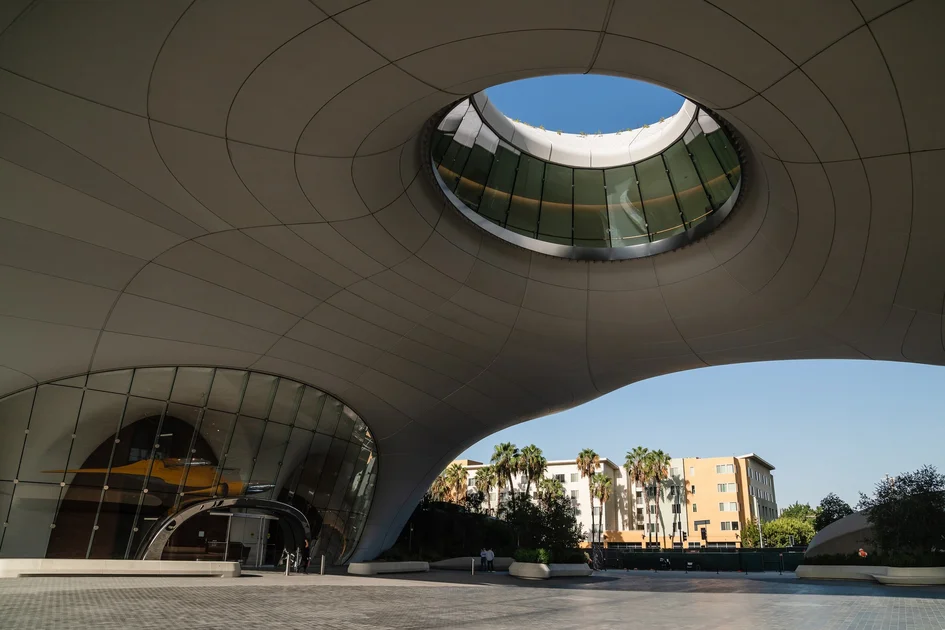
The Lucas Museum of Narrative Art opened to the public in Los Angeles on September 22, 2026, following a star-studded gala. While the 300,000-square-foot facility celebrates visual storytelling in Exposition Park, San Francisco residents are mourning the loss of the project, which was originally proposed for the Presidio in 2010 but rejected due to bureaucratic delays and design disputes. The museum, co-founded by George Lucas and Mellody Hobson, features works by Frida Kahlo and Norman Rockwell alongside Star Wars artifacts, marking the culmination of a two-decade effort that saw Lucas abandon San Francisco and Chicago before settling in Los Angeles.
Key points
- The Lucas Museum of Narrative Art officially opened to the public in Los Angeles's Exposition Park on September 22, 2026, three days after its grand opening gala.
- The 300,000-square-foot building, designed by Ma Yansong, houses over 30 galleries, two theaters, and a public park, featuring a collection of 1,300 works from a larger 40,000-piece archive.
- San Francisco was the original intended site for the $1.5 billion museum, with George Lucas approaching the Presidio Trust in 2010 to build a Beaux-Arts style structure on Crissy Field.
- The San Francisco project collapsed in 2014 after the Presidio Trust board rejected all proposals, citing Lucas's inflexible design vision and bureaucratic friction, leading Lucas to state, 'They hate us.'
- Los Angeles was selected in 2017 for its proximity to schools and a diverse population, with admission set at $25 for adults and free for residents of the museum's ZIP code.
- The opening gala featured celebrities including Leonardo DiCaprio, Oprah Winfrey, and Samuel L. Jackson, who criticized San Francisco's failure to secure the museum.
Background
The Lucas Museum project has been in development for approximately 20 years. Previous coverage noted that the museum blends high art with popular culture, featuring items like Garfield panels and Star Wars concept art. The project faced significant delays, including pandemic-related construction issues and supply chain disruptions. George Lucas previously described the effort as one that 'almost broke his will,' highlighting the personal toll of the multi-decade planning process. The museum's design by MAD Architects was intended to create a 'Gesamtkunstwerk' that unites different forms of narrative art.
How outlets are covering it
The San Francisco Standard emphasizes the local regret and bureaucratic failure, highlighting that Samuel L. Jackson publicly blamed San Francisco for 'blowing it' and that the Presidio Trust's inflexibility led to the project's departure. In contrast, LAist focuses on the community impact in South Los Angeles, noting that the museum is located in a Promise Zone with over 500,000 residents within a three-mile radius, and that it offers free admission to local residents. Vogue, meanwhile, shifts the focus to the cultural spectacle, detailing the celebrity attendance and Emma Watson's floral dress, framing the event as a high-profile cultural moment rather than a civic loss. While The San Francisco Standard cites the museum's cost as $1.5 billion, other sources and archive data reference a figure closer to $1 billion, indicating potential discrepancies in reported funding totals.
Why it matters
The opening of the Lucas Museum represents a significant cultural shift for Los Angeles, adding a major tourist destination and hundreds of jobs to the city. For San Francisco, it serves as a case study in how bureaucratic hurdles and design disputes can result in the loss of major economic and cultural investments. The museum's success in Los Angeles, with its focus on narrative art and free access for local residents, contrasts with the perceived NIMBYism and bureaucratic delays that characterized the San Francisco process, potentially influencing future urban development strategies in both cities.
What to watch
The museum will operate with timed entry tickets, with hours varying by day of the week. The Skywalker Grill, a full-service restaurant within the museum, will accept reservations without requiring a museum ticket. Future developments may include the expansion of the California Science Center nearby in Exposition Park. Additionally, the museum's impact on local tourism and the broader cultural landscape of Los Angeles will be monitored in the coming months.
- How San Francisco lost the Lucas Museum The San Francisco Standard
- Lucas Museum of Narrative Art opens its doors to fans from LA and galaxies far away LAist
- The Lucas Museum’s Architect Wants to Help You Escape from Reality The New York Times
- Making sense of George Lucas’s new billion-dollar galaxy The Economist
- Emma Watson Wore a Dress Made With Real Flowers to the Lucas Museum Opening Vogue
Want the full story? Read the original reporting
Read on The San Francisco Standard