
Nazi-Era Restitution Claim Halts $180M Van Gogh Auction Amid Provenance Dispute
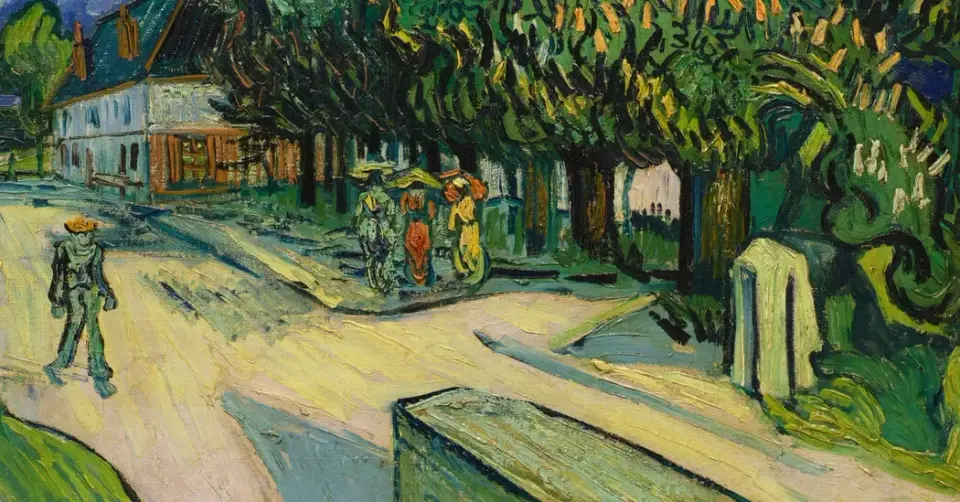
Sotheby’s faces a last-minute legal challenge to its $180 million sale of Vincent van Gogh’s 'Châtaigniers en fleurs' (Blossoming Chestnut Trees). Heirs of the painting’s original Jewish owners allege it was sold under Nazi duress in 1936. While Sotheby’s argues the sale was voluntary and fair, the dispute threatens the $2.8 billion fall auction season.
Key points
- The painting, estimated at $180 million, is part of the Blaquier-Arrieta collection, which is expected to raise approximately $450 million at Sotheby’s.
- Heirs of Samuel Fischer, a Jewish publisher, claim the 1936 sale was coerced by financial pressure from Nazi persecution, citing the Washington Principles for restitution.
- Sotheby’s counters that the painting sold for 68,000 Swiss francs (about $22,000) to an independent buyer in the Netherlands, outside Nazi control, and that the family retained other artworks.
- The dispute arises just days before the auction, with Sotheby’s stating it is working toward a resolution while maintaining the sale is scheduled for Wednesday.
- The broader Blaquier-Arrieta collection faces scrutiny over its Argentine origins, linked to the Ledesma sugar company and human rights abuses during the 1976-1983 dictatorship.
Background
The art market’s fall season is projected to reach $2.8 billion, with major works by Cézanne, Picasso, and Klimt also scheduled for auction. Previous coverage noted that the Blaquier-Arrieta collection, assembled by an Argentine couple in the 1970s, has long been associated with the Ledesma sugar company, which faced allegations of involvement in the 'Night of the Blackout' in 1976, where up to 55 trade unionists were disappeared. The current dispute adds a layer of provenance complexity to an already high-stakes sale.
How outlets are covering it
The New York Times and BBC report that Sotheby’s is engaged in dialogue with the Fischer heirs to reach a 'mutually satisfactory resolution,' with the auction house stating its research has not established duress. ARTnews provides deeper legal context, noting that Sotheby’s cites a 1936 sale price of 68,000 Swiss francs as evidence of a fair market value, and references New York law distinguishing between Nazi-era persecution and buyer-induced duress. The Guardian emphasizes the ethical tension, criticizing Sotheby’s for ignoring the collection’s Argentine human rights history in its marketing, while highlighting the contrast between the paintings' beauty and the 'disappearances' linked to the Blaquier family. All sources agree the sale is scheduled for Wednesday, but differ on the likelihood of a last-minute withdrawal, with ARTnews suggesting the timing of the claim may be strategic given recent changes to the Holocaust Expropriated Art Recovery Act.
Why it matters
This dispute tests the limits of provenance research and restitution law in the high-end art market. The outcome could set a precedent for how auction houses handle late-stage claims involving Nazi-era sales, especially after Congress eliminated the laches defense in the HEAR Act. It also highlights the growing scrutiny of art provenance beyond the Nazi era, including human rights abuses in Latin America, as collectors and institutions face increasing pressure to address the ethical origins of major collections.
What to watch
Sotheby’s is expected to proceed with the auction on Wednesday unless a resolution is reached with the Fischer heirs. The outcome of the dispute will likely hinge on whether the heirs can prove the 1936 sale was coerced under the legal standard for duress, or if Sotheby’s can demonstrate the sale was voluntary and fair. The broader market will watch for any impact on the $2.8 billion fall auction season, particularly for other high-value works with complex provenances.
- Doubts Loom Over a van Gogh as Auctions Aim for a $2.8 Billion Week The New York Times
- Masterpieces haunted by brutal past could send records tumbling at Sotheby’s The Guardian
- Sotheby's auction of $180m Van Gogh challenged over claims it was 'sold under duress' BBC
- Sotheby’s $180 M. Van Gogh Sale Faces Eleventh-Hour Nazi-Era Restitution Claim ARTnews.com
- $180 million Van Gogh tests the art market and collector confidence CNBC
Want the full story? Read the original reporting
Read on The New York Times