
Peter Max, the '60s Psychedelic Art Mogul, Dies at 88
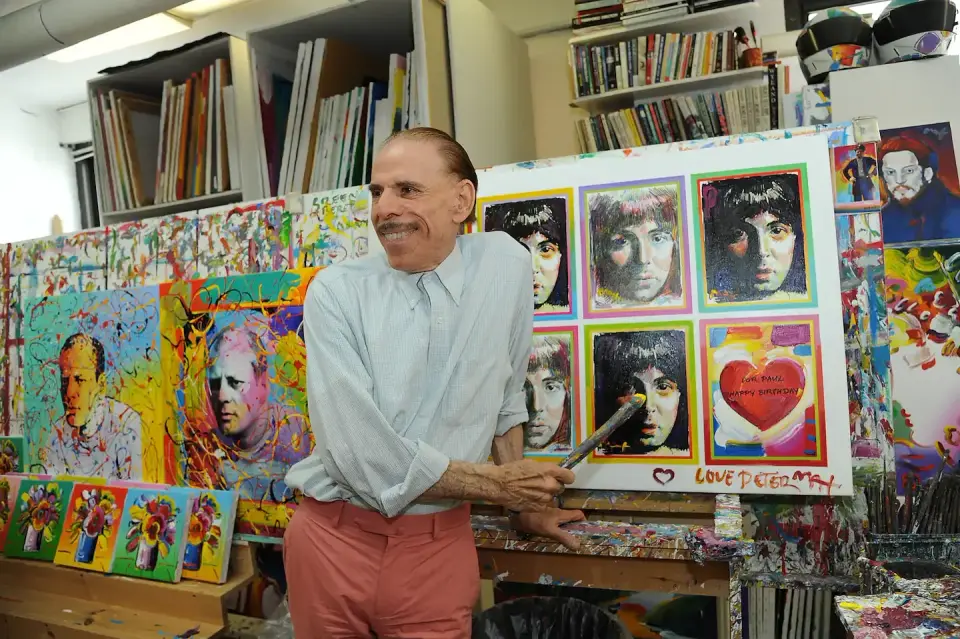
Peter Max, the artist whose fluorescent, kaleidoscopic imagery defined the visual aesthetic of the 1960s counterculture, has died at age 88. Born Peter Max Finkelstein in Berlin in 1937, he fled Nazi Germany as an infant and later settled in Brooklyn, where he transitioned from a Madison Avenue graphic designer to a prolific pop artist. His work, characterized by vivid colors and cosmic themes, became ubiquitous on everything from dorm room posters to cruise ships and airplanes. Although critics often dismissed his commercial success as lacking artistic depth, Max achieved massive financial and cultural influence, generating $1.5 billion by 1971. His later years were marked by legal disputes over his estate and a decline in health due to dementia.
Key points
- Peter Max died on Monday at age 88, confirmed by his son Adam Max and Park West Gallery; he had been suffering from dementia.
- Max’s career began in the 1960s after he left a successful graphic design firm to pursue painting, adopting a psychedelic style influenced by yoga and Eastern spirituality.
- He became a cultural phenomenon, with his posters and designs appearing on over 70 product lines, including clothing, furniture, and transportation, generating $1.5 billion in revenue by 1971.
- Max’s work was officially credited for the 'Yellow Submarine' movie and album cover, though some sources attribute the final design to Heinz Edelmann, with Max’s role described as early consulting.
- In his later years, Max faced legal battles with family members and business associates over financial management and control of his studio, culminating in the suicide of his second wife, Mary Max, in 2019.
Background
Our archive from September 2026 noted Max’s death and his status as a licensing empire builder. This briefing expands on the details of his artistic evolution, the controversies surrounding his later career, and the specific attributions of his work in major cultural projects like 'Yellow Submarine.'
How outlets are covering it
The Washington Post emphasizes Max’s role as a 'counterculture mogul' and his self-promotional genius, noting his comparison to Picasso and Matisse. The New York Times highlights his 'trippy' aesthetic and the commercial exploitation of his work, while also detailing the family legal disputes. The Hollywood Reporter focuses on his broad cultural impact, including his work for major sporting events and his friendship with the Beatles, while clarifying the 'Yellow Submarine' credit issue. Vulture underscores his connection to Eastern spirituality and his ability to capture postwar optimism, noting his work for government commissions like border signs. Critics, as cited by The Washington Post, often dismissed his art as superficial, contrasting his commercial success with the critical acclaim of peers like Andy Warhol.
Why it matters
Peter Max’s death marks the end of an era for 1960s visual culture. His work not only defined the aesthetic of the counterculture movement but also demonstrated the potential for artists to achieve massive commercial success through licensing and self-promotion. His legacy includes a significant body of work in museums, despite critical skepticism, and a complex narrative of artistic innovation, commercial exploitation, and personal turmoil.
What to watch
There are no immediate next steps regarding Peter Max, as he has passed away. However, his estate and remaining works may continue to be sold through galleries like Park West, and his legacy will likely be revisited in cultural retrospectives of the 1960s and pop art movements.
- Peter Max, whose psychedelic art came to symbolize the ’60s, dies at 88 The Washington Post
- Peter Max, Trippy Artist of Counterculture Era and Beyond, Dies at 88 The New York Times
- Peter Max, the Psychedelic Pop Artist, Dies at 88 The Hollywood Reporter
- Peter Max, Colorful Artist Known for Psychedelic Pop Art, Dies at 88 People.com
- Psychedelic-Poster Pioneer Peter Max Dies at 88 Vulture
Want the full story? Read the original reporting
Read on The Washington Post