
Yayoi Kusama, the Polka Dot Pioneer, Dies at 97
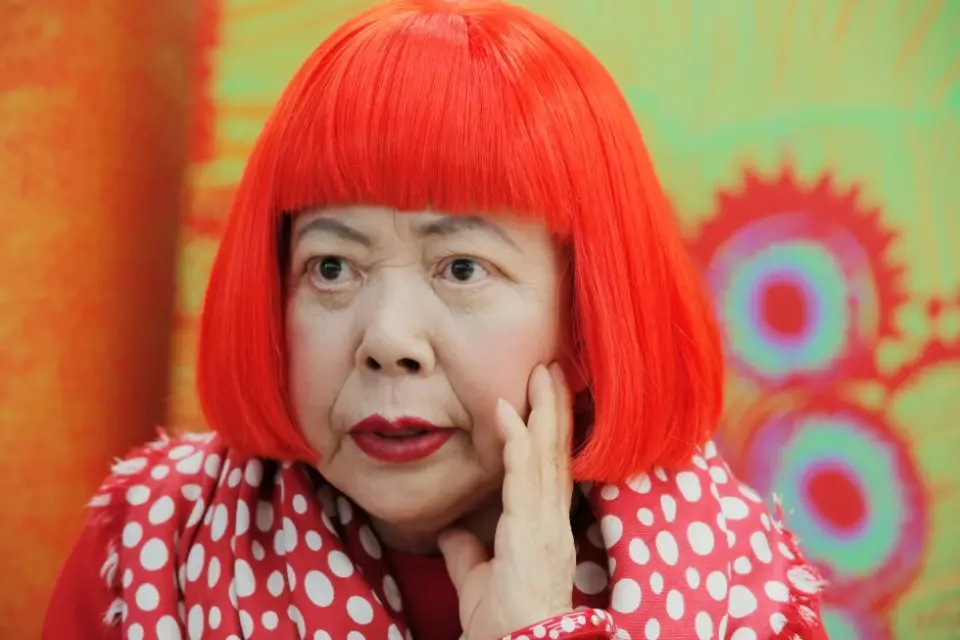
Japanese avant-garde artist Yayoi Kusama has died at the age of 97. Known globally for her polka dot motifs, pumpkin sculptures, and immersive Infinity Mirror Rooms, Kusama spent decades living in a psychiatric hospital in Tokyo while continuing to create art. Her work, which faced early criticism and obscurity, eventually became a global phenomenon, with her paintings fetching record prices and her exhibitions drawing massive crowds. She died on August 14, 2026, in a Tokyo hospital.
Key points
- Yayoi Kusama died on August 14, 2026, in Tokyo at the age of 97.
- She was a pioneering avant-garde artist known for polka dots, pumpkins, and Infinity Mirror Rooms.
- Kusama voluntarily lived in a psychiatric hospital in Tokyo for decades, using it as a stable environment for art therapy and creation.
- Her work was largely overlooked in the 1960s and 70s but gained massive global popularity in the 1990s and 2000s.
- Her paintings have fetched some of the highest prices for a female artist, with one selling for $10.5 million in 2022.
- She was born in 1929 in Matsumoto, Japan, and moved to New York in 1957.
Background
Yayoi Kusama's career was marked by a long period of obscurity and self-imposed withdrawal before her global rise to fame. In the 1960s, her provocative work, including nudity and phallic sculptures, was poorly received in New York and Japan. She returned to Japan in the 1970s and checked herself into a psychiatric hospital, where she lived and worked for decades. Her breakthrough came in the 1990s, particularly after her 1993 Venice Biennale representation, which led to major international exhibitions. The archive notes her rise from near-obscurity to global prominence, highlighting her impact on contemporary art despite her controversial early career and long withdrawal.
How outlets are covering it
AP News reports on her death and her status as a polka dot pioneer. BBC highlights her early struggles, including criticism for nudity and the theft of her ideas by male contemporaries like Andy Warhol, leading to her retreat to a psychiatric hospital. The Guardian provides a detailed visual timeline of her life, emphasizing her hallucinations, her move to New York, and her later global superstar status, including her Louis Vuitton collaboration and museum openings. All sources agree on her death date, age, and the significance of her Infinity Rooms and polka dot motifs. BBC and The Guardian both emphasize her long residence in a psychiatric hospital, while AP focuses on her artistic legacy.
Why it matters
Kusama's death marks the end of an era for contemporary art. Her work, which blended personal trauma, hallucinations, and bold visual motifs, challenged traditional art norms and achieved unprecedented commercial and cultural success. Her ability to transform from an overlooked, controversial figure to a global icon demonstrates the evolving nature of art appreciation and the power of immersive, experiential art in the digital age. Her record-breaking auction prices and massive exhibition crowds underscore her enduring influence and market value.
What to watch
The art world will likely see continued retrospectives and exhibitions of Kusama's work, as her studio has stated they will carry forward her wishes to bring hope and strength through art. Her estate and museum in Tokyo will continue to manage her legacy. The high demand for her work suggests that her market value will remain strong, and her influence on contemporary art, fashion, and design will persist. There may be new exhibitions and collaborations announced in her honor.
- Yayoi Kusama, who splashed polka dots across art world, dies at 97 in Tokyo AP News
- Japanese polka dot artist Yayoi Kusama dies aged 97 BBC
- Polka dots, infinity rooms and phallic sculptures: Yayoi Kusama’s art in pictures Yahoo
- Yayoi Kusama – a life in pictures The Guardian
- Yayoi Kusama, high priestess of polka dots, has died NPR
Want the full story? Read the original reporting
Read on AP News