
Seoul’s Art Fairs Expand Beyond Convention Center as Korea’s Creative Ecosystem Matures
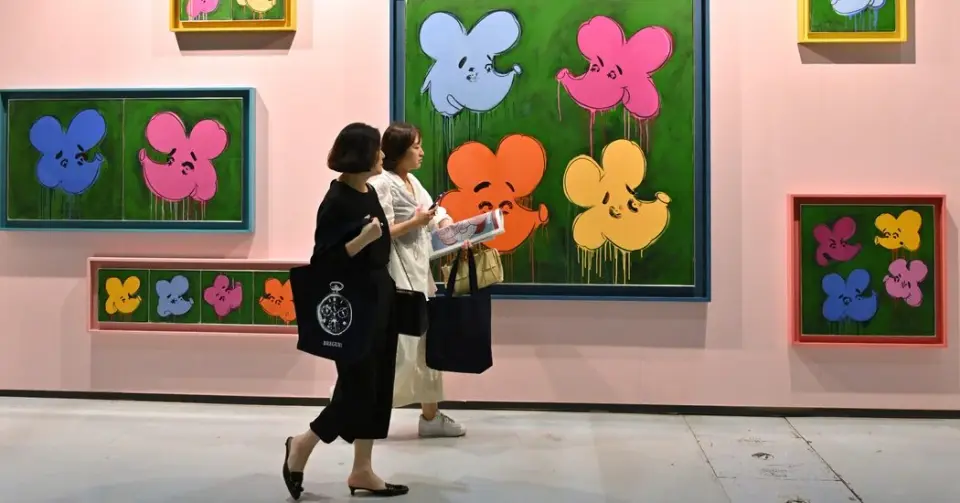
Seoul’s annual art week is evolving into a month-long cultural phenomenon, driven by the concurrent Frieze and KIAF fairs. While these events anchor the schedule at the Coex convention center, their influence now extends to dozens of citywide museums and galleries. Industry observers note that South Korea’s art scene is shifting from a niche export product to a standalone global force, fueled by cross-industry collaborations with K-pop, film, and technology sectors.
Key points
- Frieze Seoul and KIAF Seoul open to the public this week, with Frieze hosting over 130 galleries from 30 countries and KIAF featuring approximately 175 primarily Korean galleries.
- Last year, the twin fairs drew a combined 152,000 visitors, with Frieze attracting 70,000 and KIAF 82,000, signaling strong international and domestic interest.
- The fairs’ impact now extends beyond the Coex center, with numerous openings and events occurring in neighborhoods like Buam-dong and Seongbuk-dong, as well as institutions outside Seoul.
- Seoul’s art ecosystem is increasingly interconnected with other creative industries, including entertainment, fashion, and technology, creating a 'domino effect' that boosts global recognition of Korean fine art.
- Local engagement remains critical, with institutions like the Leeum Museum, MMCA, and Art Sonje Center providing deep cultural context that complements the international fair circuit.
Background
South Korea has been actively diversifying its cultural exports beyond K-pop and film, with President Lee Jae-myung recently emphasizing diplomatic and cultural engagement. While recent news has focused on defense and North Korean relations, the country’s soft power strategy includes strengthening its position in the global art market. The expansion of art infrastructure in Seoul aligns with broader efforts to position the nation as a hub for innovation and cultural exchange, distinct from its geopolitical tensions.
How outlets are covering it
The New York Times emphasizes the logistical expansion of the fairs, noting how events are spilling out of the Coex center into a citywide 'art month' with must-see shows in various neighborhoods. Artnet News focuses on the depth of Seoul’s institutional offerings, highlighting ten essential museums that provide a counterpoint to the fair circuit, suggesting that the city’s cultural value lies in its permanent collections and architectural landmarks. Observer.com frames the event within a broader economic and cultural shift, arguing that South Korea’s fine art scene is maturing into a standalone phenomenon rather than a byproduct of pop culture, driven by cross-industry collaborations and a move away from purely export-oriented identities. While the NYT and Artnet focus on the immediate event and venue logistics, Observer provides a macro-analysis of the sector’s evolving global status.
Why it matters
The growth of Seoul’s art week signals a shift in South Korea’s cultural diplomacy, moving from a focus on pop culture to a more nuanced, high-value art market. This expansion not only boosts tourism and economic activity but also enhances the country’s soft power by showcasing a sophisticated, interconnected creative ecosystem. For global collectors and institutions, Seoul is becoming a primary destination for contemporary art, reflecting a broader trend of Asian markets gaining influence in the global art world.
What to watch
Expect increased international participation in Frieze and KIAF, with more galleries from non-Asian countries joining the Seoul circuit. The success of this year’s fairs may lead to further expansion of art infrastructure in Seoul and other Korean cities, as well as deeper collaborations between Korean artists and global institutions. The 'art month' model may become a permanent fixture, with more events and exhibitions scheduled in the weeks surrounding the fairs to maximize visitor engagement and economic impact.
- Is Seoul’s Art Week Turning Into South Korea’s Art Month? The New York Times
- South Korea Beckons! Here Are 10 Essential Art Museums in Seoul Artnet News
- Ghenie Sold for 1.74 Billion Won, Gormley for 1.38 Billion... KIAF and Frieze Seoul Heat Up on Opening Day 아시아경제
- As South Korea’s Creative Industries Converge, Fine Art Is Riding the Wave observer.com
- 6 highlights to look forward to at Frieze Seoul 2026 Hashtag Legend Hong Kong
Want the full story? Read the original reporting
Read on The New York Times