
Yayoi Kusama, Polka-Dot Pioneer and Immersive Art Icon, Dies at 97
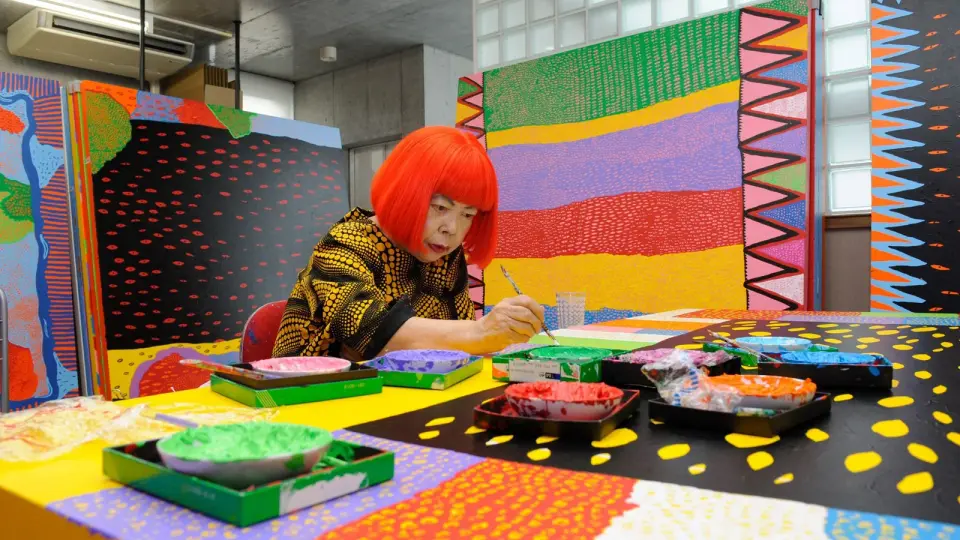
Japanese avant-garde artist Yayoi Kusama has died at age 97 in Tokyo from multiple organ failure. Born in 1929, she was a defining figure in 20th-century art, known for her polka-dot motifs, Infinity Mirror Rooms, and collaborations with luxury brands. Despite decades of relative obscurity and residence in a psychiatric hospital, she achieved global fame in the 2010s, reshaping museum attendance and social media engagement through immersive installations. Her death marks the end of an era for experiential art, with tributes pouring in from institutions like David Zwirner and Louis Vuitton.
Key points
- Kusama died on August 14, 2026, in Tokyo at age 97 due to multiple organ failure, according to her gallery David Zwirner.
- She continued painting until shortly before her death, maintaining her creative practice despite living in a psychiatric hospital since 1977.
- Her Infinity Mirror Rooms became a global phenomenon in the 2010s, driving record museum attendance and pioneering the 'experiential art' trend on social media.
- Louis Vuitton paid tribute to her, recalling two major collaborations (2012 and 2023) that integrated her polka-dot aesthetic into fashion and retail spaces.
- Kusama’s career spanned minimalism, pop art, and performance, with her work influencing how audiences engage with art in the digital age.
Background
Kusama’s death follows a long career marked by early obscurity in the US art scene and a self-imposed withdrawal to a Tokyo psychiatric hospital in 1977. Our archive notes that her global resurgence began in the late 1990s, culminating in record-breaking museum crowds in the 2010s. She was previously recognized by TIME Magazine as one of the 100 Most Influential People in 2016 and named the world’s most popular artist in 2014 based on museum attendance.
How outlets are covering it
David Zwirner, her gallery, emphasized her relentless dedication to art, stating she 'continued to paint until her final days' and never set aside her brush. CNN focused on the cultural impact of her Infinity Mirror Rooms, noting how they reshaped museum engagement and social media behavior, though some critics questioned the intellectual depth of the selfie-driven phenomenon. WWD highlighted her commercial legacy, particularly her collaborations with Louis Vuitton, which brought her work to a broader audience and generated significant cultural buzz. While all sources agree on her significance, they differ in emphasis: Zwirner on her artistic persistence, CNN on her cultural disruption, and WWD on her commercial influence.
Why it matters
Kusama’s death marks the end of a pivotal era in contemporary art, where immersive, participatory installations became central to museum strategy and public engagement. Her work bridged fine art and commercial culture, influencing how institutions attract audiences and how brands collaborate with artists. Her legacy continues through permanent installations and ongoing exhibitions, ensuring her impact on art and culture persists.
What to watch
Museums and institutions are expected to hold retrospectives and tributes to Kusama, with upcoming shows at the Stedelijk Museum in Amsterdam and other global venues. Her permanent installations, such as 'Infinite Accumulation' in London, will remain as lasting monuments to her work. The art world will likely continue to grapple with the legacy of 'experiential art' and the role of social media in shaping public engagement with art.
Want the full story? Read the original reporting
Read on Dezeen