
Yayoi Kusama, the 'outsider' artist who defined a generation, dies at 97
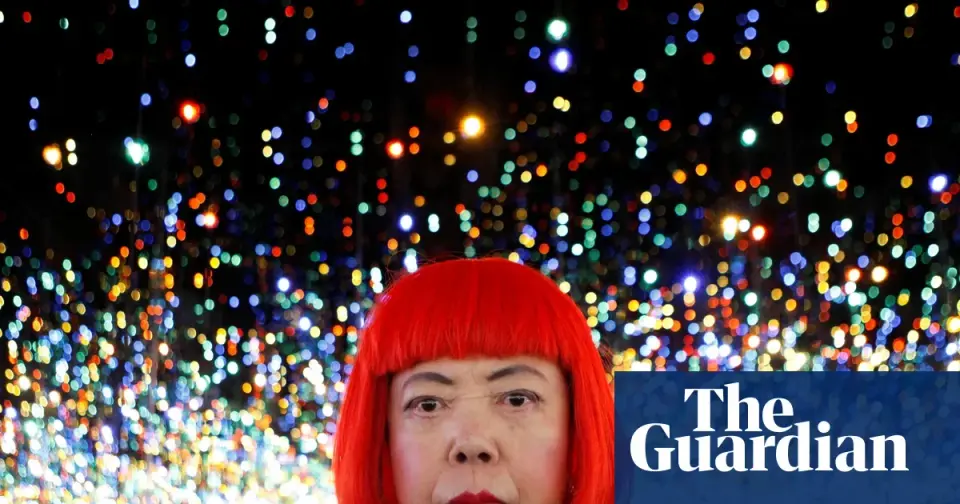
Yayoi Kusama, the Japanese avant-garde artist known for polka dots, pumpkins, and immersive mirror installations, has died at age 97. She passed away in a Tokyo hospital on August 14, having lived in a psychiatric facility since 1977 while continuing to paint daily. Though she faced decades of obscurity and mental health struggles, she eventually became the world's most commercially successful living artist, with works fetching millions at auction and drawing massive crowds to global exhibitions.
Key points
- Kusama died on August 14 in a Tokyo hospital; her studio confirmed she continued painting until her final days.
- She was born in 1929 in Matsumoto, Japan, and moved to New York in 1957, where she pioneered 'infinity net' paintings and soft sculptures.
- Her 1966 Venice Biennale piece, 'Narcissus Garden,' featured 1,500 mirrored spheres sold for $2 each, causing a scandal.
- She voluntarily entered a Tokyo psychiatric hospital in 1977, living there permanently while working in a nearby studio.
- Her work achieved record auction prices, including a $10.5 million sale in 2022, and she became a global superstar in the 2010s.
Background
Kusama’s career spanned over seven decades, beginning with early exhibitions in Japan in 1950. She moved to the United States in 1957, becoming a central figure in the post-war art scene alongside Donald Judd and Andy Warhol. After returning to Japan in 1973, she entered a psychiatric hospital in 1977, where she remained until her death. Her later career saw a massive resurgence, with major retrospectives at the Tate Modern (2012), the Hirshhorn Museum (2017), and the Museum of Modern Art (1998).
How outlets are covering it
The Guardian emphasizes Kusama’s status as an 'outsider' who was often ignored by the art establishment despite pioneering many themes later adopted by male peers. CNN highlights her commercial success and the contrast between her early obscurity and later fame, noting her $190.5 million in auction sales in 2023 alone. U.S. News & World Report focuses on her candid discussions of mental health and hallucinations, which directly influenced her art. The Conversation notes the massive public interest, citing 570,537 ticketed visitors for her 2024-25 exhibition in Melbourne, and highlights her impact on multiple art movements. All sources agree on her death date and age, but differ in emphasis: The Guardian focuses on her artistic legacy, CNN on her commercial value, U.S. News on her personal struggles, and The Conversation on her cultural impact.
Why it matters
Kusama’s death marks the end of an era for contemporary art. Her work, which blended personal trauma with universal themes of infinity and self-obliteration, reshaped how art is experienced and consumed. Her commercial success and global popularity challenged traditional art world hierarchies, proving that an artist could achieve massive success outside the traditional establishment. Her legacy continues to influence fashion, film, and performance art, and her works remain among the most valuable and sought-after in the contemporary art market.
What to watch
The art world is expected to continue honoring Kusama’s legacy through new exhibitions and retrospectives. Her works will likely remain highly valuable at auction, and her influence on contemporary art and design will persist. The Yayoi Kusama Museum in Tokyo will continue to showcase her work, and her impact on global art culture will be felt for years to come.
- Yayoi Kusama, Japanese artist who became a global superstar, dies aged 97 The Guardian
- Japanese artist Yayoi Kusama dies at 97 CNN
- Yayoi Kusama, Pop Artist Who Expanded and Endured, Dies at 97 The New York Times
- Japanese Artist Yayoi Kusama Dies at 97, Kyodo Says U.S. News & World Report
- ‘The only method I have found that relieved my illness is to keep creating art’: remembering Yayoi Kusama The Conversation
Want the full story? Read the original reporting
Read on The Guardian