
Mona Chalabi’s New Book Traces How Income Shapes Identity Across the American Class Spectrum
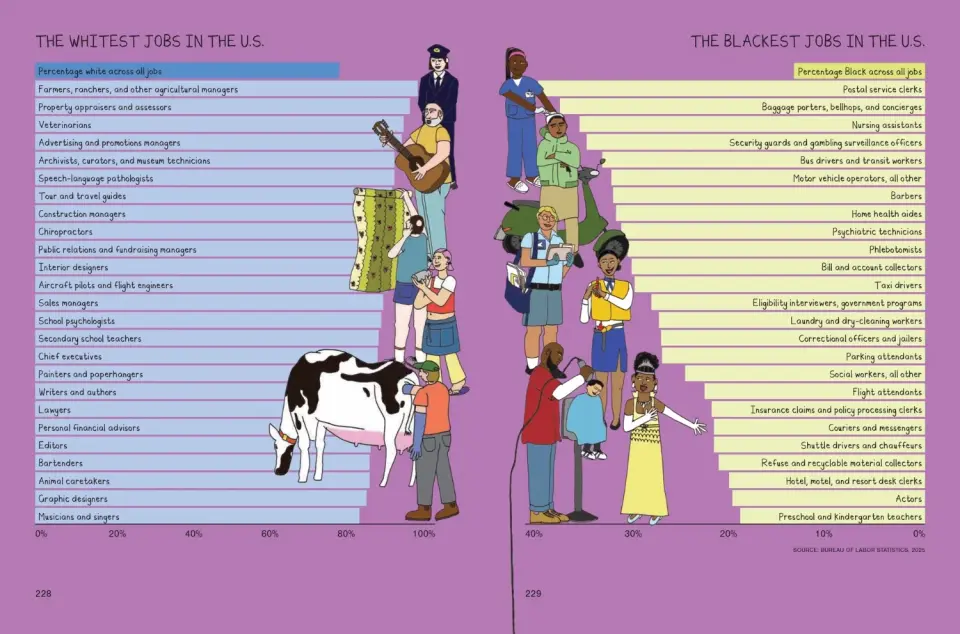
Pulitzer Prize-winning data journalist and illustrator Mona Chalabi has released 'Ten Lives: How What We Have Shapes Who We Are,' a new book examining wealth inequality in the United States. The work follows ten individuals with varying income levels, from the bottom 10% to the top 10%, over a five-year period. Chalabi documents how financial status influences personal choices, identities, and insecurities, while also analyzing systemic factors like taxes and inheritances that trap people in specific economic tiers. The book also incorporates Chalabi’s personal experience with her mother’s medical bills, which highlighted the fragility of financial safety. The publication is available in the US today.
Key points
- Mona Chalabi’s new book, 'Ten Lives: How What We Have Shapes Who We Are,' explores wealth inequality in America.
- The book follows ten people with different incomes, ranging from the bottom 10% to the top 10%, over five years.
- Chalabi documents how wealth shapes feelings, choices, identities, and insecurities for these individuals.
- The author researched data on taxes, groceries, and inheritances to understand systems that keep people stuck.
- Chalabi’s own financial fears emerged when her mother’s sudden illness and medical bills threatened her financial safety.
- The book questions how much money is needed to live a 'good' life or protect loved ones in an emergency.
Background
This release follows recent public debates on economic inequality, including United Airlines CEO Scott Kirby’s advocacy for a national wealth tax and near-total inheritance levies in late 2026. Kirby’s proposals, which faced conservative backlash, highlighted growing scrutiny of wealth distribution and the effectiveness of state-level taxes. Chalabi’s book adds a personal, longitudinal perspective to these broader policy discussions by focusing on individual experiences across the income spectrum.
Why it matters
Chalabi’s book provides a nuanced, data-driven look at how wealth impacts personal identity and security, challenging the notion that class is a secondary factor in intersectional identities. By combining long-term individual tracking with systemic analysis, the book offers insights into the real-world consequences of economic inequality, moving beyond abstract policy debates to highlight the human impact of financial structures. It also underscores the vulnerability of even those in the middle class, as evidenced by Chalabi’s own experience with medical bills.
What to watch
The book is available for purchase in the US today, and Chalabi’s recent interview with It’s Nice That may generate further public discussion on wealth inequality. The book’s release could influence ongoing conversations about economic policy, including debates on wealth taxes and inheritance levies, by providing a personal, data-backed perspective on the effects of income disparity.
Want the full story? Read the original reporting
Read on Kottke.org