
Annie Dillard, Pioneer of Mystical Nonfiction, Dies at 81
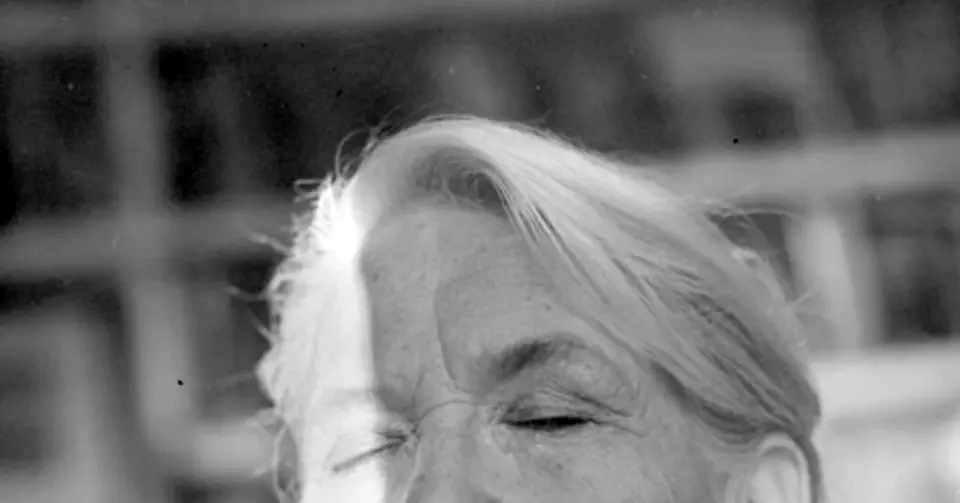
Annie Dillard, the acclaimed American writer known for blending poetic intensity with theological inquiry, has died at age 81. Her 1974 work 'Pilgrim at Tinker Creek' won the Pulitzer Prize and established her as a major voice in nature writing. While some critics praised her lyrical style, others criticized her perceived social detachment. Dillard’s legacy includes a deep engagement with Hasidic philosophy and a commitment to rigorous, immersive writing.
Key points
- Annie Dillard died on September 15, 2026, at her home in South Wellfleet, Massachusetts, at the age of 81.
- Her 1974 book 'Pilgrim at Tinker Creek' won the 1975 Pulitzer Prize for General Nonfiction and is often compared to the work of Henry David Thoreau.
- Dillard received the 2014 National Humanities Medal, presented by President Barack Obama in 2015.
- She was born Meta Ann Doak in 1945 in Pittsburgh, Pennsylvania, and later attended Hollins College in Virginia.
- Her writing process involved reading poetry aloud to achieve sonic density, influencing her distinctive prose style.
Background
Annie Dillard’s death was announced in mid-September 2026, prompting widespread tributes from literary circles. Previous coverage highlighted her influence on writers who viewed her work as a model for rigorous, immersive observation. Her earlier memoir 'An American Childhood' (1987) detailed her upbringing in Pittsburgh’s Point Breeze neighborhood, while her later works explored faith and nature through a lens that blended Christian and Jewish spiritual traditions.
How outlets are covering it
The New York Times framed Dillard’s death as a loss of a transcendent voice, emphasizing her refusal to accept biographical facts over direct 'contact' with reality. The Pittsburgh Post-Gazette provided a detailed biographical account, highlighting her roots in Pittsburgh and her academic achievements at Hollins College. The Conversation, an academic outlet, analyzed her work through the lens of poetry, arguing that her prose owed much to lyrical forms and that critics often misunderstood her hermetic style as social disengagement rather than a poetic feature. The Forward focused on her spiritual influences, noting her deep admiration for Hasidic thinkers like Martin Buber and Abraham Joshua Heschel, and her self-identification as a 'Christian Hasid.'
Why it matters
Dillard’s death marks the end of an era for American creative nonfiction, a genre she helped define by merging scientific observation with spiritual meditation. Her work challenged traditional boundaries between poetry and prose, influencing generations of writers to prioritize intensity and attention over conventional narrative structure. Her engagement with diverse spiritual traditions, including Hasidism, expanded the vocabulary of American nature writing and offered a unique perspective on faith and existence.
What to watch
Literary institutions and universities are expected to continue honoring Dillard’s legacy through readings and academic studies of her work. Her estate, managed by literary executor Maggie Nelson, will likely oversee the publication of any remaining unpublished works or essays. Readers and scholars may revisit her major works, including 'Pilgrim at Tinker Creek' and 'For the Time Being,' to analyze their enduring impact on modern literature.
- Annie Dillard Will Live on Forever The New York Times
- Annie Dillard, Pittsburgh-born Pulitzer Prize-winning author, dies at 81 Pittsburgh Post-Gazette
- Annie Dillard, Pulitzer Prize-winning novelist, dies at 81 NPR
- Annie Dillard brought poetry into prose, pioneering a mystical form of creative nonfiction that critics both admired and misunderstood The Conversation
- The Jewish soul and Hasidic inspirations of Annie Dillard The Forward
Want the full story? Read the original reporting
Read on The New York Times