
Burning Man Co-Founder Criticizes Festival for Becoming Exclusive and Commercialized
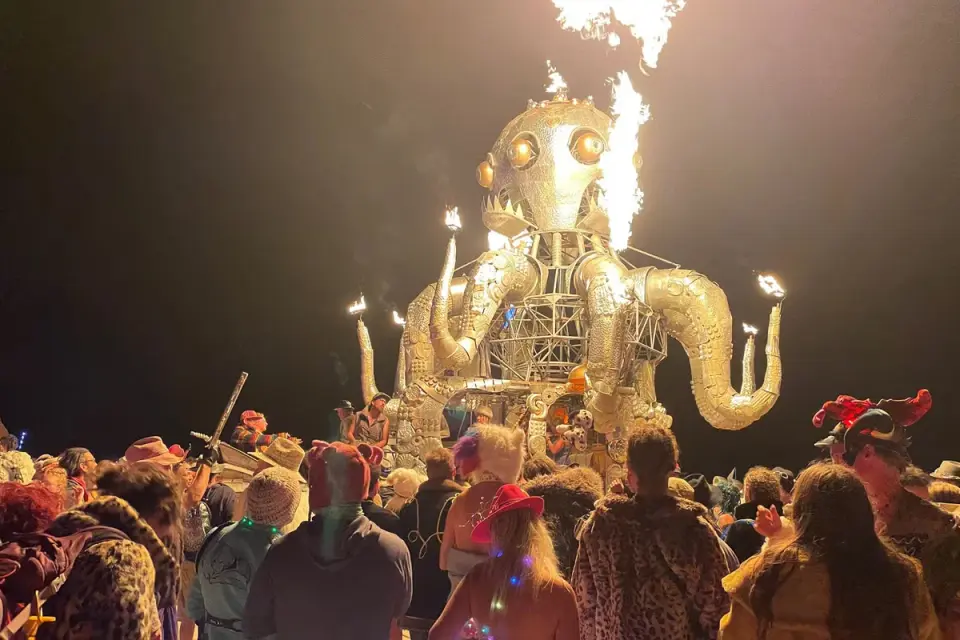
Erik Davis, co-founder of Burning Man, has publicly criticized the current state of the festival, arguing that it has lost its original spirit and transformed into an exclusive event for the wealthy. He described the modern iteration as 'Disneyland for the well-heeled,' highlighting a shift from radical self-expression to commercialized spectacle. This critique comes as the festival continues to draw massive crowds and face logistical challenges in the Nevada desert.
Key points
- Erik Davis, a co-founder of Burning Man, stated that the festival has lost its soul.
- Davis characterized the current event as 'Disneyland for the well-heeled,' emphasizing its appeal to ultra-wealthy attendees.
- The criticism highlights a perceived shift from the festival's original ethos of radical self-expression and communal effort to a more commercialized and exclusive experience.
- The festival recently hosted approximately 70,000 attendees in Black Rock City, Nevada, despite concerns over heat, smoke, and wildfire risks.
- Organizers and participants continue to manage logistical challenges, including self-sufficiency requirements for camps and environmental hazards in the desert.
Background
Burning Man has faced increasing scrutiny regarding its environmental impact and accessibility. Recent events in the Black Rock Desert were marked by extreme heat, wildfire smoke, and logistical challenges, with approximately 70,000 attendees expected. The festival's growth has raised questions about its original principles of radical self-reliance and communal participation, as critics argue that rising costs and exclusivity have alienated many from the event's core values.
Why it matters
The critique from a co-founder underscores broader concerns about the commercialization of cultural events and the erosion of their original ideals. As Burning Man becomes more expensive and exclusive, it risks losing its identity as a space for radical self-expression and communal effort, instead becoming a symbol of wealth and privilege. This shift may impact the festival's long-term sustainability and its ability to attract diverse participants.
What to watch
The festival organizers may need to address concerns about exclusivity and commercialization to preserve the event's original ethos. Future iterations of Burning Man could involve efforts to make the event more accessible and inclusive, while also managing environmental and logistical challenges in the Nevada desert. The response from the community and attendees will be crucial in determining the festival's future direction.
Want the full story? Read the original reporting
Read on The Independent