
David Treuer links modern U.S. violence to an unbroken frontier legacy in new book
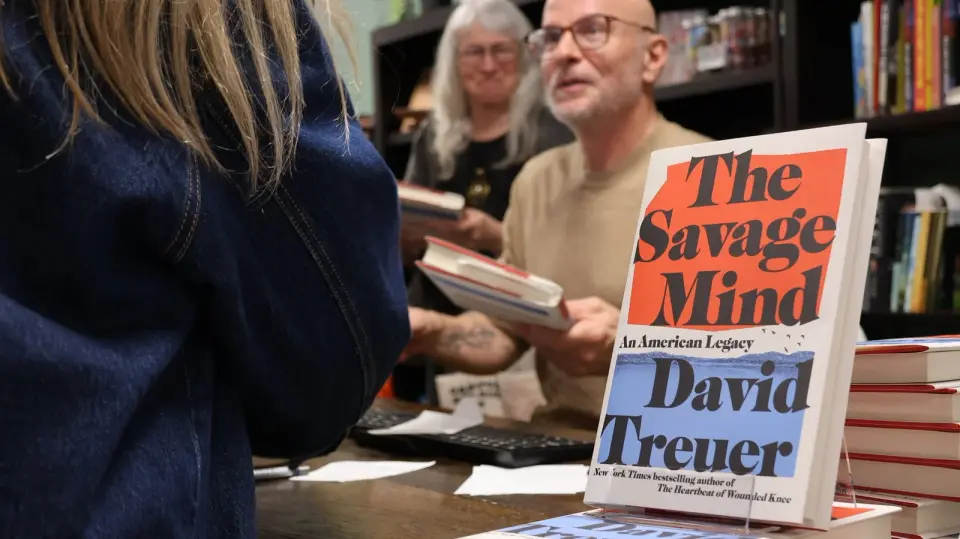
Ojibwe author David Treuer argues that the violence of America’s frontier past has not ended but continues to shape modern society. His new book, 'The Savage Mind: An American Legacy,' traces this continuity from the 1890s to current events, including police killings and mass shootings. Treuer contends that the frontier mindset expanded overseas through imperialism and inward into American culture, creating a persistent 'savage mind.'
Key points
- Treuer’s eighth book, 'The Savage Mind: An American Legacy,' was inspired by the 2015 San Bernardino shooting and the 2014 killing of Tamir Rice in Cleveland.
- The author rejects the historical narrative that the frontier ended in 1890, arguing instead that it expanded overseas through U.S. imperial policies in Cuba, Puerto Rico, Hawaii, and the Philippines.
- Treuer describes the frontier as breaking into two directions: one overseas via imperialism, and another inward into American culture, manifesting in public rituals of violence like school shootings.
- The book connects the deaths of Black individuals, including Philando Castile, Ahmaud Arbery, and George Floyd, to this ongoing frontier violence, which Treuer calls America’s original sin.
- Treuer’s mother, the first Native American woman to serve as a judge in the U.S., viewed the country as a threat, while his father, an Austrian Jewish Holocaust survivor, saw it as a refuge, illustrating what Treuer calls America’s schizophrenia.
Background
Treuer previously gained national acclaim with his 2019 book 'The Heartbeat of Wounded Knee,' which challenged the idea that Native American life ended in 1890. That work was a New York Times bestseller and a National Book Award finalist. His new book continues this theme by redefining the timeline of American violence, moving beyond traditional historical markers to include contemporary events and global imperial actions.
Why it matters
Treuer’s argument reframes current social unrest and violence not as isolated incidents but as symptoms of a deep, historical structural issue. By linking modern tragedies to the legacy of colonization and imperialism, the book offers a new lens for understanding ongoing tensions in American society and its global influence.
What to watch
Treuer is scheduled to discuss the book with chef Sean Sherman at Wóyute Thipi in Minneapolis on November 23. He has stated he will return to fiction writing after this nonfiction project, describing the book as the hardest he has written.
Want the full story? Read the original reporting
Read on MPR News