
Peter Max, the Pop Art Pioneer Who Visualized the 1960s, Dies at 88
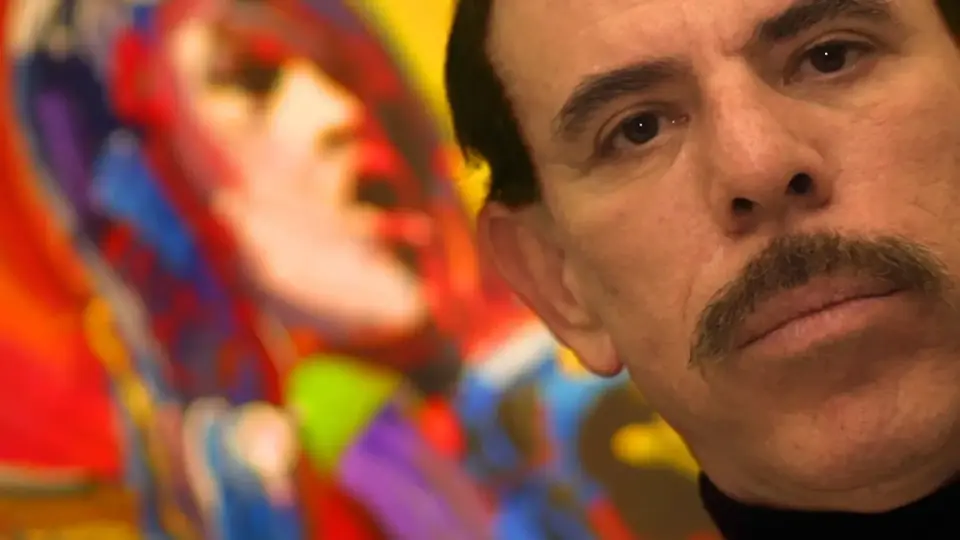
Peter Max, the German-American artist whose vibrant, psychedelic imagery defined the 1960s counterculture, has died at age 88. Known for transforming peace-and-love aesthetics into a massive commercial empire, Max passed away in a Manhattan hospital after a prolonged battle with Alzheimer's disease. His work, which ranged from iconic posters to border signage, remains a defining visual marker of the era's optimism.
Key points
- Peter Max died on Monday at a Manhattan hospital at the age of 88, following a long struggle with Alzheimer's disease, according to his spokesperson Michael Pagnotta.
- Born Peter Max Finkelstein in Berlin in 1937, he fled Nazi persecution as an infant and eventually settled in Brooklyn in 1953, later training at the Art Students League of New York.
- Max is best known for his 'Be In' poster, which helped inspire the Summer of Love, and his 'Cosmic Jumper' character, which appeared on a 1974 postage stamp.
- In the 1970s, the federal government commissioned Max to design 'Welcome to the U.S.' signs for border crossings, a project revived by President Jimmy Carter after initial official hesitation.
- Max's art was licensed for a wide array of consumer goods, including scarves, watches, and bath towels, making his style ubiquitous in American homes and public spaces.
Background
Our earlier coverage noted that Max's career was marked by both massive commercial success and significant controversy. While he became a cultural powerhouse who redesigned sets for The Tonight Show and licensed his work to over 70 companies, he also faced criticism for commercializing the counterculture. Previous reports highlighted a 1997 tax-fraud case and recent legal disputes involving his daughter Libra and a court-appointed guardian, who accused the guardian of isolating Max from family.
How outlets are covering it
Rolling Stone emphasizes Max's role in capturing the 'post-war optimism' and spiritual mystery of the era, noting his belief in making art accessible to the masses. The New York Times frames his success as a 'franchising' of the 1960s, highlighting how his benign peace-and-love message was scaled into an industrial commercial empire that permeated everyday life. AP News provides a more concise overview, focusing on his status as an iconic psychedelic pop artist and the confirmation of his death by family members. While all sources agree on the cause of death and his cultural impact, the New York Times places greater weight on the commercial ubiquity of his brand, whereas Rolling Stone focuses more on his artistic vision and influence on the hippie movement.
Why it matters
Max's death marks the end of an era in American visual culture. His ability to translate the complex, turbulent emotions of the 1960s into accessible, vibrant imagery helped shape the aesthetic of the counterculture. His legacy persists in the way pop art is often associated with commercial success and mass appeal, a duality that defined his career and continues to influence contemporary design and branding.
What to watch
There are no immediate next steps reported regarding the estate or future exhibitions, though the recent legal dispute with his court-appointed guardian may continue to be resolved in court. His work remains widely available through licensing and archival collections.
- Peter Max, Psychedelic Pop Art Icon of the 1960s, Dead at 88 rollingstone.com
- Peter Max Franchised the Cosmic ’60s Into Commercial Success, Without the Museum The New York Times
- The psychedelic pop artist Peter Max has died at 88, his son says AP News
- Peter Max, known for groovy art that came to symbolize the 60s, dies at 88 reuters.com
- Peter Max, Whose Psychedelic Paintings Defined the 1960s, Dies at 88 Artnet News
Want the full story? Read the original reporting
Read on rollingstone.com