
Photographer documents the vanished interiors of Chicago's historic Johnson Publishing Company tower
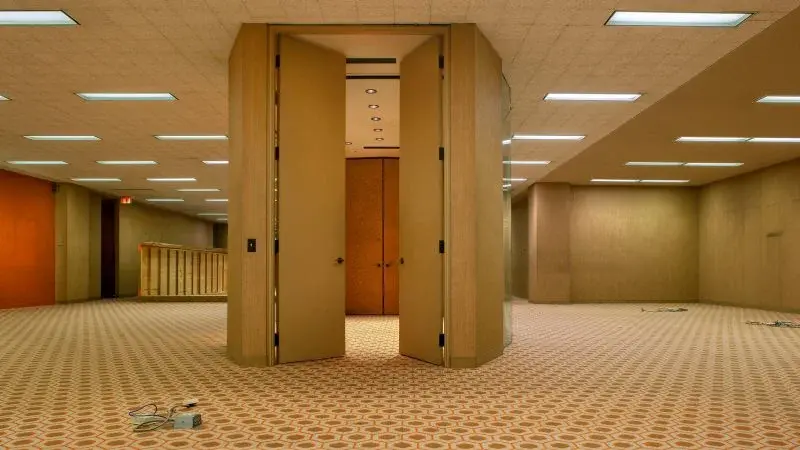
Chicago photographer Barbara Karant spent four years documenting the empty, unrenovated interiors of the former Johnson Publishing Company headquarters at 820 S. Michigan Avenue. The 11-story tower, designed by Black architect John Moutoussamy and opened in 1972, served as the home for Ebony and Jet magazines for four decades. After the company sold its titles in the 2010s and declared bankruptcy, the building sat vacant until its recent redevelopment into residential units. Karant’s new book, '820 Ebony/Jet,' preserves the vibrant, mid-century modernist design through photography, capturing the residual energy of a cultural landmark that once hosted figures like Barack Obama and Prince.
Key points
- The Johnson Publishing Company occupied an 11-story tower at 820 S. Michigan Avenue from 1972 until 2012, publishing Ebony and Jet magazines.
- The building’s interiors, designed by Arthur Elrod and William Raiser, featured bold colors, patterns, and original furnishings that remained unchanged after the company vacated.
- Photographer Barbara Karant visited the empty building approximately 40 times between 2013 and 2017 to document its preserved state before redevelopment.
- The company sold its iconic titles to a venture capitalist firm in the 2010s, leading to bankruptcy and the eventual sale of the building to Columbia College Chicago.
- The building has since been converted into residential units, with only the exterior facade and rooftop sign remaining as landmarks.
- Karant’s new book, '820 Ebony/Jet,' combines her photographs with archival images and essays to preserve the legacy of the cultural powerhouse.
Background
The Johnson Publishing Company, founded by John H. Johnson, was a major media entity in the 20th century, known for publishing Ebony and Jet magazines. The company’s headquarters in Chicago was a significant landmark for Black culture, hosting numerous celebrities and public figures. The building’s design and interior were celebrated for their vibrant, mid-century modernist aesthetic. The company faced financial difficulties in the 2010s, leading to the sale of its titles and eventual bankruptcy. The building’s legacy has been preserved through various artistic and archival efforts, including projects by Theaster Gates and Lorna Simspson.
Why it matters
The story highlights the preservation of cultural heritage through photography and archival efforts, emphasizing the importance of documenting physical spaces that hold historical significance. It underscores the impact of the Johnson Publishing Company on Black culture and media, and the challenges faced in preserving such landmarks amidst urban redevelopment. The project serves as a testament to the enduring legacy of Black creativity and resilience in the face of economic and social changes.
What to watch
The book '820 Ebony/Jet' is available for purchase, offering a visual and textual record of the Johnson Publishing Company’s legacy. The building’s redevelopment into residential units marks the end of its physical presence as a cultural landmark, but its history continues to be explored through artistic and archival projects. Theaster Gates’ ongoing work with the Johnson Publishing Company archives ensures that the company’s cultural impact remains accessible to the public.
Want the full story? Read the original reporting
Read on CNN