
Annie Dillard, Pioneer of Nature Writing and Pulitzer Winner, Dies at 81
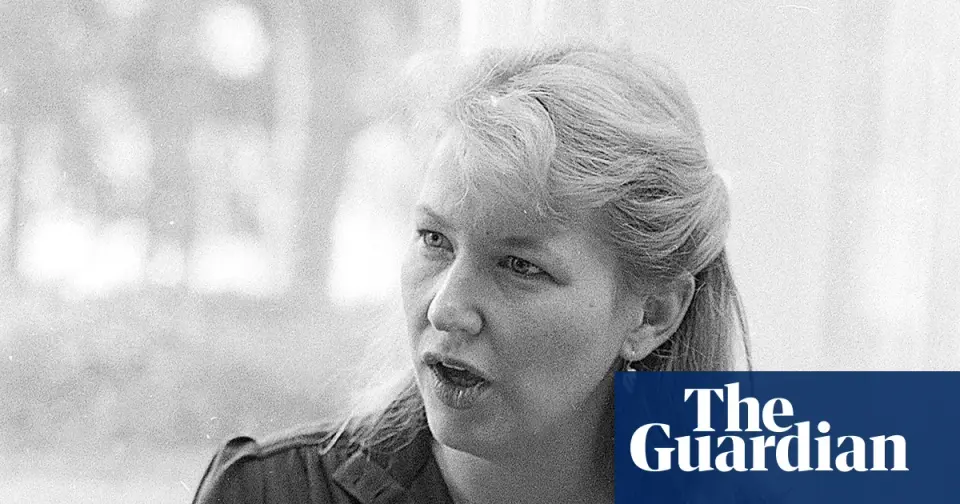
Annie Dillard, the acclaimed author of the Pulitzer Prize-winning 'Pilgrim at Tinker Creek,' has died at age 81 in South Wellfleet, Massachusetts. Her 1974 work, which explored the natural world in Virginia, established her as a leading figure in nonfiction and wilderness writing. Known for her diverse output, including novels, poetry, and essays, Dillard rejected the 'nature writer' label, preferring to view her work as theological inquiry. Her death was confirmed by her literary editor, Maggie Nelson.
Key points
- Annie Dillard died at age 81 at her home in South Wellfleet, Massachusetts, on Tuesday.
- Her literary editor, Maggie Nelson, confirmed the death to the New York Times.
- Her 1974 book 'Pilgrim at Tinker Creek' won the 1975 Pulitzer Prize for general nonfiction.
- Dillard was born in 1945 in Pittsburgh and published her debut novel, 'The Living,' in 1992.
- She was married three times, most recently to Robert D. Richardson, who died in 2020.
- She had one daughter, Cody Rose, born in 1984.
Background
Dillard’s death was first reported on September 16, 2026, as noted in our archive. Her 1974 book 'Pilgrim at Tinker Creek' was a critical and financial success, earning her the 1975 Pulitzer Prize and a place on Modern Library’s 100 best nonfiction books list in 1998. She was often compared to Henry David Thoreau, the subject of her master’s thesis, but rejected the 'nature writer' label, identifying instead as a theologian. Her 1982 essay 'Total Eclipse' was selected by Joyce Carol Oates as one of the 20th century’s 100 best essays. She lived in Washington state, splitting time between Bellingham and the Waldron and Lummi islands, after retreating from the fame following her early success.
How outlets are covering it
The Guardian emphasizes Dillard’s broad literary range, including poetry, journalism, and two novels, and highlights her rejection of the 'nature writer' label in favor of a theological perspective. The Atlantic focuses on her spiritual approach to nature, describing her work as a form of prayer and noting her status as one of the first women to succeed in the male-dominated genre of wilderness writing. The Atlantic also cites her early anxiety about being taken seriously as a 'Virginia housewife.' Both sources agree on her core achievements and Thoreau comparisons but differ in emphasis: The Guardian highlights her diverse output, while The Atlantic focuses on her spiritual and gendered context in literature.
Why it matters
Dillard’s death marks the end of an era for American nonfiction and nature writing. Her work, particularly 'Pilgrim at Tinker Creek,' redefined the genre by blending rigorous observation with spiritual and philosophical inquiry. Her insistence that writing is work, not talent, and her ability to capture the astonishment of the natural world influenced generations of writers. Her rejection of narrow labels and her diverse output across genres demonstrate the power of a singular, awe-driven voice in literature.
What to watch
The literary world will likely see increased tributes and retrospectives on Dillard’s work, particularly her essays and 'Pilgrim at Tinker Creek.' Her archives, including personal writings and correspondence at Yale, may become more accessible for scholarly study. Publishers may reissue her works, and her influence on contemporary nature writing and nonfiction may be reassessed in light of her legacy.
- Annie Dillard, Pulitzer prize-winning author of nonfiction and nature essays, dies aged 81 The Guardian
- Annie Dillard, Meditative Author of ‘Pilgrim at Tinker Creek,’ Dies at 81 The New York Times
- Annie Dillard, Pittsburgh-born Pulitzer Prize-winning author, dies at 81 Pittsburgh Post-Gazette
- What Nature’s Silence Said to Annie Dillard The Atlantic
- The Pilgrimage of Annie Dillard Sojourners
Want the full story? Read the original reporting
Read on The Guardian