
VisionQuest Concludes MCU’s WandaVision Arc with Identity Crisis and AI Family
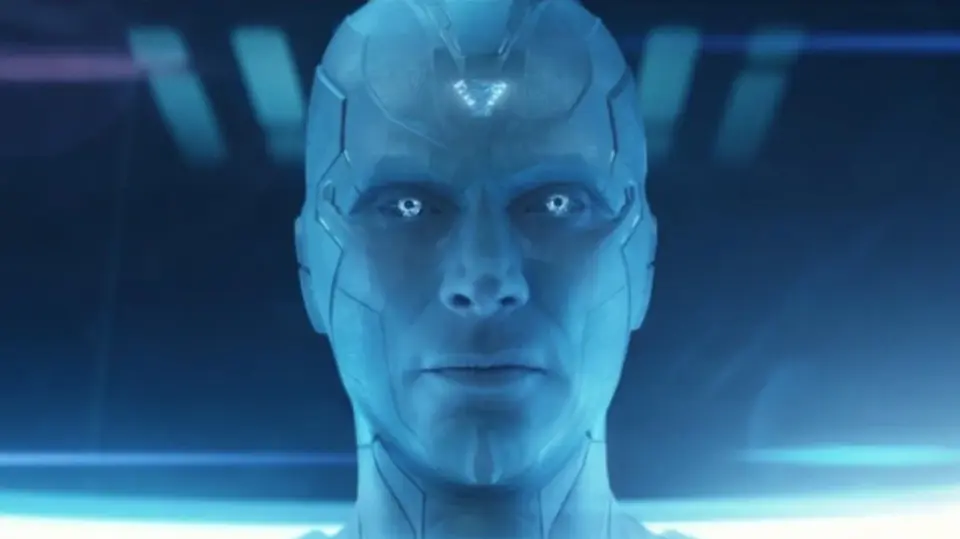
VisionQuest, an eight-episode Disney+ series premiering October 14, 2026, concludes the WandaVision narrative arc. Created by Terry Matalas, the show follows Paul Bettany’s Vision as he navigates identity and fatherhood within a virtual Mindspace populated by human avatars of AI systems, including James Spader’s Ultron. While praised for strong performances and visual design, critics note it suffers from excessive exposition and emotional flatness, marking the end of Marvel’s current TV era.
Key points
- The series serves as the final chapter of the WandaVision trilogy, following the 2021 miniseries and 2024’s Agatha All Along.
- Vision, resurrected by S.W.O.R.D., inhabits a Victorian-style Mindspace populated by human avatars of J.A.R.V.I.S., F.R.I.D.A.Y., E.D.I.T.H., DUM-E, U, and Ultron.
- New characters include bounty hunter Paladin (Todd Stashwick) and android Jocasta (T’Nia Miller), while returning characters include Thomas Shepherd (Ruaridh Mollica), the reincarnated son of Wanda and Vision.
- The show explores themes of family, identity, and the relationship between Vision and his creator, Ultron, with James Spader reprising his role from Avengers: Age of Ultron.
- Critics praise the chemistry between Bettany and Spader and the visual design of the Mindspace but criticize the series for excessive exposition and emotional flatness.
Background
VisionQuest arrives five years after WandaVision and 17 MCU TV shows later, during a transitional phase for Marvel Television. The studio has recently canceled or ended several live-action series, including Wonder Man and Daredevil: Born Again, as it reworks its approach to TV. The series is part of the Multiverse Saga, which will conclude with Avengers: Doomsday in December 2026.
How outlets are covering it
TVLine emphasizes the return of key MCU characters and the complexity of Vision’s AI family, highlighting the show’s connection to previous films and series. The Ringer, however, criticizes the series for being a by-product of a bygone MCU era, noting that its release five years after WandaVision has diluted its impact. The Ringer praises the performances and visual design but argues that the show’s overreliance on convoluted backstory and emotional storytelling fails to connect with audiences. Both sources agree that VisionQuest serves as a fitting end to an uneven era of MCU TV, but they differ on its overall quality and relevance.
Why it matters
VisionQuest marks the conclusion of the WandaVision narrative arc and the end of Marvel’s current TV era. The series highlights the studio’s struggles to recapture the success of WandaVision and the impact of its decision to prioritize one-off miniseries over interconnected stories. As Marvel gears up for the final stretch of the Multiverse Saga, VisionQuest offers a farewell to an era of MCU TV that never found the right vision, setting the stage for future projects like Zodiac and the Mutant Saga.
What to watch
The remaining six episodes of VisionQuest will air weekly on Disney+, with the finale scheduled for November 10, 2026. The series will likely explore the resolution of Vision’s identity crisis and his relationship with Thomas Shepherd, as well as the fate of Ultron and the AI avatars. The show’s conclusion will set the stage for the final stretch of the Multiverse Saga, including Avengers: Doomsday in December 2026, and potentially influence future projects like Zodiac and the Mutant Saga.
- VisionQuest: All The New And Returning Marvel Characters, Explained TVLine
- Paul Bettany says Marvel transformed his life after he was told his career was over Reuters
- Marvel Television’s VisionQuest: Paul Bettany and James Spader on Vision’s Journey of Self-Discovery D23
- ‘VisionQuest’ explores themes of love and loss, though it’s more intellectual than emotional Los Angeles Times
- ‘VisionQuest’ Is a By-Product of a Bygone MCU Era The Ringer
Want the full story? Read the original reporting
Read on TVLine