
Nathan Fielder’s Secret Holmes Documentary Breaks Box Office Records and Sparks Oscar Hopes
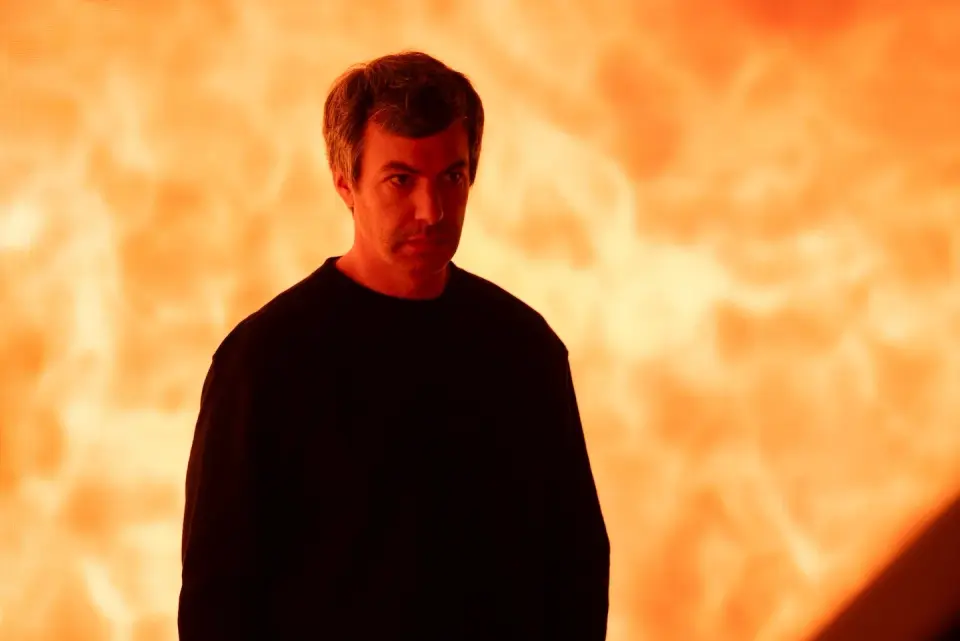
Nathan Fielder’s documentary 'You Can See Everything,' chronicling Elizabeth Holmes’s final days before prison, has become a cultural phenomenon. The film, which was kept secret for three years, debuted at the Telluride Film Festival and has since dominated box office numbers and social media discourse. It is now being considered for multiple Academy Awards, including a potential historic Best Picture nomination.
Key points
- The film was developed in secret for three years, with only a few dozen people aware of its existence before its surprise debut at the Telluride Film Festival in September 2026.
- Fielder and co-director Lance Oppenheim filmed Holmes and her partner Billy Evans in their San Diego home during the 34 days before Holmes reported to prison for fraud.
- The documentary blends vérité footage with staged reenactments, including a scene where Amanda Seyfried portrays Holmes, raising questions about authenticity and truth.
- A24, the distributor, allowed Fielder to cancel the project at any time without consequence, reflecting confidence in his vision.
- The film is tracking to become the highest-grossing non-fiction film ever, with strong box office performance driven by intense public curiosity and debate.
Background
Nathan Fielder is a Canadian comedian and director known for his work in exploring the boundaries of truth and performance, as seen in 'Nathan for You' and 'The Rehearsal.' His previous projects often involved elaborate set constructions and psychological explorations of human interaction. The current documentary continues this theme but applies it to a real-world figure, Elizabeth Holmes, the founder of Theranos, who was convicted of fraud. The film’s release follows a period of intense speculation and meme culture surrounding its secrecy, with Fielder’s publicist managing access to the project with extreme caution.
How outlets are covering it
The Washington Post emphasizes the film’s cultural impact and box office success, noting how it dominated group chats and dinner table conversations. WIRED highlights the secrecy and Fielder’s meticulous, almost obsessive approach to the project, describing the film as a 'singularly astonishing' work that challenges traditional documentary formats. IndieWire draws parallels between 'You Can See Everything' and Fielder’s HBO series 'The Rehearsal,' suggesting the film is a natural evolution of his previous work in exploring the blurring of reality and performance. CBC focuses on the Canadian connection, noting that a significant portion of the film’s crew, including Fielder, co-director Lance Oppenheim, and key collaborators, are Canadian, and highlights the film’s potential for Oscar recognition, including a historic Best Picture nomination for a documentary.
Why it matters
The success of 'You Can See Everything' challenges traditional boundaries of documentary filmmaking and raises questions about authenticity, truth, and the role of media in shaping public perception. Its potential Oscar recognition, particularly in the Best Picture category, could mark a historic shift in how documentaries are viewed and valued in the film industry. The film also reignites debates about Elizabeth Holmes’s legacy and the ethics of profit-sharing in documentary filmmaking, as her partner Billy Evans seeks legal counsel over profit demands.
What to watch
The film is expected to continue its box office run and gain momentum for the 2027 Academy Awards. A24 is campaigning for multiple categories, including Best Picture, Best Director, Best Cinematography, Best Costume Design, and Best Editing. The outcome of these nominations will determine whether the film becomes the first documentary to receive a Best Picture nomination. Additionally, the legal dispute involving Billy Evans over profit sharing may have implications for the film’s distribution and future projects.
- If you haven’t seen everything, a guide to Nathan Fielder’s genre-defying work The Washington Post
- Nathan Fielder Tells Us Everything WIRED
- 'You Can See Everything' Is Also Season 3 of 'The Rehearsal' IndieWire
- Loved You Can See Everything? Thank Canada CBC
- Who is Nathan Fielder? A guide to the mad genius behind the hot new Elizabeth Holmes doc Los Angeles Times
Want the full story? Read the original reporting
Read on The Washington Post