
Loktev’s ‘Undesirable Friends’ Links Soviet Refugee Past to Modern Russian Exile
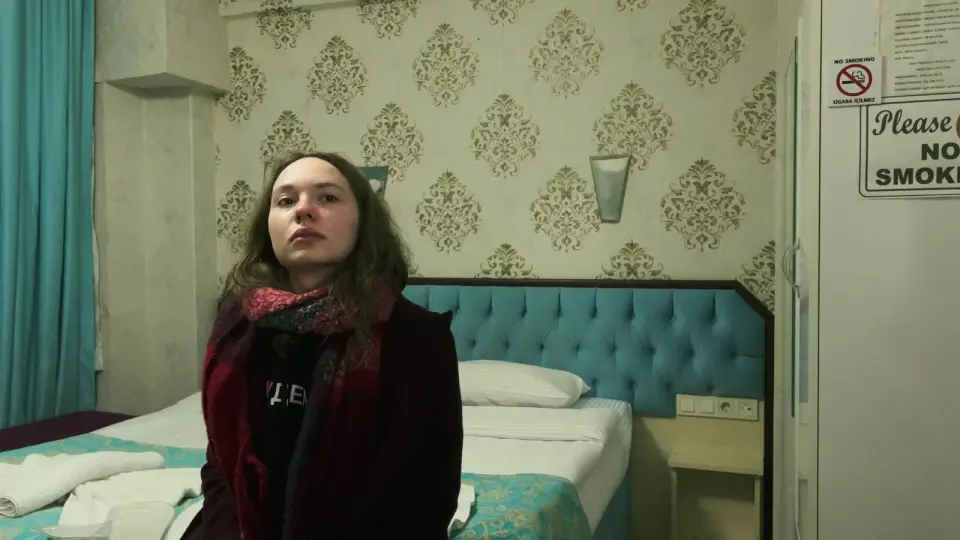
Director Julia Loktev’s documentary series 'My Undesirable Friends' chronicles the forced exile of Russian journalists, drawing parallels between her own 1979 escape from the Soviet Union and the current repression under Vladimir Putin. The films highlight how state-designated 'foreign agents' are compelled to leave the country to avoid imprisonment, continuing their reporting from abroad to counter state media narratives.
Key points
- Loktev left the Soviet Union in 1979 as a child refugee, arriving in Loveland, Colorado with sponsorship from HIAS, after her family was rejected for emigration to Israel.
- Her 2024 film 'My Undesirable Friends: Part I' documented Russian journalists labeled as 'foreign agents,' a status requiring them to display large, legalistic disclaimers on all public content, including social media posts.
- Part II, titled 'Exile,' begins with the raid on TV Rain studios in early 2022 and follows the journalists as they flee to countries without extradition agreements with Russia, such as Istanbul and Amsterdam.
- The exiled reporters continue to provide alternative news to Russians, using VPNs to bypass state media that refers to the war in Ukraine as a 'special military operation.'
- Loktev distinguishes her 1979 immigration, which was permanent due to the Iron Curtain, from the current exile of her subjects, who face prison sentences if they return and may not come back until after Putin’s death.
- The documentary premiered at the Venice Film Festival in September and had its U.S. premiere at the New York Film Festival, featuring a journalist who was poisoned during filming.
Background
This story builds on earlier coverage of Julia Loktev’s work, specifically her 2024 documentary 'My Undesirable Friends: Part I — Last Air in Moscow,' which focused on the initial designation of journalists as foreign agents. The current article details the release of the second part, 'Exile,' which tracks the physical displacement of these individuals following the escalation of the war in Ukraine.
Why it matters
The documentary illustrates the escalating global trend of authoritarian governments silencing critical voices through legal and physical displacement. By connecting historical Jewish refugee experiences with modern Russian journalist exiles, it highlights how state-sanctioned repression forces individuals to choose between imprisonment and exile, impacting the flow of independent information in conflict zones.
What to watch
Loktev and her subjects have indicated that a potential third part of the series would likely only occur after the death of Vladimir Putin. Meanwhile, the exiled journalists continue to report from abroad, relying on workarounds to reach audiences in Russia, while the war in Ukraine shows no signs of stopping.
Want the full story? Read the original reporting
Read on The Forward