
Fjord: Mungiu’s Palme d’Or Winner Sparks Debate on Religious Tolerance and State Overreach
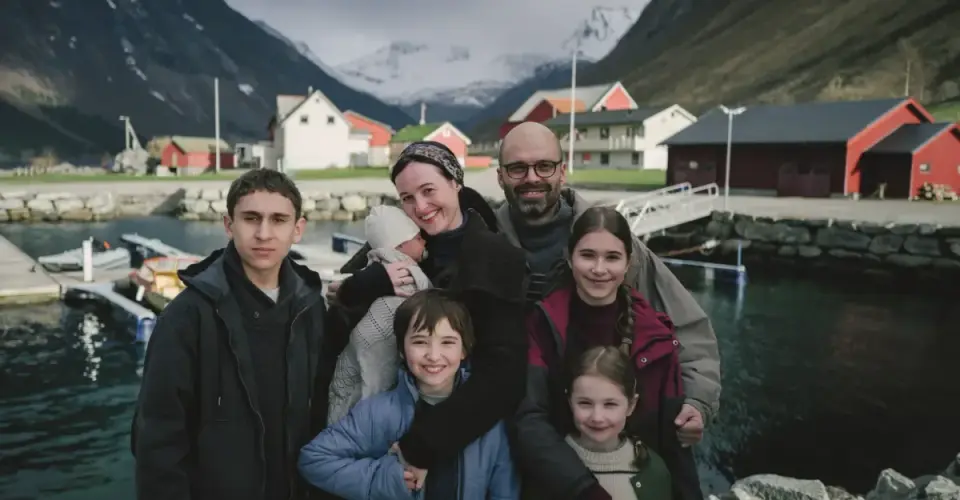
Cristian Mungiu’s sixth feature, Fjord, has won the Palme d’Or and is now a major Oscar contender. The film follows a Romanian-Norwegian Christian family in rural Norway whose children are removed by state authorities after allegations of abuse. Mungiu uses a naturalistic style to explore the clash between secular progressive values and religious conservatism, refusing to offer a clear moral verdict.
Key points
- Fjord won the 2026 Palme d’Or at Cannes, marking Mungiu’s second top prize after 2007’s 4 Months, 3 Weeks, and 2 Days.
- The film is loosely based on the 2015 case of Marius and Ruth Bondariu, a real-life incident involving a Romanian family in Norway.
- Sebastian Stan and Renate Reinsve star as the parents, with Stan’s performance praised for its unglamorous intensity and Reinsve’s for her restrained emotional depth.
- The plot centers on the removal of five children by Norwegian child welfare services, triggering a legal and social crisis for the family.
- Mungiu describes his role as a 'moderator,' presenting conflicting viewpoints without guiding the audience to a specific conclusion.
Background
Mungiu is known for naturalistic dramas that avoid extradiegetic music and close-ups, often exploring ethical dilemmas in Romanian society. His previous works, such as R.M.N. (2022), dealt with xenophobia and social division. Fjord extends this theme to the intersection of religious faith and secular state power, a topic Mungiu researched for eight years after reading news articles about immigrant families in Nordic countries.
How outlets are covering it
The Verge highlights Mungiu’s intent to act as a 'moderator,' presenting both sides of the cultural clash to encourage viewer reflection. Slate emphasizes the film’s potential as an Oscar contender, praising Stan’s and Reinsve’s performances and the film’s rigorous, non-clinical approach to a hot-button issue. The New Yorker criticizes the film for potential 'both-sides-ism' but defends Mungiu’s nuance, noting that the film critiques both the welfare state’s overreach and the family’s rigid beliefs. While all outlets agree on the film’s quality, they differ on whether Mungiu’s ambiguity is a strength or a form of political vacillation.
Why it matters
Fjord addresses the growing polarization between secular progressive societies and religious minorities, a tension that is increasingly relevant in global politics. By focusing on a specific case in Norway, the film raises broader questions about tolerance, child welfare, and the limits of state intervention in private lives. Its success at Cannes and potential Oscar recognition signal a shift in mainstream cinema toward complex, morally ambiguous narratives that challenge viewers to engage with difficult social issues.
What to watch
Fjord has a wide US release scheduled for October 23, 2026. It is expected to be a strong contender for the Academy Awards, particularly for Best Picture, Best Actor, and Best Actress. Mungiu is currently in a promotional tour, engaging with audiences and discussing the film’s themes of integration and empathy.
- The director of Fjord takes the ‘risky position’ of moderator The Verge
- He Won’t Tell You What to Think. Some Viewers Can’t Forgive Him for That. The New York Times
- He Started as Just Another Marvel Hunk, but Now He’s Once Again Revealed Himself to Be a Stunningly Sensitive Actor Slate
- ‘Fjord’ Review: Sebastian Stan in a Drama of Parents Besieged WSJ
- “Fjord” Keeps the Faith The New Yorker
Want the full story? Read the original reporting
Read on The Verge