
Sorkin's 'The Social Reckoning' Fails at Box Office and Critics
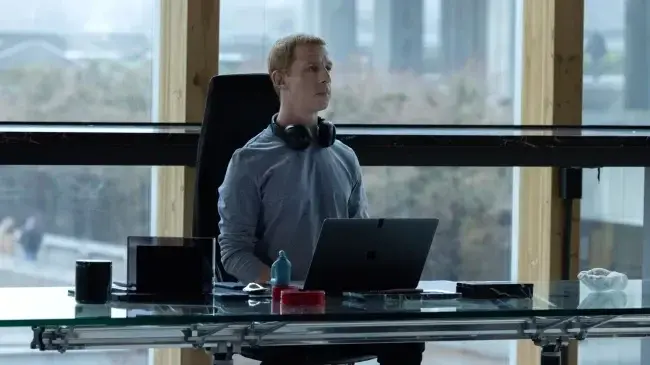
Aaron Sorkin’s 'The Social Reckoning' has failed commercially and critically, opening with just $5.5 million against a $30 million budget. The film, which stars Mikey Madison and Jeremy Allen White, explores the 2021 Facebook whistleblower scandal but lacks the urgency of its 2010 predecessor, 'The Social Network.' Critics and audiences note that the story feels outdated in the age of AI, while the absence of original director David Fincher and star Jesse Eisenberg hurt its marketing appeal.
Key points
- The film earned $5.5 million in its opening weekend, a significant drop from the $22.1 million debut of 'The Social Network.'
- David Fincher declined to direct, and Jesse Eisenberg refused to reprise his role as Mark Zuckerberg, leaving Sorkin to direct and Jeremy Strong to play the tech mogul.
- The story focuses on Frances Haugen’s 2021 whistleblowing and the 'Facebook Files' reporting by Jeff Horwitz, rather than the founding of Facebook.
- Critics argue the film feels anachronistic, as the issues it highlights regarding algorithms and radicalization are now overshadowed by the rise of artificial intelligence.
- Sony kept the budget at $30 million to limit financial losses, but the film still faces a critical and commercial failure.
Background
The 2010 film 'The Social Network' was a critical and commercial success, earning $225 million globally and winning multiple Oscars. It is widely considered one of the greatest films of the 21st century. 'The Social Reckoning' was positioned as a companion piece or sequel, but it struggled to capture the same cultural urgency. Recent archive coverage notes that the film underperformed significantly compared to other releases like 'Other Mommy,' which dominated the box office despite poor reviews.
How outlets are covering it
IndieWire attributes the failure to the absence of David Fincher and Jesse Eisenberg, as well as the film’s focus on algorithms rather than the more pressing AI concerns of 2026. The New York Magazine argues that the film is a 'defeated, reform-minded liberalism' that fails to address the reality that Facebook’s problems were inherent to its design, not just a lack of oversight. Salon.com suggests the film is a 'journalism thriller’s last stand,' highlighting the conflict between slow investigative reporting and the rapid pace of modern tech culture. The Hollywood Reporter notes that while the cast felt pressure from the predecessor's legacy, Sorkin’s insistence on creative freedom for the actors helped mitigate some of that anxiety, though it did not save the film's reception.
Why it matters
The failure of 'The Social Reckoning' highlights the difficulty of adapting recent tech scandals into cinematic narratives when the cultural landscape has shifted rapidly. It underscores the challenge of making films about 'old' tech problems in an era dominated by AI, and it reflects the broader struggle of Hollywood to find relevance in stories that feel dated upon release.
What to watch
The film is expected to continue its decline in theaters, with no clear path to profitability. Sorkin has not ruled out a potential third film in the series, but the current reception makes a sequel unlikely. The film may find a secondary life on streaming platforms, though its critical reception suggests limited audience interest.
- 'The Social Reckoning' Bombs— Why Sorkin's Sequel Failed at Box Office IndieWire
- Aaron Sorkin on ‘The Social Reckoning’ The New York Times
- ‘The Social Reckoning’ Stars Mikey Madison and Jeremy Allen White Discuss the Pressure of Following ‘The Social Network’ The Hollywood Reporter
- The Problem With Facebook Was Facebook New York Magazine
- “The Social Reckoning” is the journalism thriller’s last stand Salon.com
Want the full story? Read the original reporting
Read on IndieWire