
Strict Booking Rules Guard Frank Lloyd Wright Homes Now Open for Overnight Stays
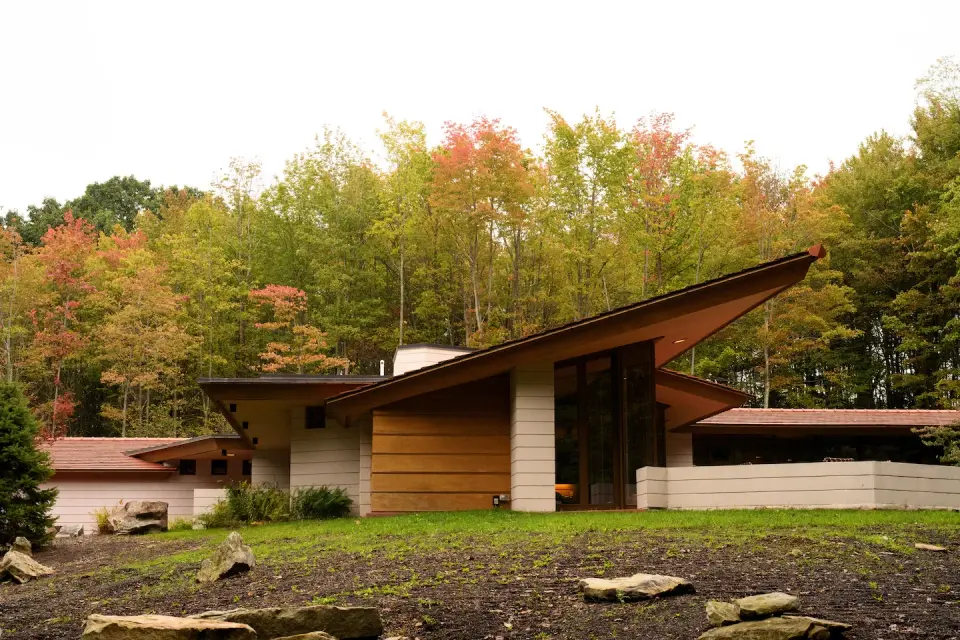
Owners of Frank Lloyd Wright-designed homes are increasingly offering overnight stays to the public, but they impose strict rules to protect the historic structures. For example, guests at a 2,000-square-foot property in Ann Arbor, Michigan, must submit detailed intake forms before booking. This trend highlights the tension between making rare architectural landmarks accessible and preserving their integrity.
Key points
- Guests seeking to stay at the Cox family’s Frank Lloyd Wright home in Ann Arbor, Michigan, must complete a detailed intake form providing personal information and intended use of the property.
- The 2,000-square-foot house is situated on two wooded acres adjacent to the University of Michigan arboretum, emphasizing the need for careful management of the site.
- The Lindholm House, originally built in 1952 in Cloquet, Minnesota, was later relocated to Polymath Park in Acme, Pennsylvania, and is now available for short-term rental.
- Owners face a delicate balance between sharing these rare architectural properties with the public and protecting them as historic landmarks.
- This rental trend occurs amid broader concerns about the preservation of Wright’s legacy, including recent issues with deteriorating structures in Los Angeles and high-value listings in Minneapolis.
Background
Recent reports have highlighted the fragility of Frank Lloyd Wright’s architectural legacy, such as the decay of the 1939 Sturges House in Los Angeles and the $2.5 million listing for a 1951 residence in Minneapolis. These incidents underscore the ongoing challenges in maintaining Wright’s work, making the new availability of overnight stays in his homes a notable development in the preservation and public access of his designs.
Why it matters
The availability of overnight stays in Frank Lloyd Wright homes represents a shift in how historic architectural landmarks are accessed by the public. While it offers unique opportunities for enthusiasts, it also raises questions about the long-term preservation of these structures. The strict rules imposed by owners reflect a growing awareness of the need to balance public interest with the protection of irreplaceable cultural assets.
What to watch
As more Wright homes become available for short-term rental, it will be important to monitor how these arrangements impact the preservation of the properties. Future developments may include the establishment of standardized guidelines for such rentals, as well as increased scrutiny from preservationists and local authorities to ensure that these historic sites are not compromised by public use.
Want the full story? Read the original reporting
Read on The Washington Post