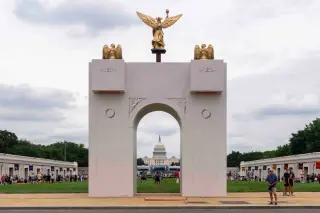
A Washington nonprofit, The Cultural Landscape Foundation, filed a federal lawsuit to stop the Interior Department and the National Park Service from repainting the Lincoln Memorial Reflecting Pool blue without the required historic-preservation reviews, arguing the color undermines the pool’s solemn design; Trump supporters say renovations will beautify the site, and a judge will decide the case.
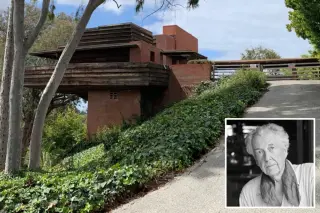
Marilyn Monroe’s Brentwood home, saved from demolition by a 2024 designation as a cultural-historical monument, has sparked a legal battle after the current owners sued for compensation, arguing the designation infringes private-property rights and devalues their investment; a federal judge dismissed the takings claim but allowed an amended complaint, while state-court challenges continue as preservationists warn the house risks neglect with no clear acquisition path.
President Trump unveiled a plan to resurface the Lincoln Memorial Reflecting Pool with an 'American Flag Blue' coating to prevent leaks, claiming it would cost under $2 million and take about two weeks to complete; preservationists warn the blue finish could distort the pool’s solemn reading and bypass federal review, reviving debate over unilateral renovations to Washington and drawing online criticism while echoing past renovation controversies.
A federal judge blocked above-ground construction on the Trump administration’s planned $400 million White House ballroom, allowing only below-ground work and minimal above-ground steps needed to protect national-security facilities; the National Trust for Historic Preservation is suing to halt the project, which includes demolishing the East Wing, following prior injunctions and a circuit-court directive to assess national-security implications.
A U.S. judge temporarily halted construction of the White House ballroom after the National Trust for Historic Preservation sued, ruling that Congress authorization and other required planning steps were not followed. The 14‑day pause gives time for potential appeal. The project, reportedly costing about $400 million and funded privately, prompted demolition of the East Wing; Trump criticized the ruling while supporters say restoration must follow constitutional processes.
Historic preservation groups filed a lawsuit to block proposed Kennedy Center renovations, arguing the plans could threaten the landmark’s historic status and violate preservation norms, highlighting the political and cultural tensions surrounding the center under the Trump administration.
At a Washington, DC hearing, Judge Richard Leon criticized Donald Trump’s plan to convert the White House East Wing into a $400 million ballroom and signaled he may halt the project after a lawsuit by the National Trust for Historic Preservation argues it lacks proper authorization and reviews. White House lawyers contend no outside approval is needed and some funding is private, while federal review bodies have delayed votes pending public input. Leon, who has previously ruled against the preservationists, called the administration’s arguments 'brazen' and said a ruling is expected by the end of March, underscoring ongoing questions about presidential alterations to the historic residence.
A landmarked 1899 mansion at 1000 Ocean Avenue in Ditmas Park, Brooklyn, has fallen into severe disrepair with dozens of city violations; listed for $2.6 million, its restoration could cost $3–5 million and would require Landmarks Commission approvals, leaving its future uncertain and demolition possible only under rare circumstances.
A federal judge pressed Justice Department lawyers to cite the legal authority for the Trump administration’s plan to demolish the White House East Wing and build a $400 million ballroom, as historic-preservation groups sue for oversight. The hearing raises whether Congress must authorize such a project, even as the administration cites funding and Interior Department gifts; design reviews by two federal commissions continue and construction remains planned for spring, with potential appeals to higher courts.
Trump appointees on the Commission on Fine Arts endorsed a major White House ballroom expansion but pressed for in-person 3D scale models of the complex (including the Treasury and Eisenhower Building) to judge its mass and how it fits with the White House’s character. The plan would add about 90,000 square feet in total, with 22,000 for the ballroom, bringing the footprint to roughly 145,000 sq ft after the East Wing demolition. Concerns about scale, symmetry, and the view from the South Lawn persisted along with largely negative online public comments. Historic preservationists are seeking a court injunction to halt construction, and U.S. District Judge Richard Leon said a ruling is expected next month with potential appeals anticipated. If approved, the in-person briefing would accompany renderings already shown to the commission, and a two-story east colonnade may be added to improve cohesion.
A federal judge questioned the Trump administration's claim it can continue the privately financed East Wing ballroom renovation without congressional approval, as the National Trust for Historic Preservation seeks to block the project until proper oversight is followed; the argument centers on whether the president can unilaterally proceed and whether the private funding arrangement qualifies as in-house financing. A ruling is expected in February.
John Mayer and McG purchased the historic Chaplin Studios for $44 million, aiming to preserve its legacy while upgrading its facilities. They emphasize maintaining the studio's unique character and history, including Chaplin-era artifacts, and plan to use it for creative productions and events, blending preservation with modern use. Their goal is to protect a cultural landmark and foster a vibrant creative community in Los Angeles.
The National Trust for Historic Preservation has sued President Trump to halt his White House ballroom project, arguing it bypasses required reviews and congressional approval, and seeking to stop further work until proper procedures are followed. The White House defends the project as within Trump's legal authority, citing historical precedents, but critics highlight concerns over the bypassing of federal laws and public input processes.
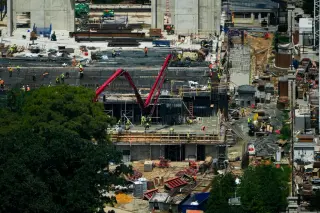
The East Wing of the White House has been demolished to make way for Donald Trump's $300 million gilded ballroom, despite promises to preserve the existing structure and legal challenges from historic preservation groups and local residents. The project, funded by Trump and major tech donors, has faced criticism for bypassing required approvals and altering a historic landmark.
The White House East Wing has been demolished to make way for a new $300 million ballroom, despite concerns from preservationists and pending approvals from relevant agencies, with President Trump funding the project privately.