
Sorkin Warns Meta’s Algorithmic Power Remains a Critical Threat to Democracy
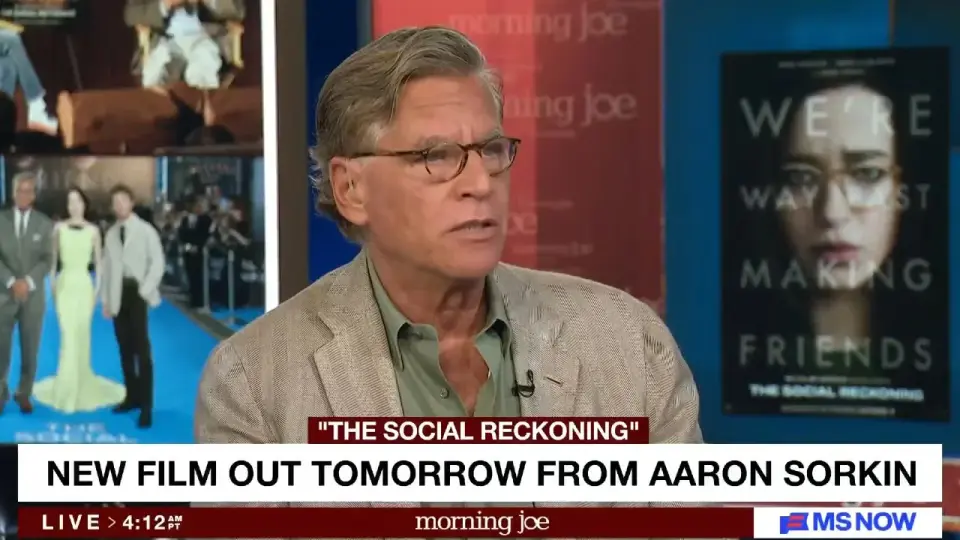
Aaron Sorkin appeared on 'Morning Joe' to argue that Meta’s influence on society remains dangerously unchecked. He stated that the issues highlighted in his new film, 'The Social Reckoning,' are not hypothetical but represent a real, ongoing crisis for democracy. Sorkin emphasized that despite the 2021 Facebook Files leak, fundamental problems with algorithmic manipulation and addictive design persist. He criticized the lack of legislative action, noting that tech oligarchs fund the campaigns of the very politicians who could regulate the industry. The filmmaker described social media addiction as a chemical dependency similar to gambling, where dopamine hits occur during anticipation rather than reward. He concluded that the public should be concerned because the structural tensions between growth and safety within tech giants have not been resolved.
Key points
- Sorkin stated on 'Morning Joe' that everyone should be worried about Meta’s power, calling it a real and unprecedented problem for democracy.
- He noted that Facebook intentionally pushed content likely to cause anger to maximize resharing, knowing this would increase engagement.
- Sorkin argued that the addition of algorithmic news feeds has created fragmented realities for users, replacing shared news consumption.
- He claimed that Mark Zuckerberg prioritized growth over safety, leading to a dangerous imbalance in corporate decision-making.
- The filmmaker compared social media addiction to gambling, explaining that dopamine spikes occur when users check for likes, not when they receive them.
- Sorkin asserted that no significant changes have occurred since the 2021 Facebook Files leak, largely due to a lack of laws and the influence of tech-funded political campaigns.
Background
This interview follows the recent theatrical release of 'The Social Reckoning,' which dramatizes the 2021 Facebook Files scandal involving whistleblower Frances Haugen and journalist Jeff Horwitz. The film, a sequel to 'The Social Network,' has received mixed reviews for its sharp dialogue but criticism for feeling dated and omitting references to Donald Trump. It arrives amid a crowded slate of tech-critical films and highlights Meta’s historical refusal to fact-check political ads. Sorkin’s comments reinforce the film’s central thesis that Meta’s internal knowledge of user harms has not led to sufficient regulatory or structural changes.
Why it matters
Sorkin’s remarks highlight the persistent gap between public awareness of tech harms and legislative action. By linking the lack of regulation to the financial influence of tech oligarchs on political campaigns, he underscores a systemic barrier to addressing algorithmic manipulation. His comparison of social media to gambling provides a concrete framework for understanding the addictive nature of current platform designs, which may influence future public discourse on digital well-being and corporate accountability.
What to watch
Sorkin’s call for new laws suggests that the debate over tech regulation will remain a focal point in upcoming political cycles. The continued release of films like 'The Social Reckoning' indicates sustained cultural interest in holding tech giants accountable for their societal impact. However, without legislative changes, the structural issues Sorkin identified may persist, leaving users exposed to the same algorithmic manipulations that prioritize engagement over safety.
- Aaron Sorkin Tells 'Morning Joe' Everyone Should Be Concerned About Meta's Power: 'This Isn't a Fake Problem' TheWrap
- Why Mark Zuckerberg Is a Mere Supporting Character in the New Facebook Movie WSJ
- THE SOCIAL RECKONING Aaron Sorkin NPR
- “The Social Reckoning” is a fatally earnest sequel to a classic The Economist
- The real reporter behind 'The Social Reckoning' on what Aaron Sorkin’s film gets right — and what it changes Reuters
Want the full story? Read the original reporting
Read on TheWrap