Meta has removed Muse Image, its Instagram-based AI image feature, after widespread backlash over privacy concerns and an auto-referencing mechanism. Meta says the tool missed the mark and is no longer available, while industry groups like CAA and SAG-AFTRA urge guardrails and easy opt-outs.
A National Desk poll asks readers to vote on whether Facebook (Meta) should be held financially liable for youth mental‑health harms linked to social media, reflecting ongoing debates about platform accountability and potential penalties for juveniles’ safety.
Meta shares surged about 6% on Friday and roughly 15% for the week as optimism grows around its AI strategy, following releases of Muse Image and Muse Spark 1.1 and plans for in-house Iris AI chips; investors see potential monetization through ads, subscriptions, and a cloud offering, with capex guidance raised as Meta accelerates its push into AI infrastructure and data centers.
Meta unveiled Muse Image, a feature within Meta AI that lets users generate images using the likenesses of people with public Instagram accounts by tagging them; users aren’t notified when their likeness is used and accounts must opt out to prevent usage. Privacy advocates and groups like Public Citizen, CAA, and SAG-AFTRA criticize the approach and call for affirmative consent or stricter controls, while Meta says protections exist and is evaluating next steps. No policy changes have been announced yet as the discussion continues.
EU regulators preliminarily found Meta’s autoplay, infinite scroll, and highly personalized content addictive and not adequately assessed for risks to users, especially minors, under the Digital Services Act; they urged Meta to disable these features by default, introduce screen-time breaks, and adjust its recommender system, with fines up to 6% of global turnover if it fails to comply; Meta disputes the findings but says it has teen protections and will defend its approach as the investigation continues.
EU regulators have charged Meta with failing to curb 'addictive design' on Facebook and Instagram—such as autoplay and infinite scroll—that may drive excessive teen use, while Meta defends its steps and the Commission weighs reforms under the Digital Services Act, with penalties up to 6% of annual turnover.
Meta’s Muse Image AI can generate pictures by pulling faces from public Instagram posts when users tag profiles in prompts, with source material used by default and without notifying the depicted people. Public accounts can opt out via Settings > Sharing and Reuse; private accounts and users under 18 are excluded. Privacy advocates say the opt-out is buried and unfair, warning about minors being depicted; Meta says guardrails exist and will act on policy-violating content. Muse Image is live in the Meta AI app and Instagram Stories in the US, with plans to expand to Facebook and add video features.
Meta auto-enrolled public Instagram accounts into Muse Image AI for remixing, but you can opt out by turning off 'Allow people to create with and reuse your content' for posts and reels in Instagram's Sharing and reuse settings. Existing remixes won’t be deleted after opt-out, and the move has sparked privacy concerns and backlash, particularly in the EU.
Meta rolled out Muse Spark 1.1, its best-performing model for agentic and coding tasks, with a public developer API after a private preview and pricing designed to attract high usage: $20 in free credits, then $1.25 per million input tokens and $4.25 per million output tokens. The move aims to competing with OpenAI and Anthropic, with initial API access limited to Meta properties while scaling, and Meta says a Muse Spark variant will remain open source even as it develops a more powerful model codenamed Watermelon; Muse Spark’s development follows Muse Image and signals a broader shift from open-source Llama toward paid access to proprietary AI models.
CAA called on Meta to require opt-in consent for using creators’ names, images, likenesses, and works in Muse AI, arguing default opt-out risks artists’ livelihoods; the move comes as Muse Photo/Video rolls out with public Instagram profiles set to opt-out, prompting industry backlash and calls for clearer disclosures, monitoring, and easy removal of unauthorized content.
Meta is reportedly developing prototype “super sensing” smart glasses that could continuously record audio and take photos for Meta AI to query, with raw footage potentially not stored and only metadata uploaded to servers. The approach, described by the Financial Times, would raise privacy concerns amid ongoing scrutiny of facial-recognition features and recording indicators. Meta says privacy is built in, and an update can disable the camera if the privacy light is tampered with, though the LED may stay off during “AI Feature” or “super sensing” use. Executives have signaled glasses could become a day‑long personal assistant, and FT reports detail, though release timelines remain unclear.
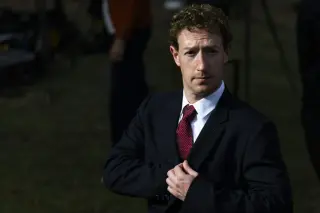
Meta’s Mark Zuckerberg says AI agents aren’t advancing as quickly as hoped amid mass layoffs and a reorganizing effort, with the company leaning on competitors’ models while spending about $145 billion on AI infrastructure; Meta also paused its employee-monitoring program following a data leak, though Zuckerberg remains cautiously optimistic about benefits within three to six months.
Meta says it will crack down on users who disable a key privacy feature on Ray‑Ban Meta smart glasses, a move aimed at preventing covert, AI-assisted recording and addressing safety concerns around wearable devices; the company told NBC News’ Joanna Stern it plans enforcement against those who bypass the privacy indicator on the gadgets.
Meta and other social platforms face a multi-state COPPA lawsuit accusing deceptive data practices. California and three other states seek up to about $1.4 trillion in damages, which Meta calls a “headline-seeking” figure that is “untethered from reality.” The case is part of a broader wave of child-privacy actions, involving about 29 states and potentially heading to trial in August, while Meta’s stock fluctuates as investors weigh AI and hardware investments.
Meta is building its first large Canadian data center—a 1 gigawatt facility in Alberta's Sturgeon County that will cost about $9 billion and take 2–3 years, as part of a broader AI infrastructure push and potential cloud business selling excess capacity; the project will create thousands of construction jobs and involve local energy partners, while drawing scrutiny over environmental impact and energy use amid competition with other hyperscalers.