
HBO’s 2005 'Rome' Was a Budgetary and Narrative Precursor to Modern Prestige TV
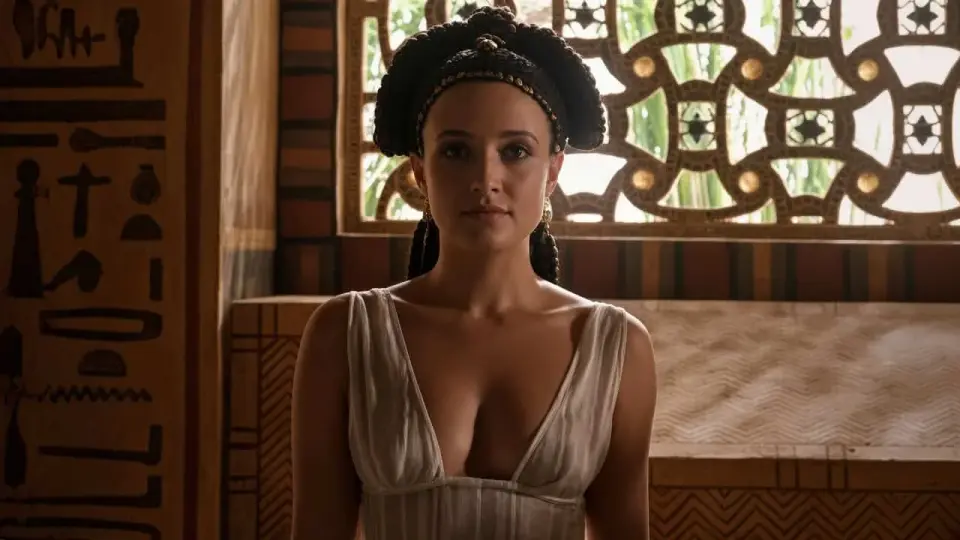
Jonathan Klotz argues that HBO's 2005 series 'Rome' was a decade ahead of its time, serving as a direct precursor to 'Game of Thrones' in its ambitious historical scope and production scale. The show featured a $100 million budget, historically accurate sets, and a complex narrative structure that mirrored the political violence of the Roman Republic. Although it was a critical success, its high cost relative to 2005 television standards led to its cancellation after two seasons. Klotz notes that the series' restrained approach to violence and sex, compared to contemporaries like 'Spartacus', aligns with modern prestige TV trends. The article highlights Ray Stevenson's performance as Titus Pollo as a standout element, noting his consistent presence across all episodes. The series is currently available on HBO Max.
Key points
- The 2005 HBO series 'Rome' had a production budget of $100 million, which was higher than the cost of a mid-level movie at the time.
- The show was a critical success and helped establish HBO's ability to produce prestige content beyond crime dramas like 'The Sopranos' and 'The Wire'.
- Klotz compares 'Rome' to 'Game of Thrones', noting that both use physical violence to mirror political conflict, though 'Rome' is more restrained in its depiction of sex and violence.
- The series was cancelled after two seasons, with Klotz suggesting that a hypothetical Season 5 would have covered the rise of Jesus Christ.
- Ray Stevenson is highlighted for his performance as Titus Pollo, appearing in every episode with consistent high-quality acting.
- The series is currently streaming on HBO Max.
Background
HBO has continued to invest in high-budget historical and fantasy adaptations, as seen in the recent casting announcements for the 'Harry Potter' series, which is set to debut on December 25, 2026. The network's strategy of producing expensive, multi-season prestige content mirrors the approach that initially led to the cancellation of 'Rome' due to its high cost relative to 2005 standards. Modern streaming platforms, such as Netflix, have since normalized budgets of $20 million per episode, making the $100 million total budget for 'Rome' appear modest by today's standards.
Why it matters
The article underscores how production budgets and narrative complexity in television have evolved, with 'Rome' serving as a foundational example of the prestige TV model that later shows like 'Game of Thrones' and 'Stranger Things' would expand upon. It highlights the shift from network television's cost constraints to the current era of high-budget streaming content.
What to watch
No specific future developments are mentioned for 'Rome', but the series remains available on HBO Max. The broader trend of high-budget historical and fantasy adaptations continues, as evidenced by the ongoing production of HBO's 'Harry Potter' series.
Want the full story? Read the original reporting
Read on Giant Freakin Robot