
Eagles' 1974 'On the Border' Used Dan Rowan's Joke to Mock Nixon's Imminent Resignation
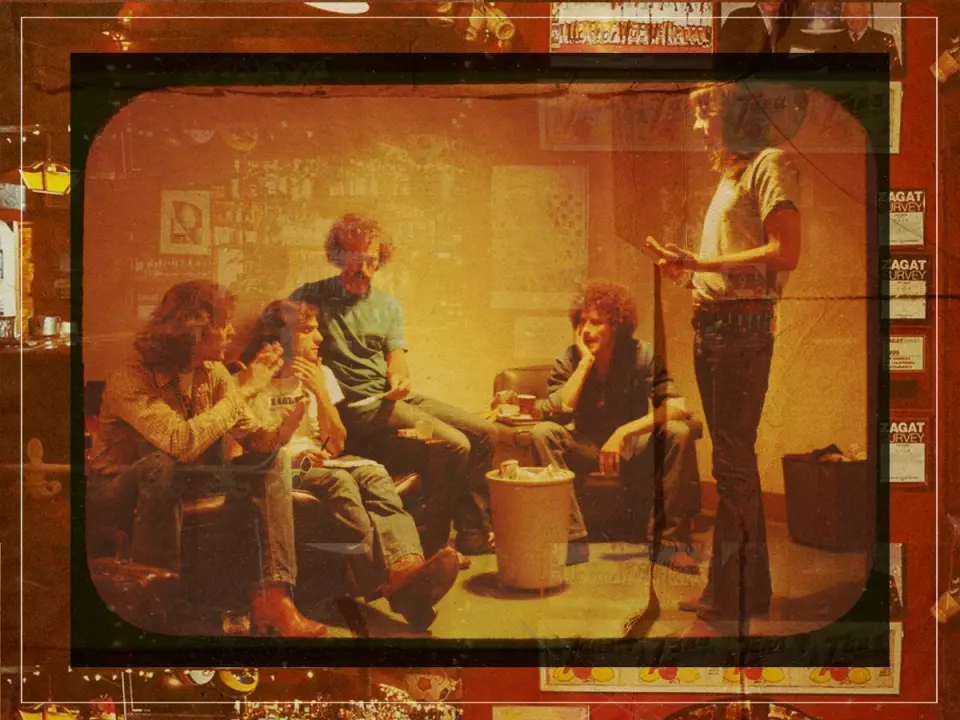
The Eagles addressed the Watergate scandal and President Richard Nixon's impending resignation in their 1974 track 'On the Border.' The song, written by Don Henley, Glenn Frey, and Bernie Leadon, concluded with a whispered reference to Nixon, marking a rare political statement from the band.
Key points
- The Eagles released 'On the Border' as the title track of their third studio album in 1974, directly addressing the Watergate scandal.
- The song was written by Don Henley, Glenn Frey, and Bernie Leadon, though internal tensions led to a final version that differed from Henley's original vision.
- Glenn Frey whispered 'Say goodnight, Dick' at the end of the track, a phrase popularized by comedian Dan Rowan, which served as a 'kiss-off' to Nixon.
- Nixon resigned five months after the album's release, validating the band's timing and political intent.
- Don Henley described the song as a subtle comic response to a corrupt president, countering claims that the band lacked humor or political engagement.
Background
The Eagles emerged from the counterculture movement of the 1960s, a generation known for political activism. While often associated with a laid-back, apolitical image, the band had roots in the Beat Generation and the broader counterculture. Don Henley later recalled the late 1960s as a 'magical time' when music and political awakening intersected. This background explains their willingness to engage with the Watergate scandal, despite their typical sound. The archive contains no relevant background on this specific topic, as the earlier articles cover unrelated subjects such as university appointments, celebrity deaths, NFL rules, and market volatility.
Why it matters
The song demonstrates that the Eagles, often perceived as apolitical, could engage with contemporary political issues when they felt compelled to do so. It highlights the intersection of music and politics in the 1970s, where artists used their platforms to comment on significant events like the Watergate scandal. The song also shows how cultural figures, including comedians like Dan Rowan, influenced the language and tone of political commentary in popular music.
What to watch
No further developments are expected, as the song and its historical context are well-documented. The Eagles' legacy as a band that occasionally engaged with political issues remains a part of their cultural impact.
Want the full story? Read the original reporting
Read on Far Out Magazine