
Waters Slams Hetfield’s Anti-Politics Stance After Sphere Remarks
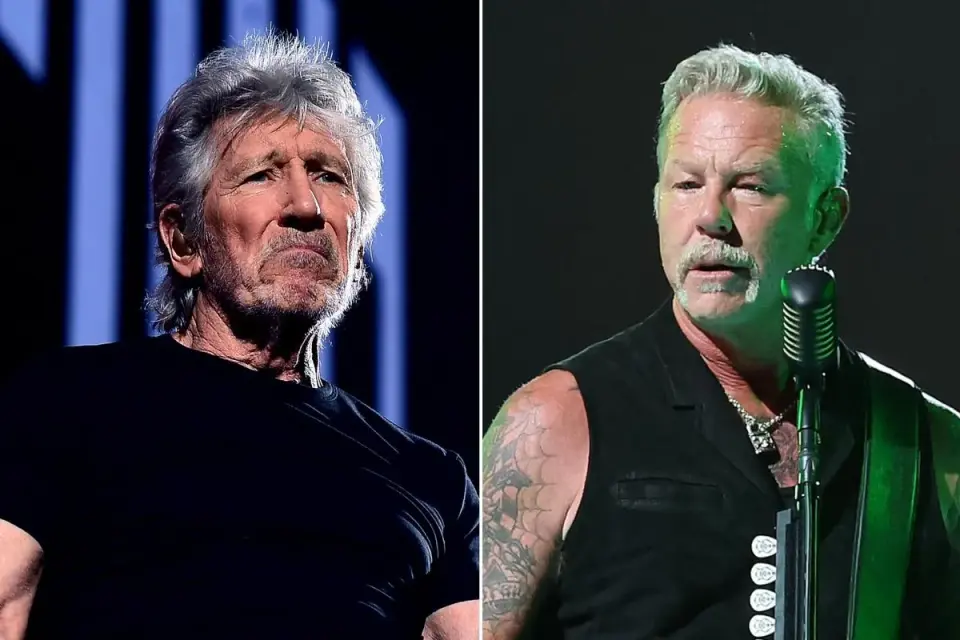
Roger Waters has publicly criticized Metallica frontman James Hetfield for his recent anti-political remarks at the Las Vegas Sphere. Hetfield told fans that the band avoids political agendas to maintain unity, a stance Waters labeled as hypocritical. This clash highlights a broader debate in the music industry regarding the role of political messaging in live performances, particularly following recent controversies involving other artists.
Key points
- James Hetfield stated during Metallica’s Las Vegas Sphere residency that the band is not there to influence fans with political views, focusing instead on 'love, energy and heavy music.'
- Roger Waters responded by calling Hetfield a 'prick' for his apolitical stance, arguing that such neutrality is inconsistent with the band's historical engagement with social issues.
- Hetfield’s comments followed the removal of rapper Macklemore from Ed Sheeran’s tour due to pro-Palestinian statements, a move Hetfield cited as an example of why political agendas alienate audiences.
- Metallica’s 'ReLoad' album recently returned to the Billboard charts, landing at No. 1 on the Top Hard Rock Albums chart, coinciding with the band’s new residency.
- Hetfield has long maintained that politics polarize fans, whereas music connects them, a view he reiterated in a 2016 BBC interview.
Background
This dispute occurs against a backdrop of increasing tension between musicians and political expression. In September 2026, Roger Waters announced a 2027 'Legacy' tour led by his son, Harry Waters, focusing on Pink Floyd’s 1971-1979 era, a period known for Waters’ politically charged lyrics. Meanwhile, the music industry has seen a surge in controversies over political statements at concerts, including the recent fallout involving Ed Sheeran and Macklemore. Hetfield’s stance aligns with his long-held belief that music should transcend political divisions, a position he has defended since the early 2000s.
How outlets are covering it
Fox News and Billboard emphasize Hetfield’s perspective, framing his remarks as a defense of artistic neutrality and a response to the Macklemore-Ed Sheeran controversy. They highlight his argument that political agendas alienate fans and that music should serve as a unifying force. In contrast, Consequence of Sound focuses on Roger Waters’ rebuttal, portraying Hetfield’s stance as hypocritical given Metallica’s history of addressing social issues in their music. Ultimate Classic Rock provides background on Pink Floyd’s evolution, noting Waters’ shift toward political commentary in the late 1970s, which contextualizes his current criticism of Hetfield. The outlets differ in their framing: Fox News and Billboard present Hetfield’s view as a reasonable stance, while Consequence of Sound and Ultimate Classic Rock highlight the tension between artistic neutrality and political engagement.
Why it matters
This clash underscores a growing divide in the music industry over the role of political expression in live performances. As artists face increasing pressure to take stands on social issues, the debate over whether concerts should remain apolitical or serve as platforms for activism is intensifying. Hetfield’s stance may influence how other artists approach political messaging, while Waters’ criticism highlights the expectations of fans who view music as a tool for social change. The outcome of this debate could shape the future of live music and its relationship with political discourse.
What to watch
Metallica is expected to continue its Las Vegas Sphere residency through March 2027, with no immediate changes to their setlist or messaging. Roger Waters’ 'Legacy' tour is scheduled to begin in 2027, where he may further address the political themes of Pink Floyd’s earlier work. The music industry will likely continue to grapple with the balance between artistic neutrality and political engagement, particularly as more artists face backlash for their public statements.
- Roger Waters Rips ‘Prick’ James Hetfield Over Apolitical Stance Ultimate Classic Rock
- Metallica frontman James Hetfield blasts entertainers pushing political agendas at concerts Fox News
- Metallica’s James Hetfield Has a Message for Entertainers Who Bring Their ‘Bullsh–‘ Agenda to the Stage Billboard
- Roger Waters Calls James Hetfield a “Prick” Over Metallica Frontman’s Sphere Speech Consequence of Sound
- "We're all in this together. Can we agree?" Nikki Sixx proclaims Mötley Crüe shows to be politics-free zones Louder
Want the full story? Read the original reporting
Read on Ultimate Classic Rock