
Gordon-Levitt Urges UN to Focus on AI's Erosion of Empathy, Not Extinction
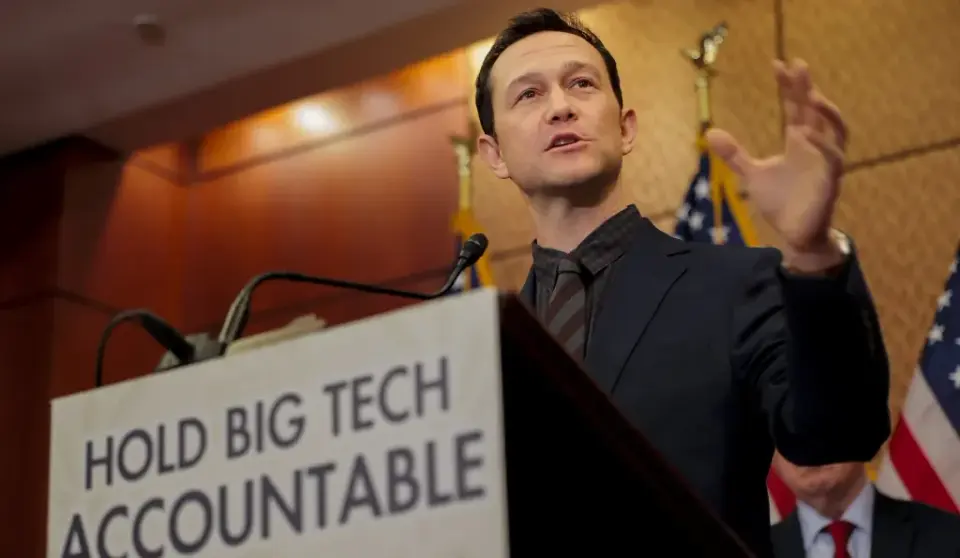
Joseph Gordon-Levitt, the UN’s new global advocate for human-centric digital governance, argues that the primary risks of AI are the decline of democracy and human empathy, rather than existential threats. In a video interview, he warns that models are trained to 'hijack intimacy' and urges the public to focus on the people building the technology.
Key points
- Gordon-Levitt was appointed the UN’s first global advocate for human-centric digital governance in March 2026.
- He argues that AI is fundamentally 'algorithmically recombined, human-produced data' and should be governed by people for people.
- The actor co-founded the Creators Coalition on AI in December 2025 to establish ethical standards for AI use in entertainment.
- Gordon-Levitt was recently named one of Time magazine’s 100 most influential 'innovators, leaders, and thinkers' on AI.
- He acknowledges the challenge of regulating fast-moving Silicon Valley through slow-moving UN frameworks, suggesting a seven-year timeline for international agreements.
Background
This follows earlier warnings from researchers and authors, such as Sherry Turkle, about the psychological harms of AI chatbot intimacy. Gordon-Levitt’s stance aligns with his previous advocacy for creator compensation and his participation in anti-AI campaigns alongside other industry figures like Scarlett Johansson and Cate Blanchett.
How outlets are covering it
While Deadline and The Hollywood Reporter emphasize his role as a UN advocate and his specific warnings about 'hijacking intimacy,' The New York Times frames the interview as a direct response to public questions about AI safety. Variety highlights his long-standing outspokenness on AI, noting his January 2026 support for an anti-AI campaign. All outlets agree on his core message: the threat is not the technology itself, but the corporate interests driving it. However, Deadline notes a critical comment suggesting he is 'compromised' on the topic, while other outlets focus on his credibility as a 'shortcut' for understanding complex AI policy issues.
Why it matters
This highlights a growing shift in AI discourse from existential risks to socio-economic and psychological impacts. Gordon-Levitt’s position underscores the need for human-centric governance in a landscape where tech companies are increasingly shaping economic and social structures without adequate public oversight.
What to watch
Gordon-Levitt is en route to address world leaders at the UN on the impact of AI. The UN is expected to work toward an internationally agreed-upon regulatory framework, though the timeline remains uncertain. The Creators Coalition on AI will continue to push for ethical standards in the entertainment industry.
- Joseph Gordon-Levitt Warns AI Models Are “Being Trained To Hijack Your Intimacy” Deadline
- Opinion | We Had Questions About A.I. Joseph Gordon-Levitt Had Answers. The New York Times
- Joseph Gordon-Levitt Says A.I. Is Being Trained to ‘Hijack Your Intimacy’: ‘We Should Be Concerned’ Variety
- Joseph Gordon-Levitt Says Instead of Being Afraid of AI, “We Should Be Concerned About the People Building AI” The Hollywood Reporter
- Joseph Gordon-Levitt, in his new U.N.-appointed role, addresses AI impact A.V. Club
Want the full story? Read the original reporting
Read on Deadline