
AI 'Reskinning' Steals Performances from Musicians and Comedians
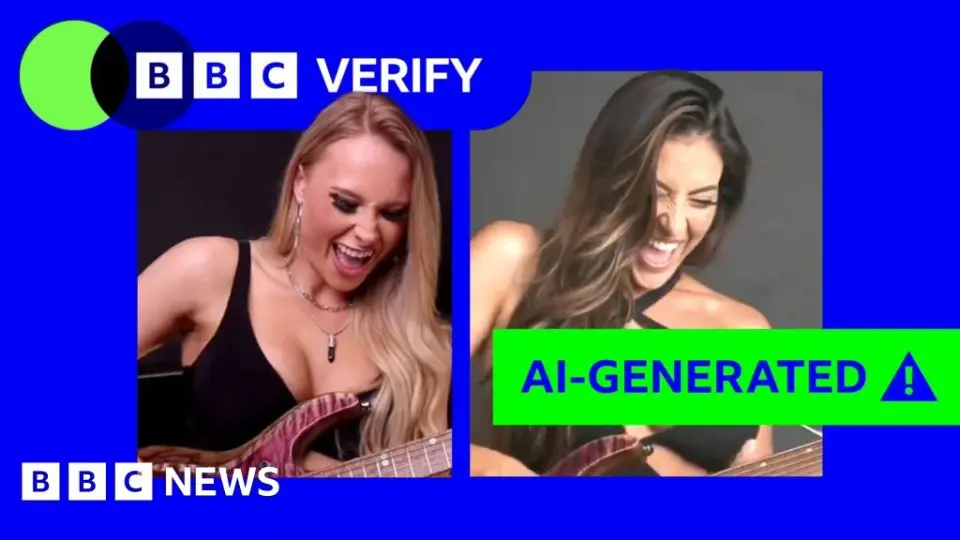
AI tools are enabling 'reskinning,' where creators' videos are copied and replaced with AI-generated avatars to generate views and revenue. This practice is causing financial and reputational harm to musicians and comedians, prompting calls for stronger legal protections.
Key points
- AI 'reskinning' involves copying a creator's performance, background, and movements, then replacing the person with an AI-generated character.
- UK guitarist Sophie Lloyd reports her work was cloned by an account named 'Mila Vasari,' which used her performances to sell adult content on Fanvue.
- Norwegian dancer Kjetil Krogstad found his viral video was reskinned with an AI bunny, which outperformed his original post before being deleted.
- British car creator Grace Roberts noted that AI copies of her videos replicated her exact facial movements and background, altering only her appearance to a conventional standard of attractiveness.
- American comedian Julia Jasunas warns that AI bots stealing jokes are going viral, causing audiences to mistake them for real people and undermining live comedy careers.
- The UK union Equity has called for new laws to protect performers, arguing current copyright legislation is inadequate against AI misuse.
Background
This issue follows broader concerns about AI's impact on creative industries, including previous discussions about how public figures and creators navigate digital legacies and unauthorized uses of their likenesses or work.
How outlets are covering it
BBC Verify highlights the financial exploitation and sexualization of creators' work, noting that AI avatars often conform to conventional ideals of attractiveness to maximize engagement. The 105.7 The Point podcast frames the issue primarily through the lens of stand-up comedy, emphasizing the threat to comedians' livelihoods and the difficulty of distinguishing stolen material from legitimate content. While BBC focuses on the visual and physical cloning of performers, the podcast emphasizes the theft of intellectual property like jokes and timing. Both sources agree that current platform policies are struggling to keep up with the scale of the problem, but BBC provides specific examples of adult content monetization, whereas the podcast focuses on the broader entertainment industry's confusion regarding copyright claims.
Why it matters
The rise of AI reskinning threatens the economic viability of content creators by allowing unauthorized copies to outperform original work. It raises urgent questions about digital identity, copyright enforcement, and the ethical boundaries of AI in creative industries, potentially undermining trust in online media.
What to watch
Meta and Instagram are expected to implement stricter detection tools for AI-generated copies. Legal advocates may push for new legislation to address the inadequacy of current copyright laws in the AI era. Creators may increasingly avoid posting original content online to prevent theft, or demand stricter platform enforcement to protect their intellectual property.
Want the full story? Read the original reporting
Read on BBC