
Italian Director Tinto Brass, Known for 'Caligula' and Erotic Cinema, Dies at 93
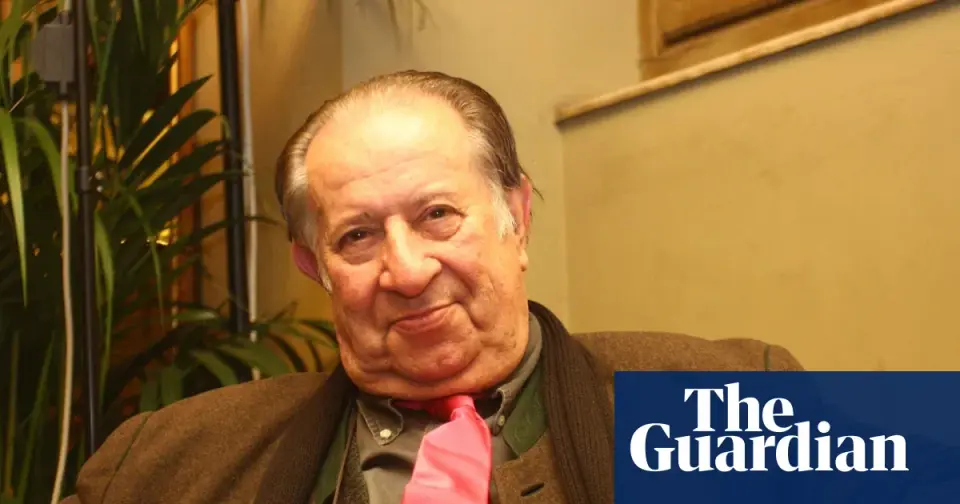
Italian film director Tinto Brass has died in Rome at the age of 93. Announced by his family to Italian press agency Ansa, Brass was a pioneer of Italian erotic cinema, best known internationally for the controversial 1979 film 'Caligula' and the 1976 'Salon Kitty'. His career began in the 1960s with avant-garde and experimental works before shifting to explicit genre films in the 1970s. Brass, born in Milan and raised in Venice, had previously worked as an archivist in Paris and assistant to Roberto Rossellini. He is survived by his wife Caterina Varzi and two children.
Key points
- Tinto Brass died in Rome on Wednesday, November 4, 2026, at age 93; his wife and children announced the news to Ansa.
- Born Giovanni Brass in Milan in 1933, he studied law before moving to Paris to work at the Cinémathèque Française.
- He returned to Italy to assist Roberto Rossellini, making his directorial debut in 1963 with 'In capo al mondo' (retitled 'Chi lavora è perduto').
- In the 1970s, he pivoted to erotic cinema, directing 'Salon Kitty' (1976) and 'Caligula' (1979), the latter starring Malcolm McDowell and Helen Mirren.
- 'Caligula' faced production conflicts; producer Bob Guccione added unsimulated hardcore scenes without Brass’s consent, leading both Brass and screenwriter Gore Vidal to disown the final cut.
- A re-edited version of 'Caligula' without Guccione’s inserts screened at Cannes in 2023, though Brass did not approve it.
Background
Tinto Brass was a significant figure in Italian cinema, transitioning from avant-garde experimentation to mainstream eroticism. Our earlier coverage noted his long career and battles with censorship and producers. He had suffered a stroke in 2010 and remained active in filmmaking into the 2000s. His work often explored themes of power, sex, and politics, earning him both critical acclaim and controversy.
How outlets are covering it
The Guardian emphasizes Brass’s early experimental work and his view of eroticism as a key to human expression, noting his collaboration with Umberto Eco. Euronews highlights his role in liberating desire and breaking taboos, detailing his extensive filmography including 'The Key' and 'Paprika'. Deadline focuses on the financial scale of 'Caligula' ($25 million budget) and the legal/creative battles with Bob Guccione and Gore Vidal. The Hollywood Reporter notes his Golden Bear win for 'The Howl' and his later short films. All sources agree on his death in Rome and his association with erotic cinema, but differ in emphasis: The Guardian on artistic intent, Euronews on cultural impact, Deadline on production history, and THR on awards and later career.
Why it matters
Tinto Brass’s death marks the end of an era in Italian cinema, particularly in the genre of erotic filmmaking. His work, especially 'Caligula', remains a cultural touchstone, debated for its artistic merit versus explicit content. His career reflects broader tensions in film production between directors, producers, and censors, as well as the evolution of Italian cinema from avant-garde to commercial genre films. His legacy includes both critical acclaim for experimental works and controversy over explicit content, influencing subsequent filmmakers and discussions about censorship and artistic freedom.
What to watch
No immediate next steps are reported. Brass’s estate and archive, curated by his wife Caterina Varzi, may continue to preserve his work. His wish for ashes to be scattered in the Venice lagoon may be fulfilled. Further retrospectives or screenings of his films, including restored versions, may occur in the coming months, given recent 4K restorations of his earlier works.
- Tinto Brass, director of Caligula and maestro of Euro erotica, dies aged 93 The Guardian
- Tinto Brass, maestro of Italian erotic cinema, dies in Rome aged 93 Euronews.com
- Italian filmmaker Tinto Brass dies at 93 Cleveland.com
- Tinto Brass Dies: Italian ‘Caligula’ Director Was 93 Deadline
- Tinto Brass, Director of the X-Rated ‘Caligula,’ Dies at 93 The Hollywood Reporter
Want the full story? Read the original reporting
Read on The Guardian