
Simulations Reveal How Aging Culvert Failures Can Isolate 30% of Residents
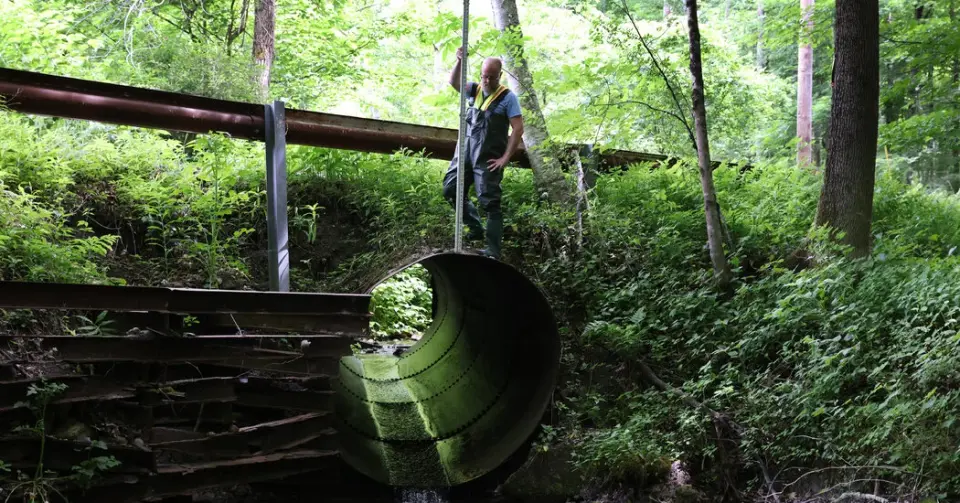
A new study in Risk Analysis demonstrates that the failure of small, aging culverts can severely disrupt emergency access. In a simulated scenario for the Deerfield River watershed in Massachusetts, a storm intensity of 7 on a 10-point scale caused approximately 350 culverts to fail, leaving roughly 30% of the local population unable to reach the only nearby emergency room. The research highlights that while large bridges often receive more attention, the nation’s six million culverts are increasingly vulnerable to intense, short-duration rainfall events.
Key points
- Jessica Boakye, a civil and environmental engineering professor at the University of Massachusetts at Amherst, led a geospatial study of the Deerfield River watershed in Franklin County, Massachusetts, which contains 783 culverts and 1,350 miles of road.
- The study utilized county data to assign failure probabilities to each culvert, creating a model with 5,881 nodes and 7,039 road segments to simulate the impact of various storm intensities.
- Findings indicate that 242 specific culverts are critical connectors; the failure of just one of these can completely disconnect a population node from the road network.
- At a storm intensity rating of 7, the simulation showed that an average of 350 culverts would fail, preventing approximately 30% of the study area’s residents from reaching the local emergency room.
- Headwaters Economics reports that nearly two-thirds of the nation’s six million culverts were built to standards insufficient for current storm patterns, with many being over 100 years old.
- A real-world example from 2021 in Addison, Maine, showed that a failed 78-foot culvert forced an ambulance to take a detour, extending a 15-minute response time to one hour with tragic consequences.
Background
This issue follows a pattern of infrastructure failures in the United States, such as the 2026 collapse of a mill tank in Washington state, which highlighted the dangers of deferred maintenance on aging systems. While that incident involved a large industrial tank, the current focus shifts to smaller, often overlooked components like culverts. Previous archive coverage of Android security and cosmetic procedures is unrelated to this infrastructure topic, but the broader theme of assessing the fitness and risk of aging systems remains relevant. The current study builds on earlier concerns about how small-scale infrastructure can cause large-scale damage, particularly as climate patterns shift toward more intense microbursts.
Why it matters
The study underscores a critical gap in public safety planning: the neglect of small-scale infrastructure that serves as the backbone of emergency access. As climate change drives more frequent and intense rainfall, the failure of these unseen components can isolate communities from medical care and evacuation routes. By providing a data-driven framework for prioritizing repairs, the research offers a practical tool for municipalities to mitigate risks without necessarily diverting funds from larger projects like bridges. It highlights that resilience requires attention to the entire network, not just the most visible parts.
What to watch
Local and state governments are expected to use similar geospatial models to assess their own culvert networks and prioritize replacements. New York University is currently evaluating 80,000 small culverts across the state, while Vermont is documenting over 114,000. As funding remains tight, these studies will likely influence budget allocations, focusing on the most critical connectors first. The trend suggests a growing national recognition that small infrastructure failures can have disproportionately large impacts on public safety and emergency response times.
Want the full story? Read the original reporting
Read on The New York Times