
Single-cell mapping reveals how MYC drives immune evasion in pancreatic cancer
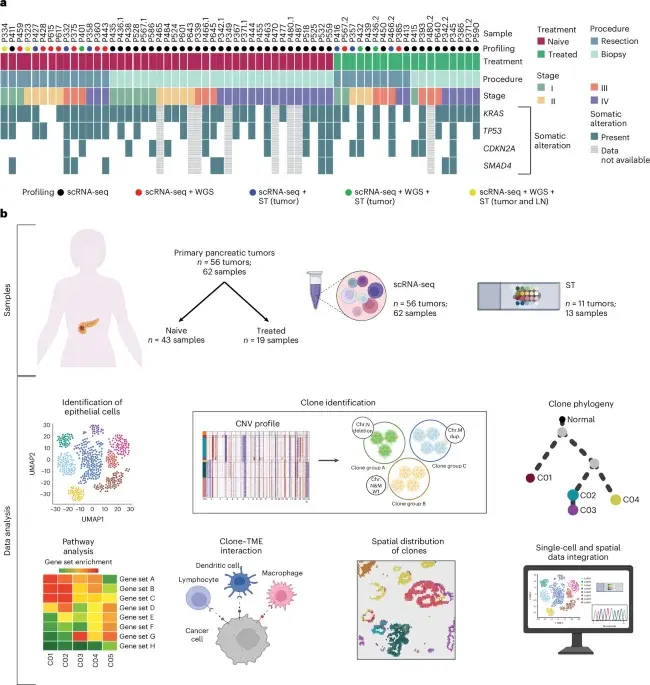
A large-scale study published in Nature Genetics maps the clonal and spatial heterogeneity of pancreatic ductal adenocarcinoma (PDAC) using single-cell RNA sequencing and spatial transcriptomics. The research identifies a critical link between MYC gene amplification and the shift from classical to basal tumor subtypes, a transition that suppresses immune responses. By analyzing 62 primary tumors and 11 matched spatial samples, the study demonstrates that specific genetic changes drive transcriptional plasticity and metastatic potential, offering new targets for therapeutic intervention.
Key points
- Researchers profiled 62 primary PDAC tumors using single-cell RNA sequencing, analyzing over 443,000 cells, and 11 tumors with matched spatial transcriptomics.
- The study identified multiple genetically distinct neoplastic clones coexisting within individual tumors, revealing significant intratumoral heterogeneity.
- Genomic dosage of ligands and receptors was found to modulate cell-cell communication; amplifications enriched interactions while deletions suppressed them.
- Focal amplification of the MYC gene at 8q24 was recurrently associated with transitions from classical to basal tumor subtypes, occurring at a frequency higher than chance.
- These subtype transitions were accompanied by a coordinated depletion of immune-response programs, creating an immune-depleted state.
- Functional experiments in murine and human models showed that MYC knockdown reactivates classical transcriptional programs and restores immune pathways.
Background
This study builds on recent advancements in understanding pancreatic cancer biology, including the development of mRNA-based immunotherapies that have shown promise in animal models by weakening fibrotic barriers and training the immune system. It also aligns with emerging technologies like Spatial-ATAC-Hi-C, which enable the mapping of 3D genome architecture and chromatin accessibility in tissue sections, providing deeper insights into clonal heterogeneity across tumor regions. Previous research has also highlighted the importance of subtypes in determining therapeutic responses, such as the distinct behaviors of plasmacytoid and neuroendocrine subtypes in other cancers.
Why it matters
Understanding the molecular mechanisms driving clonal heterogeneity and immune evasion in PDAC is crucial for developing more effective treatments. By identifying MYC amplification as a key driver of immune-depleted states, this research provides a potential target for therapeutic intervention. Targeting clonal evolution and the mechanisms driving metastasis could improve patient outcomes and inform the development of personalized therapies that address the dynamic nature of pancreatic cancer.
What to watch
Further research will likely focus on validating these findings in larger clinical cohorts and exploring the efficacy of targeting MYC or related pathways in combination with immunotherapies. The development of therapeutic strategies that can modulate clonal evolution and restore immune responses in PDAC is a promising area for future clinical trials.
Want the full story? Read the original reporting
Read on Nature