
Cunningham Falls beaver tests positive for rabies after biting 13-year-old
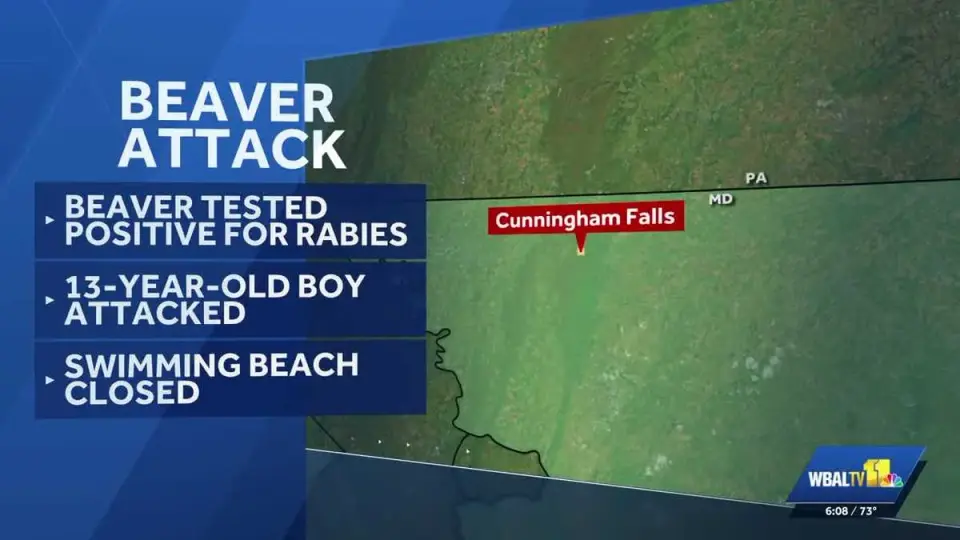
A 13-year-old boy was airlifted to Johns Hopkins Hospital after being bitten by a beaver at Cunningham Falls State Park in Frederick County, Maryland. The animal was captured and euthanized by the Maryland Department of Natural Resources, with subsequent testing confirming the presence of rabies. The swimming area at the William Houck Area remains closed for several days while officials ensure the site is safe. Health authorities are urging anyone who may have contacted the animal or other wildlife to seek medical attention and report exposure to the Frederick County Health Department.
Key points
- The attack occurred around 9:10 a.m. on Sunday in the William Houck Area near North Beach at Cunningham Falls State Park.
- The victim, a 13-year-old boy, suffered injuries to his hands and chest and was transported to Johns Hopkins Hospital in Baltimore.
- The Maryland Department of Natural Resources captured the beaver shortly after the incident and euthanized it to facilitate rabies testing.
- The Maryland Department of Health confirmed on Monday that the beaver tested positive for rabies.
- The swimming beach remains closed for several days while crews search for additional animals and confirm the area is safe for visitors.
- The Frederick County Health Department is advising the public to contact healthcare providers if they suspect exposure to the animal or other wildlife.
Background
This incident follows a series of rabies-related alerts in the region, including a positive raccoon test in Whitesboro, New York, and a coyote attack in Great Falls, Virginia, earlier in 2026. These prior events highlighted the ongoing risks associated with wildlife exposure and the importance of prompt post-exposure treatment. The current case underscores the need for vigilance in state parks, where visitors may encounter wild animals in recreational areas.
How outlets are covering it
WBAL and WBFF emphasized the immediate medical response, noting the boy’s airlift to Johns Hopkins Hospital and the closure of the swimming area. The Baltimore Sun focused on the broader public health implications, quoting officials about the prolonged closure of the beach to ensure safety. WTOP highlighted the health department’s warnings, stressing that rabies is nearly always fatal in humans without prompt treatment and detailing symptoms to watch for in animals. All sources agreed on the confirmed rabies status of the beaver and the closure of the swimming area, but differed in emphasis: WBAL and WBFF focused on the victim’s condition, while WTOP and the Baltimore Sun emphasized public health guidance and safety protocols.
Why it matters
The confirmed rabies case in a state park highlights the risks of wildlife encounters in recreational areas and the importance of prompt medical attention for any animal bites. It also underscores the need for public awareness of rabies symptoms and the role of local health departments in managing exposure risks. The closure of the swimming area demonstrates the precautionary measures taken to protect public health, even when the immediate threat is contained.
What to watch
Officials will continue searching the area for additional beavers to ensure no other rabid animals are present. The swimming area is expected to reopen only after it is confirmed safe, which may take several days. The Frederick County Health Department will monitor for any additional exposure reports and provide guidance to the public. The Maryland Department of Natural Resources will coordinate with park services to determine the timeline for reopening the area.
- Beaver that bit boy at Cunningham Falls State Park test positive for rabies WBAL-TV
- Rabies confirmed in Cunningham Falls beaver attack hospitalizing boy, 13 Baltimore Sun
- Teenager swimming in Maryland lake bitten by rabid beaver WTOP
- Boy, 13, Airlifted After Beaver Attack at Cunningham Falls State Park WBFF
- Officials search for more rabid beavers at Cunningham Falls State after teen bitten WUSA9
Want the full story? Read the original reporting
Read on WBAL-TV