
Learjet Crash in Florida: Investigators Weigh Icing, Structural Failure, and Weather as Key Causes
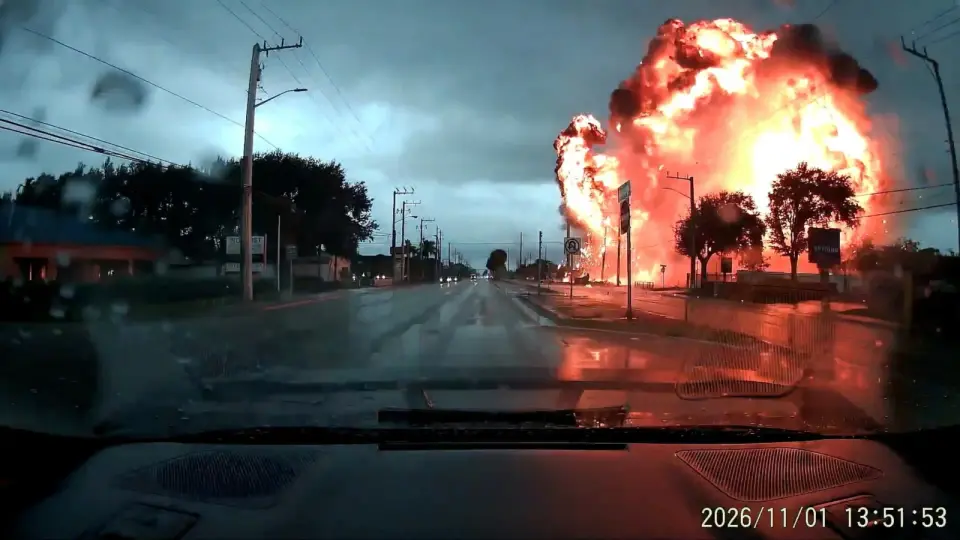
A Learjet 60 crashed in Greenacres, Florida, on Nov. 1, killing all nine people on board. The NTSB is investigating whether icing, severe turbulence, or a structural failure involving the tail elevator caused the aircraft to dive. Fragments of the tail were found miles from the impact site, confirming an in-flight breakup, though it remains unclear if the failure caused the crash or resulted from it.
Key points
- The crash killed pilot Jeffrey Gregory, co-pilot Nathalia Filgueiras, and seven passengers, including a family of four and their nanny.
- NTSB investigators recovered parts of the left elevator up to 3.8 miles from the impact crater, indicating the aircraft broke apart before hitting the ground.
- Co-pilot Filgueiras reported icing and severe turbulence to air traffic controllers minutes before the crash, with the aircraft dropping over 700 feet in a short period.
- Experts suggest the crash may have involved a 'Mach tuck,' a nose-down pitch caused by aerodynamic changes at high speeds, or a structural failure similar to a 2003 FAA directive on Learjet 45s.
- A preliminary NTSB report is expected in about a month, but a full cause determination may take over a year.
Background
The crash occurred on Nov. 1, 2026, in Greenacres, Palm Beach County, Florida. The aircraft was traveling from Austin, Texas, to the Bahamas. Prior to the crash, the Learjet 60 encountered a thunderstorm that reached 40,000 feet, with reports of icing and turbulence. The NTSB has been investigating the crash since the incident, with a focus on weather conditions, structural integrity, and pilot actions.
How outlets are covering it
USA TODAY emphasizes the role of 'Mach tuck' and icing, citing expert pilots who note Learjets have narrow margins for error at high altitudes. WPTV highlights the impact on local residents, such as Stephanie Platts, whose home was destroyed by debris and fire. KOMO focuses on the identification of the nine victims, including tech entrepreneur Adam Robinson and his family. KKCO 11 News details the recovery of tail fragments and the co-pilot's final radio transmissions, noting the pilot's recitation of the Lord's Prayer. All sources agree on the fatal outcome and the NTSB's ongoing investigation, but they differ in emphasis: USA TODAY and KKCO focus on technical causes, while WPTV and KOMO highlight human impact and victim identification.
Why it matters
The crash underscores the risks of high-altitude flight in severe weather and the importance of structural integrity in aircraft design. The NTSB's investigation may lead to safety recommendations for Learjet operators and could influence future aviation regulations. The loss of nine lives, including children, has drawn national attention to aviation safety and the need for thorough crash investigations.
What to watch
The NTSB will release a preliminary report in about a month, detailing the sequence of events and potential causes. A full investigation may take over a year, with a focus on the cockpit voice recorder, which may be damaged or missing. The NTSB will also analyze the recovered tail fragments and weather data to determine if icing, turbulence, or a structural failure caused the crash.
- 'Huge clue'? Experts unravel a mysterious, tragic nose-down jet crash USA Today
- Greenacres mom loses home after deadly jet crash, asks community for help WPTV
- All nine victims in Florida plane crash officially identified by PBSO KOMO
- Pilot in Learjet crash that killed 9 in Florida was a husband, father and a devout Christian KKCO 11 News
- Palm Beach plane had ‘incredibly fast’ descent before fiery crash. What happened? chronicleonline.com
Want the full story? Read the original reporting
Read on USA Today