
NTSB finds Learjet tail parts miles from crash site, confirming pre-impact breakup
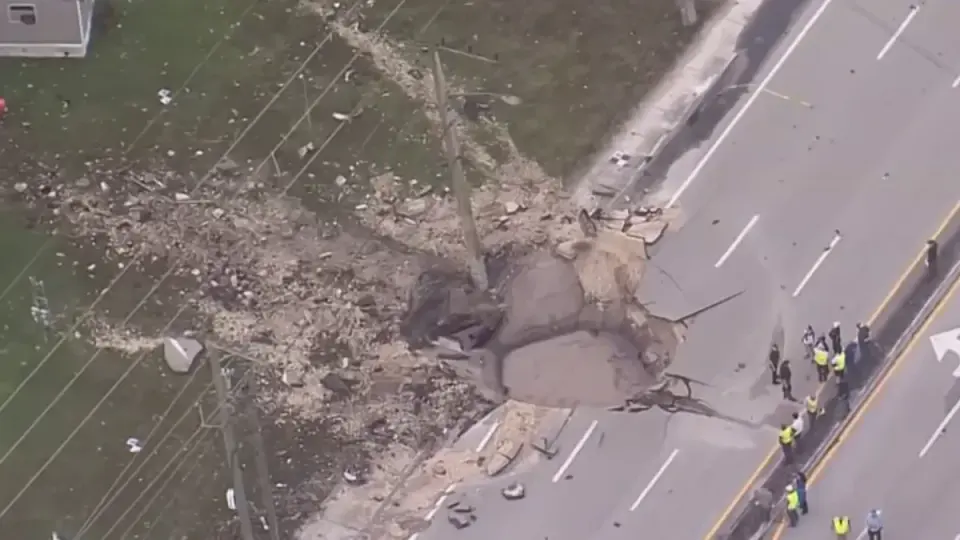
The National Transportation Safety Board confirmed that fragments of the Learjet 60’s left tail elevator were found up to 3.8 miles from the crash site in Greenacres, Florida, proving the aircraft broke apart before impact. The crash on November 1 killed all nine people aboard, including a Texas tech family and two pilots, after the jet nosedived following reports of severe icing and turbulence. Investigators face weather-related delays but plan to access the crater by Wednesday. A preliminary report is expected in about a month, with a final cause determination likely taking over a year.
Key points
- NTSB member Tom Chapman confirmed that pieces of the left elevator, which controls pitch, were found between 1.3 and 3.8 miles from the impact site.
- The discovery confirms the aircraft broke apart before hitting the ground, though it is unclear if the breakup caused or resulted from the nosedive.
- The crash killed nine people, including tech entrepreneur Adam Robinson, his wife Helen Sharp, their two children, their nanny, and two pilots.
- Co-pilot Nathalia Gadelha Filgueiras reported ice and turbulence before the plane descended at over 20,000 feet per minute.
- Heavy rain has delayed investigators, but they plan to access the crater by Wednesday to find critical components like the cockpit voice recorder.
Background
The Learjet 60 crashed on November 1 in Palm Beach County, Florida, after departing Austin, Texas, for the Bahamas. The aircraft encountered severe weather, including icing and turbulence, before nosediving into a residential area near Greenacres. The crash killed all nine people on board and displaced approximately 600 nearby residents. Investigators have been working to collect wreckage and dashcam video, with weather conditions hindering their efforts.
How outlets are covering it
While all sources agree that the tail elevator fragments confirm a pre-impact breakup, they differ on the cause. Aviation safety expert Jeff Guzzetti told the Associated Press that the breakup was likely a result of the nosedive, not the cause. In contrast, former NTSB investigator Greg Feith told Fox News that the breakup may have been caused by pilots over-stressing the aircraft’s structure while trying to level it. The NTSB, through member Tom Chapman, emphasized that it is too early to determine the cause and that weather remains a major focus of the investigation. The Yahoo News report highlighted the challenges investigators face, including heavy rain and the need to drain the crater before accessing critical evidence.
Why it matters
The discovery of the tail elevator fragments is a critical piece of evidence in the NTSB investigation, as it confirms the aircraft broke apart before impact. This finding will help investigators determine whether the breakup was a cause or a result of the nosedive, which could have implications for aviation safety regulations and practices. The crash also highlights the dangers of flying into severe weather and the importance of proper pilot training and decision-making.
What to watch
Investigators plan to access the crater by Wednesday to find critical components, including the cockpit voice recorder. A preliminary NTSB report is expected in about a month, but a final determination of the probable cause will likely take more than a year. The NTSB will also review maintenance records, interview officials at Upper Jets, and analyze weather data to understand what the plane encountered at around 35,000 feet.
- ‘Very important' evidence found miles from Learjet crash site in Florida, investigator says NBC 6 South Florida
- Key Part of Jet in Deadly Florida Crash Found Far From Impact Site The New York Times
- What's next in the investigation of the Learjet crash in Florida that killed 9? WMUR
- Pilots' push to level jet may have torn off key piece found miles from Florida crash, former NTSB expert says Fox News
- ‘A big puzzle’: Key evidence in Learjet crash investigation found up to 3.8 miles away, NTSB says Yahoo
Want the full story? Read the original reporting
Read on NBC 6 South Florida