
Supreme Court Justice Kagan rejects surrogate's bid to halt custody of critically ill infant
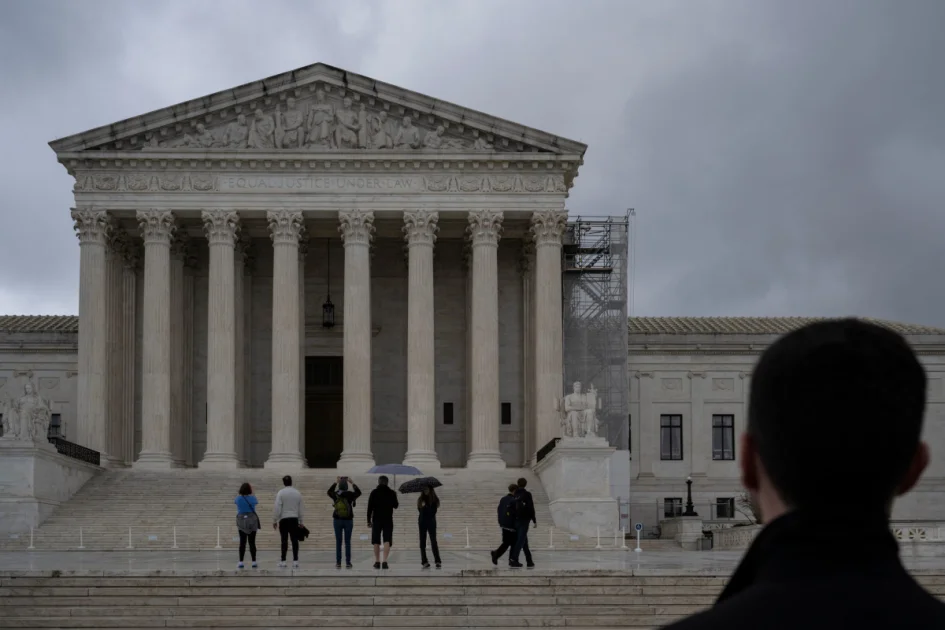
U.S. Supreme Court Justice Elena Kagan declined to intervene in a high-profile custody dispute, allowing a California couple to retain legal authority over a baby born in Texas with a severe heart defect. The surrogate, McKenna West, had refused to terminate the pregnancy as requested by the biological parents, Omar Ahmed and Nausheen Gilkar, after a fetal diagnosis of hypoplastic left heart syndrome. West moved to Texas to give birth and sought conservatorship to ensure the child received medical care, arguing the parents might not provide it. Lower courts in California and Texas ruled in favor of the biological parents, and Kagan’s refusal to block those rulings leaves the parents in control of the child’s critical medical decisions. The case highlights tensions between surrogacy contracts, abortion access, and parental rights across state lines.
Key points
- Justice Elena Kagan rejected an emergency appeal from surrogate McKenna West on September 22, 2026, leaving lower court rulings in favor of the biological parents intact.
- The biological parents, Omar Ahmed and Nausheen Gilkar, had requested West to terminate the pregnancy after the fetus was diagnosed with hypoplastic left heart syndrome in April 2026.
- West refused the abortion, moved to Texas, and gave birth to a boy named Rumi (by the parents) or Gabriel (by West) on August 12, 2026.
- The infant underwent a Norwood procedure, the first of several required surgeries for his condition, at Children’s Hospital in Dallas.
- West sought conservatorship to ensure the child received life-saving care, while the parents argued they were committed to providing that care and were present in the hospital.
- The case involved legal battles in California, Texas, and Alaska, with West arguing the California ruling violated her due process rights.
Background
This dispute emerged after a surrogacy contract between the California couple and West included a provision allowing the parents to request an abortion for a fetus with a severe abnormality. When the diagnosis was confirmed at 20 weeks, the couple requested termination, but West initially agreed and then changed her mind, citing an emotional connection to the child. She enlisted antiabortion activists to fund her move to Texas, where abortion is banned. The case has drawn national attention due to its intersection of surrogacy law, abortion access, and cross-state jurisdictional conflicts. Earlier coverage noted that experts considered Supreme Court intervention unlikely, given the technical legal questions surrounding California’s jurisdiction over the parental rights.
How outlets are covering it
The Texas Tribune and CBS News emphasize the finality of the Supreme Court’s decision and the biological parents’ commitment to the child’s medical care, citing attorney Adam Wolf’s statement that the parents have been 'with their child around the clock' in the hospital. The Washington Post highlights the technical legal issue of whether a California court had jurisdiction to grant parental rights, noting that West’s attorneys argued the ruling violated her 14th Amendment due process rights. West’s attorney, Lincoln Davis Wilson, expressed disappointment but noted that the legal fight prompted the parents to publicly commit to providing lifesaving care, which West viewed as a partial victory. The parents’ attorneys, including Lee Budner, dismissed West’s claims as an attempt to undermine their parental rights and emphasized that the child’s condition remains critical, requiring privacy for the family.
Why it matters
The case underscores unresolved legal gaps in federal surrogacy regulation and the complexities of cross-state custody disputes involving abortion and parental rights. It highlights the tension between contractual agreements in surrogacy and the surrogate’s autonomy, as well as the role of state abortion laws in shaping outcomes for critically ill infants. The Supreme Court’s refusal to intervene leaves the biological parents in control, but the dispute may influence future legal standards for surrogacy contracts and the rights of surrogates in cases involving fetal abnormalities.
What to watch
The biological parents are expected to continue managing the child’s medical care, including subsequent surgeries for hypoplastic left heart syndrome. The Texas Supreme Court has also declined to bar the parents from taking the child back to California. West’s legal team may continue to monitor the child’s care, but the immediate custody dispute is resolved. The case may serve as a precedent for future surrogacy disputes involving fetal abnormalities and cross-state jurisdictional conflicts.
- U.S. Supreme Court declines to give surrogate custody of baby she birthed in Dallas texastribune.org
- Supreme Court stays out of custody dispute between California couple and surrogate CBS News
- U.S. Supreme Court declines to intervene in surrogacy controversy Yahoo
- Supreme Court Order Gives Parents Custody of Baby in Surrogacy Fight The New York Times
- Kagan declines appeal from surrogate mother who refused to get abortion washingtonpost.com
Want the full story? Read the original reporting
Read on texastribune.org