
Utah judge frees Douglas Carter after 41 years on death row, citing DNA exclusion
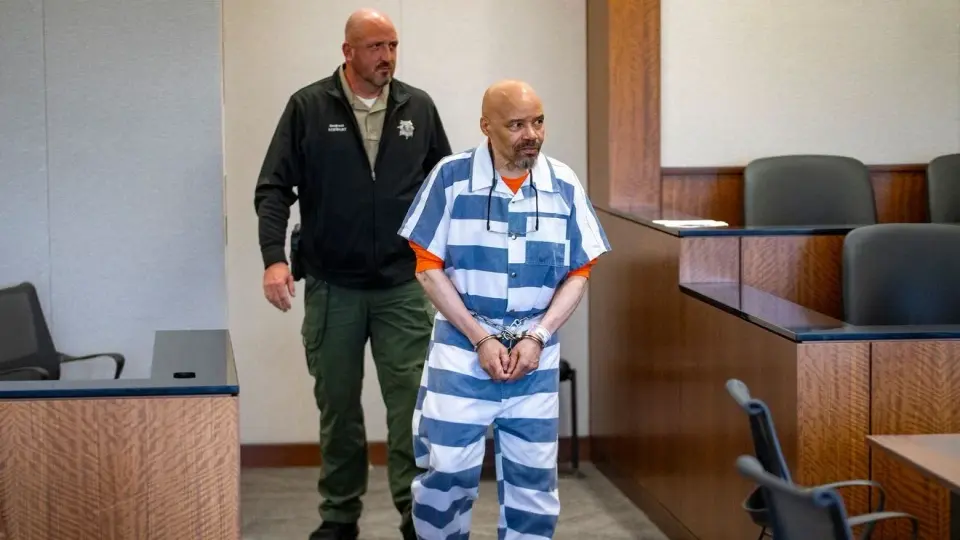
A Utah judge ordered the release of Douglas Carter on bail after he spent 41 years in prison, including decades on death row, for the 1985 murder of Eva Olesen. The decision followed new DNA testing that excluded Carter from crime scene samples and prosecutors withdrawing their request for the death penalty. Carter, now 71, faces strict bail conditions, including a GPS monitor and curfew, while the victim's family opposes his release. His attorneys argue he is innocent and call for the case to be dismissed, citing evidence of police misconduct and coerced confessions.
Key points
- Judge Derek Pullan granted bail to Douglas Carter on September 28, 2026, after prosecutors dropped the death penalty request following DNA results that excluded him from blood and genetic material found at the crime scene.
- Carter, 71, was convicted in 1985 for the murder of Eva Olesen, a Provo woman and aunt of the local police chief. He was sentenced to death, a conviction later vacated in 2022 due to witness misconduct and affirmed by the Utah Supreme Court in 2025.
- Carter must wear a GPS monitor, maintain an 11 p.m. curfew, find employment, and avoid contact with the victim's family while on bail. He will be placed in an extended stay accommodation near his son.
- The Olesen family, including daughter-in-law Theresa Olesen, opposed the release, arguing that the lack of a DNA match does not prove innocence and that Carter remains a potential danger. They requested he remain in jail pending trial.
- Carter's attorney, Neal Hamilton, stated that Carter was coerced into a confession and that police suppressed evidence pointing to other suspects, including the victim's husband. Hamilton called for the case to be dismissed and for an independent investigation into the prosecution.
Background
This case follows a long history of legal battles in Utah regarding capital murder and wrongful convictions. In August 2026, the state executed Anthony Hines for a 1985 murder, highlighting ongoing debates over the death penalty. In September 2026, Utah courts also handled the trial of Tyler Robinson for the killing of Charlie Kirk, where prosecutors sought the death penalty, contrasting with the withdrawal of that penalty in Carter's case. Carter's situation underscores the impact of DNA technology and judicial review on decades-old convictions.
How outlets are covering it
KUTV and KSL.com reported the release as a result of the judge's ruling and the DNA exclusion, emphasizing the end of Carter's 41-year imprisonment. CNN highlighted the DNA results and the victim's family's objections, noting that prosecutors did not contest the release but the family feared for their safety. The Salt Lake Tribune provided detailed accounts of Carter's release, his son's presence, and the attorney's call for an innocence petition and independent investigation. All sources agreed on the DNA exclusion and the judge's decision but differed in emphasis: some focused on the procedural aspects, while others highlighted the emotional impact and the family's dissent.
Why it matters
The release of Douglas Carter after 41 years underscores the role of DNA evidence and judicial review in correcting wrongful convictions. It highlights the consequences of police misconduct and coerced confessions in capital cases. The case also raises questions about the fairness of the death penalty and the need for independent investigations into past prosecutions. Carter's release, despite ongoing charges, reflects the tension between justice for victims and the rights of the accused, particularly when new evidence emerges decades after a conviction.
What to watch
Carter will live under strict bail conditions, including a GPS monitor and curfew, while awaiting a retrial scheduled for July 2027. His attorneys will pursue a factual innocence petition and request an independent investigation into the 1985 case. Prosecutors will reassess the remaining evidence, including the signed confession and witness testimony, to determine whether to continue with the aggravated murder charge. The victim's family may continue to advocate for his confinement, while Carter's supporters will focus on his rehabilitation and compensation.
- Judge orders Douglas Carter released after over 40 years on Utah's death row KUTV
- Man ordered released on bail after decades on Utah’s death row after DNA tests show no match to him CNN
- Douglas Carter walks out of Utah County Jail after 40 years on death row KUTV
- Judge orders release of former Utah death row inmate after 41 years — but aggravated murder charge remains The Salt Lake Tribune
- Douglas Carter released on bail after 41 years behind bars KSL.com
Want the full story? Read the original reporting
Read on KUTV