
Utah Judge Orders Release of Douglas Carter After 41 Years on Death Row Following DNA Exclusion
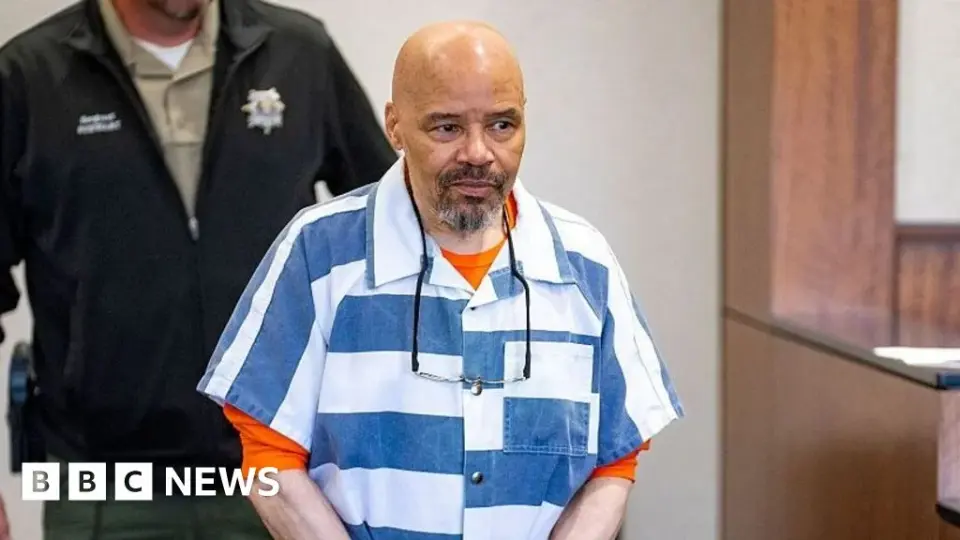
Douglas Carter, 71, was released on bail from Utah County Jail on September 28, 2026, after spending 41 years in prison, including decades on death row, for the 1985 murder of Eva Olesen. Judge Derek Pullan granted release after new DNA testing excluded Carter from crime scene samples and prosecutors dropped the death penalty. Carter faces strict bail conditions, including a GPS monitor and curfew, while his attorneys call for the case to be dismissed. The victim's family opposes the release, arguing the DNA exclusion does not prove innocence.
Key points
- Carter was released on bail on September 28, 2026, after 41 years in prison, including decades on death row, for the 1985 murder of Eva Olesen in Provo, Utah.
- Judge Derek Pullan granted release after new DNA testing excluded Carter from blood on a doorknob and genetic material on a knife handle, and prosecutors dropped the death penalty.
- Carter faces strict bail conditions, including a GPS monitor, 11 p.m. curfew, no contact with the victim's family, and enrollment in a reentry program.
- Carter's attorneys call for the case to be dismissed, citing evidence of police misconduct, coerced confessions, and suppressed evidence pointing to other suspects, including the victim's husband.
- The victim's family opposes the release, arguing the DNA exclusion does not prove innocence and expressing concerns about Carter's safety and the possibility of further harm.
Background
Carter was convicted in 1985 of murdering Eva Olesen, a Provo woman who was the aunt of the then-Provo police chief. He was sentenced to death but always maintained his innocence, stating that a signed confession was coerced. In 2011, two key witnesses recanted, saying they were bribed and threatened by police. The Utah Supreme Court ordered a new trial in 2025, citing misconduct by investigators. Carter's release follows a long legal battle and new DNA evidence that excluded him from crime scene samples.
How outlets are covering it
BBC and KSL.com emphasize the DNA exclusion and prosecutors' decision to drop the death penalty as key factors in Carter's release. The Salt Lake Tribune highlights the victim's family's opposition and the ongoing aggravated murder charge. CBS News focuses on the coerced confession and police misconduct, including the suppression of evidence pointing to the victim's husband. All sources agree on the basic facts but differ in emphasis: BBC and KSL focus on the DNA and legal process, while The Salt Lake Tribune and CBS News highlight the family's concerns and the broader issues of police misconduct.
Why it matters
Carter's release after 41 years on death row underscores the importance of DNA evidence in overturning wrongful convictions and highlights the need for reforms in police and prosecutorial practices. The case also raises questions about the treatment of death row inmates and the impact of long-term incarceration on individuals and their families.
What to watch
Carter will live under strict bail conditions, including a GPS monitor and curfew, while awaiting a new trial scheduled for 2027. His attorneys will continue to push for the case to be dismissed and for an independent investigation into the circumstances of his prosecution. The victim's family will likely continue to oppose his release and seek justice for Eva Olesen.
- Man released on bail after 41 years on death row in Utah BBC
- Douglas Carter released on bail after 41 years behind bars KSL.com
- Former Utah death row inmate walked out of jail — but aggravated murder charge remains The Salt Lake Tribune
- Doug Carter, twice sentenced to die, steps out from behind bars in Utah thanks to DNA analysis Utah News Dispatch
- Man who spent decades on death row in Utah ordered released on bail after no DNA match CBS News
Want the full story? Read the original reporting
Read on BBC