
Florida's 'De-Flocking' Order Triggers Widespread Removal of License Plate Readers
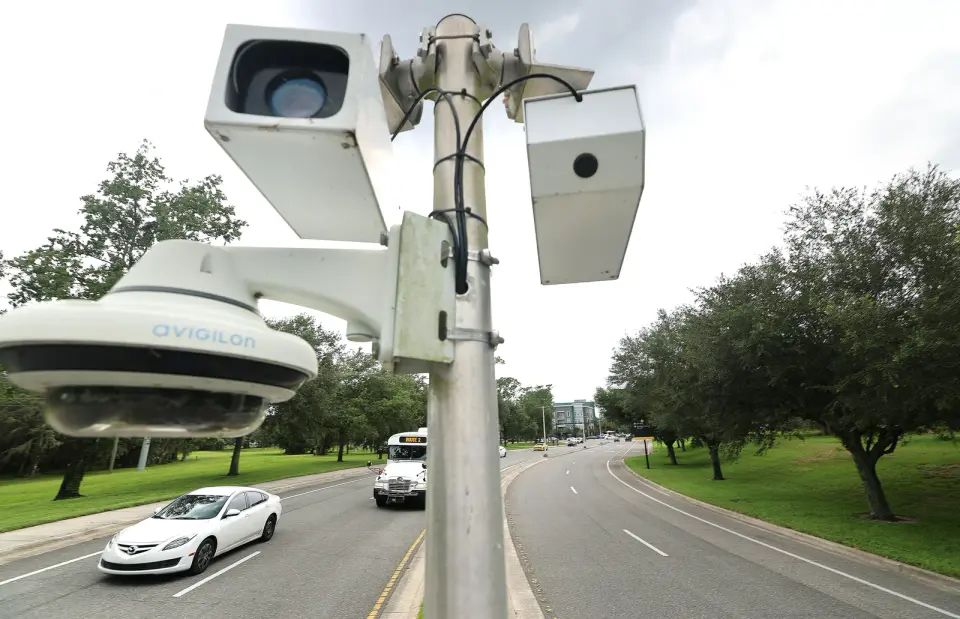
Florida Governor Ron DeSantis has ordered the removal of automated license plate readers from state highways, prompting a rapid cascade of local government actions across Central Florida. The Florida Department of Transportation revoked permits for these cameras, citing privacy concerns and misuse, while local sheriffs and city councils in Orange, Osceola, Lake, and Seminole counties have suspended or dismantled their own networks. Law enforcement officials argue the technology is vital for solving crimes, but residents and privacy advocates contend the surveillance is excessive and unconstitutional.
Key points
- The Florida Department of Transportation issued a memo on Monday ordering the removal of license plate readers from state rights-of-way within 30 days, citing 'exponential increase' in deployments and privacy concerns.
- Local jurisdictions in Central Florida, including Lake County, Seminole County, and Osceola County, have voted to dismantle or pause their use of the cameras, with some cities like Oviedo ending contracts entirely.
- Orange County Sheriff Chad Mina stated his office will comply with the state order but intends to continue using the technology where legally permitted, noting it has helped solve murders and locate missing persons.
- The move follows a national trend, with Texas Governor Greg Abbott halting state funding for similar cameras and over 100 local governments across the US canceling contracts since last year.
- Flock Safety, the primary manufacturer, has responded by shortening data retention periods and adding safeguards against 'abnormal activity,' while arguing the technology is a critical public safety tool.
Background
This development follows a series of recent local and state actions against automated surveillance. In late August, Texas Governor Greg Abbott halted state funding for Flock cameras after investigations into misuse and privacy violations. Simultaneously, cities like Oxford, Ohio, and Irmo, South Carolina, have been debating or ending their own camera programs due to public outcry over surveillance expansion. Senator Josh Hawley also opened a federal probe into Flock Safety's data practices and safeguards in late August, reflecting a growing national debate over the balance between public safety and civil liberties.
How outlets are covering it
Outlets highlight a sharp divide between privacy advocates and law enforcement. The Orlando Sentinel and WCTV emphasize the swift local response to the state order, noting that while the FDOT memo only applies to state roads, local jurisdictions are voluntarily removing cameras from city streets. NBC News frames the action as part of a broader national backlash, citing a Texas Tribune report on funding cuts and noting that Flock Safety has recently shortened data retention from one month to one week in response to criticism. Conversely, law enforcement officials like Orange County Sheriff Chad Mina and Volusia County Sheriff Mike Chitwood argue that the cameras are indispensable for solving serious crimes, with Chitwood suggesting that some criticism is based on 'half-truths' and that the removal will negatively impact public safety. Residents, such as Tara Hill of Oviedo, describe the technology as 'automated mass surveillance' that treats all citizens as suspects.
Why it matters
The removal of these cameras represents a significant shift in the use of AI-powered surveillance technology in the United States. As the technology becomes more ubiquitous, the tension between public safety and privacy is intensifying. The Florida order may set a precedent for other states and localities to restrict or ban similar technologies, potentially altering how law enforcement tracks suspects and investigates crimes. The debate also raises broader questions about the role of private companies in public surveillance and the need for legislative guardrails to prevent misuse.
What to watch
The Florida Department of Transportation has given local agencies 30 days to remove the cameras from state roads, after which the state will take action. Governor DeSantis has called for legislative action in the coming spring to establish permanent rules for the use of license plate readers. Meanwhile, Flock Safety continues to implement new safeguards and data retention policies, and local law enforcement agencies are assessing the impact of the removal on their ability to solve crimes. The situation may also lead to further legal challenges or public protests as the technology's future remains uncertain.
- Florida’s de-Flocking: After state order, Central Florida municipalities end use of high-tech cameras Orlando Sentinel
- Florida bans Flock cameras and other license plate readers from state highways NBC News
- Florida Bans Flock Cameras, License Plate Readers From State Roads Bloomberg.com
- Gov. DeSantis bans Flock cameras from state highways WCTV
- License plate readers going away in Escambia and Santa Rosa counties, City of Pensacola WEAR-TV
Want the full story? Read the original reporting
Read on Orlando Sentinel