
Brooklyn Hosts 66-Hour Marathon Reading of Robert Caro’s ‘The Power Broker’
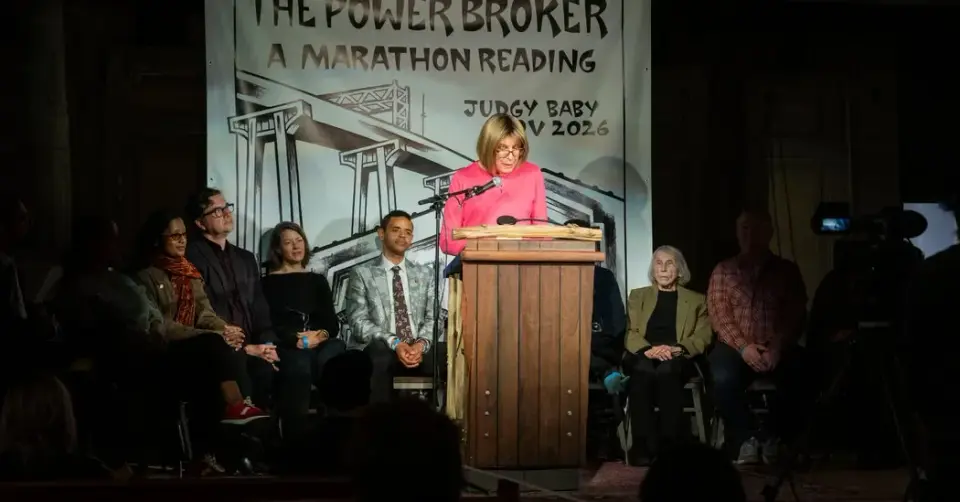
A 66-hour, nonstop reading of Robert Caro’s 1,162-page book 'The Power Broker' took place in Brooklyn, featuring hundreds of participants including politicians, academics, and public figures. The event, organized by Brad Vogel at the Judgy Baby arts space in Gowanus, highlighted the book's enduring cultural significance in New York City. Participants read 10-minute segments around the clock, with author Robert Caro reading the final pages. The event drew attention for its scale and the diverse roster of attendees, including subway announcer Bernie Wagenblast and state Senator Andrew Gounardes.
Key points
- The marathon reading lasted approximately 66 hours, with readers taking 10-minute turns to read aloud from the 1,162-page book.
- The event was held at the Judgy Baby arts space in Gowanus, Brooklyn, and was organized by Brad Vogel, director of special projects at the venue.
- Hundreds of participants included current and former government officials, academics, and cultural figures, such as Bernie Wagenblast, the voice of NYC subway announcements.
- Robert Caro, the author of 'The Power Broker,' read the final pages of the book during the event.
- The book, published in 1974 and a Pulitzer Prize winner, is described as a cultural epic of New York City, focusing on the legacy of urban planner Robert Moses.
Background
The event reflects the ongoing cultural obsession with Robert Caro’s 'The Power Broker' among New Yorkers, a book that has been a subject of debate and admiration for decades. Previous coverage in our archive has highlighted the book’s influence on discussions of power and infrastructure, though this specific event is a new cultural phenomenon. The marathon reading aligns with broader trends in New York of using public events to engage with historical and political narratives, as seen in other cultural initiatives.
How outlets are covering it
The New York Times emphasized the 'joyful nerdiness' of the event, highlighting the diverse and passionate participants, including a union organizer, a biographer of Albert Einstein, and a 'street librarian.' NPR focused on the book’s status as an 'epic of New York City,' with organizer Brad Vogel noting its relevance to contemporary political and social issues. City & State New York provided a more critical perspective, with WNYC news anchor Jami Floyd recalling a debate with her son about the 'relative good and evil' of Robert Moses, suggesting the book remains a polarizing text. The outlets also differed in their emphasis: The Times and NPR highlighted the event’s cultural significance and the author’s involvement, while City & State focused on the political and historical debates surrounding the book’s subject.
Why it matters
The marathon reading underscores the enduring cultural and political relevance of Robert Caro’s 'The Power Broker' in New York City, a book that continues to shape discussions about urban planning, power, and public infrastructure. The event’s scale and the diversity of its participants reflect the book’s status as a touchstone for New Yorkers, bridging generations and political affiliations. It also highlights the city’s tradition of using public events to engage with historical narratives, reinforcing the idea that cultural events can serve as platforms for broader societal reflection.
What to watch
The event has concluded, but its impact may continue to influence public discourse about Robert Moses and urban planning in New York City. The book’s relevance to contemporary issues, such as infrastructure maintenance and public policy, may lead to further discussions or events. Additionally, the event’s success could inspire similar cultural initiatives in other cities, as New York continues to use public events to engage with its history and politics.
- The Joyful Nerdiness of a 66-Hour, Nonstop Reading of ‘The Power Broker’ The New York Times
- Why people are Robert Caro’s ‘The Power Broker’ out loud over several days NPR
- Editor’s note: 333 pages down, in ‘Power Broker’ marathon reading City & State New York
- ‘The Power Broker’ reading marathon starts tonight, featuring nearly 400 readers over four days Brooklyn Eagle
- Starting today at 7pm in NYC, 400 volunteers will read Rober... Kottke.org
Want the full story? Read the original reporting
Read on The New York Times