
Big Island Reopens Amid Lala Aftermath: Power Outages Persist, Kaʻū Remains Isolated
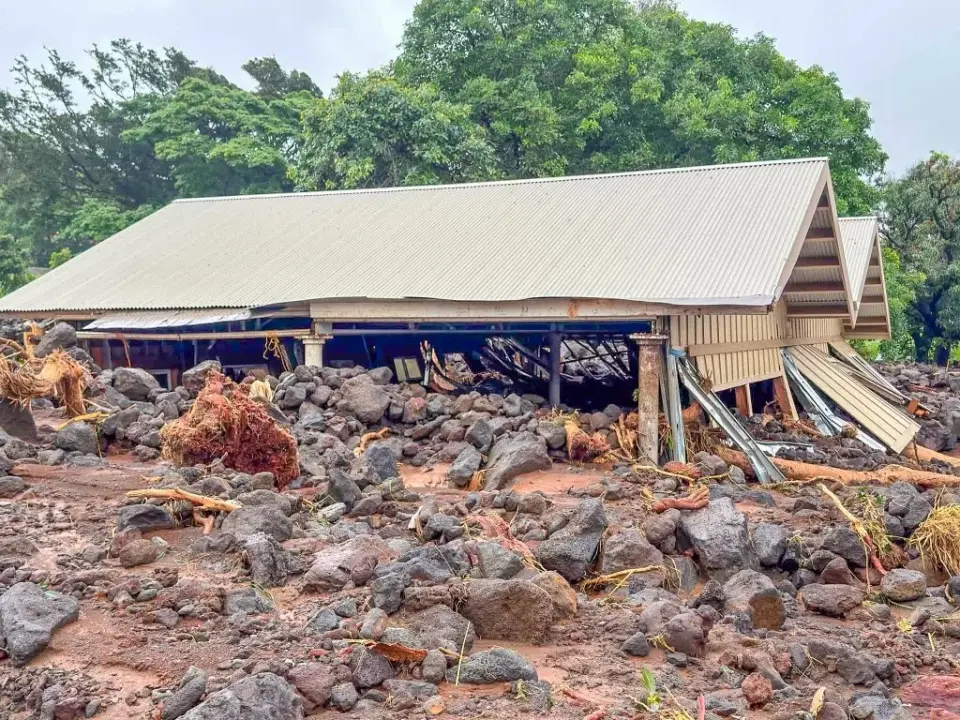
Hurricane Lala, which passed within 30 miles of the Big Island without making landfall, caused severe flooding and infrastructure damage. As of August 17, 2026, approximately 41,190 customers remain without power, and critical roads in the Kaʻū District remain closed, isolating communities like Pāhala. While Hilo and Kona airports have reopened, all public schools, state offices, and courts on the Big Island remain closed for safety assessments. A brown water advisory is in effect, and emergency crews are prioritizing restoration in rural areas.
Key points
- Power: About 41,190 customers remain without power, primarily in Puna, Kona, and Kohala. Hawaiian Electric has requested mainland assistance, with roughly 100 crew members expected to arrive by Tuesday.
- Infrastructure: Six bridges in the Kaʻū District are damaged or destroyed. Pāhala is completely cut off, isolating the region's only hospital. Nāʻālehu and Waiʻōhinu are partially accessible only from the Kona side.
- Closures: All public schools, state and county offices, courts, and most parks on the Big Island are closed on Monday, August 17. Nāʻālehu Elementary remains closed through August 20 due to damage and road access issues.
- Safety: A brown water advisory is in effect for 48-72 hours post-rain. Residents are advised to avoid streams and ponds to prevent leptospirosis. Essential Needs Only notices are issued for water supply due to power outages.
- Airports: Hilo International and Ellison Onizuka Kona International airports reopened on Sunday morning after inspections. Passengers are advised to check flight statuses and expect longer wait times.
Background
Lala was the first hurricane to threaten Hawaii since 1992. It weakened to a tropical storm as it passed the Big Island but later regained hurricane status over the central Pacific. The storm brought over 3 feet of rain to some areas, including 48 inches in Kapalua, Maui. Previous archive coverage noted the storm's rapid intensification and the state's preparation for potential landfall, which ultimately did not occur, but the outer bands caused significant destruction.
How outlets are covering it
Big Island Now provides detailed operational updates on closures, power restoration timelines, and specific facility statuses, emphasizing the logistical challenges of recovery. The New York Times highlights the broader context, noting that while Lala did not make landfall, its outer bands caused extensive damage, and at least three people have died. CBS News focuses on the human impact, detailing a mudslide in Waiʻōhinu that destroyed about a dozen homes and the isolation of communities. Hawaii Public Radio emphasizes the severity of the flooding in the Kaʻū District, describing it as the worst damage seen in that area, and notes the critical isolation of Pāhala's hospital. All sources agree on the scale of the damage and the ongoing challenges in restoration, but differ in emphasis: Big Island Now on logistics, NYT on the storm's rarity and impact, CBS on human tragedy, and HPR on infrastructure isolation.
Why it matters
The recovery from Hurricane Lala is a critical test for Hawaii's infrastructure and emergency response systems. The isolation of key communities like Pāhala, which houses the region's only hospital, poses significant risks to public health and safety. The prolonged power outages and road closures will have long-term economic and social impacts, particularly in rural areas. The storm's rarity, being the first hurricane to threaten Hawaii since 1992, underscores the need for preparedness and resilience in the face of increasingly severe weather events linked to climate change.
What to watch
Hawaiian Electric expects mainland crew members to arrive by Tuesday and begin work on Wednesday. Restoration efforts will continue, with some rural areas potentially facing extended outages. The state and county offices, courts, and most public schools on the Big Island are expected to reopen as assessments are completed. The brown water advisory will remain in effect for 48-72 hours after the rain stops. Residents are advised to monitor updates from local authorities and emergency services for further instructions.
- What you need to know about Hurricane Lala recovery, Monday closures on the Big Island Big Island Now
- What We Know About Damages From Hurricane Lala in Hawaii The New York Times
- Several homes on Hawaii's Big Island destroyed by mudslide triggered by former Hurricane Lala CBS News
- Hawaiʻi Island communities cut off by floods, road damage in wake of Lala Hawaii Public Radio
- Thousands without power after Tropical Storm Lala uproots trees in Hawaii Anchorage Daily News
Want the full story? Read the original reporting
Read on Big Island Now