
Grand Canyon Flash Flood Kills Two, Leaves One Missing After Infrastructure Collapse
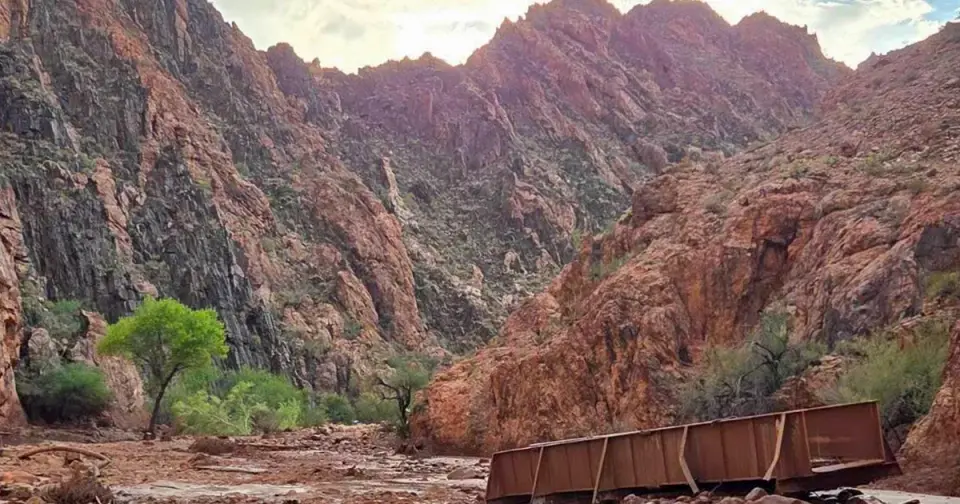
A severe flash flood on August 29, 2026, devastated the inner canyon of Grand Canyon National Park, resulting in two confirmed deaths and one missing person. The event destroyed nearly all footbridges across Bright Angel Creek and severed 40% of the park's water supply pipeline. While 82 people were evacuated, authorities confirmed that most initially reported missing hikers have been accounted for.
Key points
- Two victims, chiropractor John Giusti (46) and Brent Rosenkranz (42), were killed; their friend Timothy Allen Smith remains missing.
- The flood destroyed nearly all footbridges spanning Bright Angel Creek, eliminating hiker access to Phantom Ranch and the North Kaibab Trail.
- Approximately 40% of the Transcanyon Waterline, a 12.5-mile pipeline supplying the South Rim, was damaged, leaving the park with only two weeks of stored water.
- 82 individuals were evacuated from the inner canyon, with rescue operations coordinated by the National Park Service and Arizona Department of Public Safety.
- The Colorado River was closed to traffic due to debris, though rafting trips later reopened after safety assessments.
Background
This incident follows a series of monsoon-related weather events in the region. Earlier archive coverage noted that similar flash floods in August 2026 had previously triggered air rescues of approximately 50 visitors from the same area, though no deaths were reported in those initial incidents. The current event represents a significant escalation in severity, marking the first fatal flash flood in the inner canyon in recent years.
How outlets are covering it
NBC News initially reported at least 20 people missing, reflecting the immediate uncertainty after the storm. CNN and CBS News later clarified that while 15 people were initially unaccounted for, most were located, leaving only one missing. CBS News provided specific casualty details, identifying the two deceased and the remaining missing individual. The National Park Service emphasized the infrastructure damage, particularly the destruction of the Transcanyon Waterline, which CBS News described as 'battered, bruised, and decimated.' CNN highlighted the extreme weather conditions, noting that the fourth wave of rain produced up to one inch of precipitation in 30 minutes, while CBS News focused on the narrow escapes of hikers who crossed bridges just minutes before they were destroyed.
Why it matters
The event highlights the vulnerability of critical infrastructure in national parks to extreme weather events. The damage to the Transcanyon Waterline threatens water availability for the South Rim, which hosts millions of visitors annually. The closure of Phantom Ranch and the North Kaibab Trail disrupts major hiking routes and tourism operations, demonstrating the significant impact of flash floods on both public safety and park logistics.
What to watch
Authorities are continuing search efforts for the one missing individual. Park officials are assessing the full extent of damage to the Transcanyon Waterline and other infrastructure. The National Park Service has implemented water conservation measures, including prohibiting fires and limiting overnight stays, to preserve the remaining water reserves. Further flash flooding is possible due to ongoing monsoon activity, which may delay repair efforts and reopenings.
- At least 20 missing at Grand Canyon after extreme flash flooding NBC News
- More than 20 people may be missing after Grand Canyon flooding, park service says CNN
- At least 20 missing, dozens evacuated from Grand Canyon after flash flood hits creek South China Morning Post
- Grand Canyon flash floods leave around 15 missing as dozens are evacuated, park officials say CBS News
- Significant Flash Flooding Closes Phantom Ranch and North Kaibab Trail National Park Service (.gov)
Want the full story? Read the original reporting
Read on NBC News