
Mass Resignations Signal Collapse of University of Iowa’s Center for Intellectual Freedom
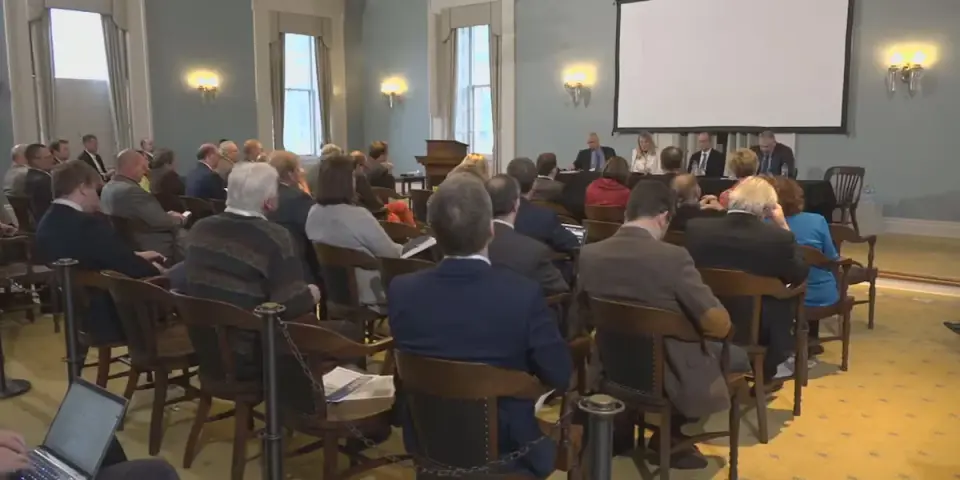
Eleven out-of-state academics resigned from the advisory council of the University of Iowa’s Center for Intellectual Freedom (CIF), citing a 'vote of no confidence' in the Iowa Board of Regents. The departures follow a power struggle over the center’s governance and director hiring process. While the Board of Regents accepted the resignations and affirmed its support for the center’s mission, the resigning members argued that the regents prioritized ideological conformity over academic independence. The CIF, which paused classes until 2028 due to low enrollment, now faces leadership uncertainty as it searches for a permanent director.
Key points
- The Iowa Board of Regents accepted the immediate resignations of 11 members from the CIF Advisory Council, including Richard Lowery, Thomas Gallanis, and Dorian Abbot.
- Resigning members framed their departure as a 'vote of no confidence' in the Board of Regents, alleging that the board refused to allow the center to operate independently or in accordance with the law.
- The conflict stemmed from a dispute between Regents President Robert Cramer and advisory council chair Richard Lowery over who would control the hiring process for the center’s permanent director.
- The CIF paused all classes until Fall 2028 following underwhelming enrollment numbers in Spring 2026, with only 19 students registering for its initial course offerings.
- The remaining 15 council members, mostly Iowans, will continue the search for a permanent director, with the executive committee meeting virtually on September 25.
Background
The Center for Intellectual Freedom was established in 2025 after Iowa Governor Kim Reynolds signed legislation mandating civics courses at state universities. The center was placed under the authority of the Iowa Board of Regents rather than the university administration, a move criticized by opponents as a political maneuver to counter perceived liberal bias on campus. Interim director Luciano de Castro has faced scrutiny for his curriculum proposals, which some faculty argue are ideologically motivated. The center received $1 million in state funding for the 2025-26 and 2026-27 academic years, but operations were halted in July 2026 to allow for a reevaluation of its structure and leadership.
How outlets are covering it
KCRG and KGAN reported the resignations as a formal acceptance by the Board of Regents, emphasizing the board’s statement that it appreciates the departing members’ work and intends to move forward with the remaining 15 council members. The Gazette provided deeper context, framing the resignations as a direct response to an ultimatum from Regents President Robert Cramer, who demanded that Lowery either collaborate or step down. The Gazette highlighted the ideological divide, noting that many resigning members were conservative academics who felt the regents were capitulating to the university’s 'leftist' administration. The Daily Iowan offered a critical perspective, quoting faculty members who argued that the center’s creation and mandatory course requirements violate academic freedom and represent legislative overreach. While the Board of Regents maintains that the center is a non-ideological academic initiative, critics like UI professors Brett Johnson and Victor Ray argue that the center’s structure and curriculum are inherently political and undermine the university’s autonomy.
Why it matters
The mass resignations expose deep fractures in the governance of the Center for Intellectual Freedom, raising questions about the balance between state control and academic independence. With classes paused until 2028 and the permanent director search ongoing, the center’s future remains uncertain. The controversy highlights broader tensions in higher education regarding the role of the state in curriculum design and the definition of intellectual freedom. As the center approaches its mandatory course launch, the lack of a permanent director and unresolved governance disputes may impact its ability to fulfill its legislative mandate and secure long-term funding.
What to watch
The CIF Executive Committee will meet virtually on September 25 to continue the search for a permanent director. The Board of Regents has indicated that the remaining 15 advisory council members will oversee the hiring process, with the regents retaining final authority. The center’s classes are scheduled to resume in Fall 2028, but the timeline for curriculum development and faculty hiring remains uncertain. The outcome of the director search will likely determine whether the center can stabilize its operations or if it will face further challenges in balancing academic integrity with political expectations.
- 11 members resign from Center for Intellectual Freedom Advisory Council KCRG
- ‘Vote of no confidence’ in regents prompts Center for Intellectual Freedom mass resignations thegazette.com
- Nearly a dozen members of UI Center for Intellectual Freedom board resigns KGAN
- Uncertainty in leadership, curriculum surrounds UI Center for Intellectual Freedom The Daily Iowan
- 11 quit Center for Intellectual Freedom council, citing low confidence siouxcityjournal.com
Want the full story? Read the original reporting
Read on KCRG