
Alpha School Launches Chicago Campus with AI-Driven Instruction and $55,000 Tuition
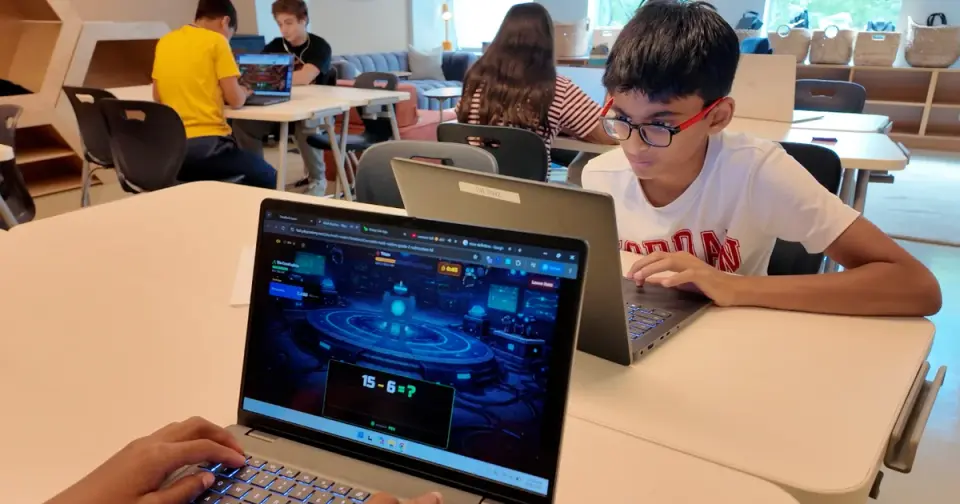
Alpha School opened its first Chicago campus this fall, offering a teacherless model where AI software delivers all academic instruction for pre-K through eighth-grade students. The for-profit network charges $55,000 annually, claiming students master core subjects in just two hours of daily study. Critics question the lack of external validation and high costs, while supporters praise the personalized, mastery-based approach.
Key points
- Alpha School’s Chicago campus opened in fall 2026 for students in pre-K through eighth grade, replacing traditional teachers with 'guides' and AI-driven adaptive software.
- The proprietary TimeBack system, developed by cognitive scientist Carl Hendrick, adjusts to individual student skills and claims to enable mastery of core subjects in roughly two hours per day.
- Annual tuition is $55,000, approximately $8,000 more than the average private college cost, though the school does not screen applicants based on prior grades or test scores.
- Staff members, called 'guides,' focus on emotional and motivational support rather than academic instruction, with only one-third holding education degrees according to a University of Colorado analysis.
- Alpha claims its students score in the top 1% on national standardized tests and are admitted to elite universities like Stanford and Northwestern, though these outcomes lack independent validation.
Background
Recent news cycles have highlighted extreme measures in school safety and admissions, such as the Supreme Court’s upcoming ruling on race-neutral admissions and the tragic Silver Rail Elementary shooting in Oregon. These events underscore growing public anxiety about school environments and equity. Alpha’s model emerges in this climate as a radical alternative, shifting focus from physical safety and traditional pedagogy to technological efficiency and personalized learning, though it remains a niche, high-cost option.
Why it matters
Alpha’s model challenges fundamental assumptions about the role of teachers and the structure of the school day. By claiming that AI can replace traditional instruction, it forces a debate on the future of education, the value of human interaction in learning, and the accessibility of innovative educational models that are currently priced out of reach for most families.
What to watch
The Chicago campus will serve as a key test case for Alpha’s model. Stakeholders will watch for independent assessments of student outcomes, potential regulatory scrutiny regarding the lack of teacher credentials, and whether the high tuition barrier limits the model’s scalability. Critics may push for public accountability, while supporters will likely highlight early success stories to attract more families.
Want the full story? Read the original reporting
Read on CBS News