
Chuncheon City Partners with U.S. College to Counter AI Reliance in Education
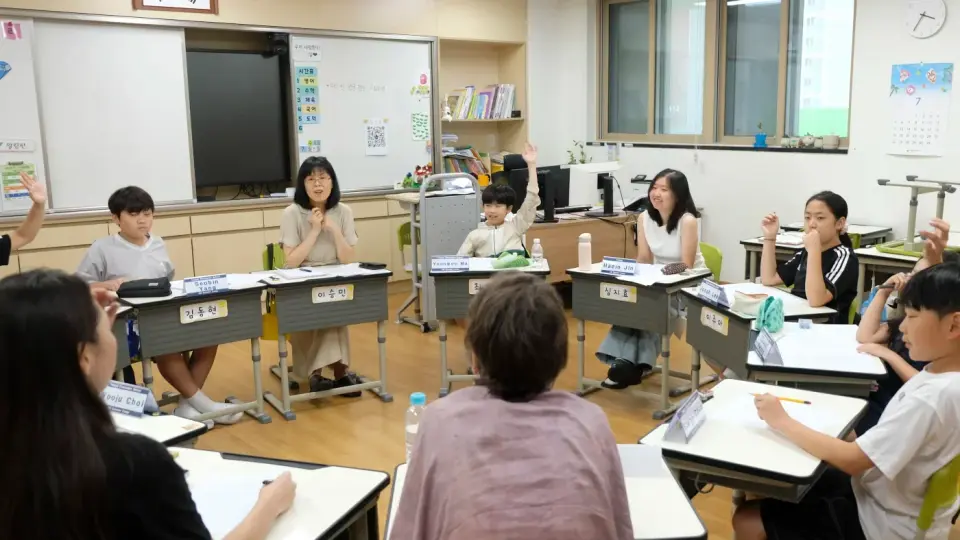
Chuncheon, South Korea, has adopted the 'Great Books' educational model from St. John's College to combat declining reading skills and excessive AI reliance among students. The program, which emphasizes discussion over lecturing and restricts external information sources, aims to foster independent reasoning. Currently, 120 college students and 770 younger students participate in the initiative, which was co-founded in 2019 by Incheon National University professor Lee Yonghwa. Local officials view this as a revolutionary alternative to the intense, test-driven pressure of the traditional Korean education system.
Key points
- Chuncheon established an academic partnership with St. John's College to implement the 'Great Books' model, which features no majors, no lecturing, and a ban on using the internet or AI for answers.
- The initiative addresses a post-COVID drop in South Korean reading skills and the fact that 51% of students use AI chatbots weekly for studying, according to OECD data.
- Professor Lee Yonghwa, who co-founded South Korea's first Great Books program in 2019, argues that over-reliance on AI erodes students' ability to memorize facts and judge the quality of AI-generated results.
- The program currently involves 120 college students, 770 younger students, and 40 teachers in training across the country.
- Chuncheon Mayor Yook Dong-han describes the initiative as a 'small but revolutionary achievement' that challenges established educational practices and generates high student interest.
Background
This development follows broader trends in South Korea where families often send children to cram schools or foreign institutions to escape the intense pressure of college entrance exams. The move also aligns with global concerns about the impact of AI on critical thinking, though it specifically targets the unique cultural context of South Korea's hyper-competitive academic environment. Previous archive items highlight South Korea's focus on environmental and health issues, but this story addresses a distinct educational crisis regarding cognitive skills and AI dependency.
Why it matters
As AI becomes ubiquitous in education, the ability to reason independently and evaluate information critically is increasingly vital. Chuncheon's experiment offers a potential model for other nations facing similar challenges with declining reading proficiency and over-reliance on automated tools. By removing external sources and forcing students to rely on their own reasoning and peer discussion, the program aims to preserve the cognitive skills necessary for democratic participation and intellectual growth in an AI-driven world.
What to watch
The program is expected to expand as more teachers complete training and more schools adopt the model. Observers will watch whether the 'Great Books' approach can effectively counter the deep-rooted culture of test preparation in South Korea and if it can scale beyond the current 890 participants without losing its core emphasis on independent thought and discussion.
Want the full story? Read the original reporting
Read on NPR