
Judge Allows Zhong Anti-Asian Bias Suit to Proceed Against University of Washington
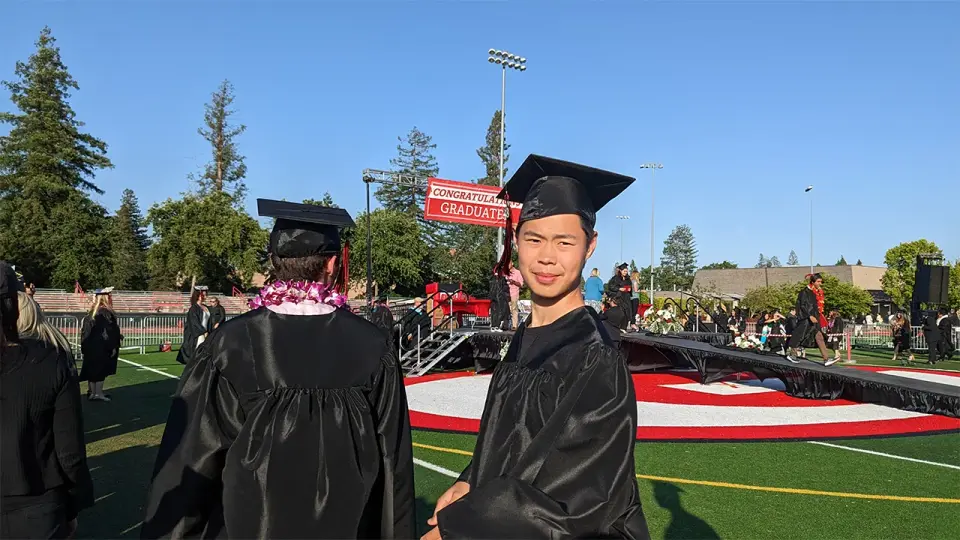
A federal judge has allowed a civil rights lawsuit alleging anti-Asian bias in college admissions to proceed against the University of Washington. The ruling, issued by Judge James L. Robart, rejected the university's motion to dismiss the Title VI claims, enabling the plaintiffs to enter the discovery phase. The case involves Stanley Zhong, a high-achieving student who was rejected by 16 of 18 colleges despite a 1590 SAT score and 4.42 GPA. While the judge dismissed other claims and two of the three plaintiffs, the core allegations regarding racially discriminatory practices against Asian-American applicants will now move forward. The University of Washington maintains that its admissions prioritize state residents, but the plaintiffs argue that systemic bias persists despite recent legal precedents.
Key points
- Judge James L. Robart denied the University of Washington's motion to dismiss the Title VI claims in the Zhong lawsuit, allowing the case to proceed to discovery.
- Stanley Zhong, a 2023 graduate of Henry M. Gunn High School in Palo Alto, California, was rejected by 16 of 18 colleges despite a 1590 SAT score and a 4.42 weighted GPA.
- The lawsuit alleges that the University of Washington and other institutions engaged in racially discriminatory admissions practices that disadvantage highly qualified Asian-American applicants.
- The ruling determined that sovereign immunity was abrogated for the Title VI claims, permitting the plaintiffs to request internal documents and admissions data from the university.
- Stanley Zhong was hired by Google as a software engineer in 2023, a position his family claims typically requires a Ph.D. or equivalent experience, after his college rejections.
- The University of Washington Board of Regents stated that admission to the Allen School is highly competitive and that the university prioritizes Washington residents for admission.
Background
This development follows a broader trend of scrutiny regarding racial discrimination in higher education admissions. In July 2026, the U.S. Department of Education’s Office for Civil Rights began investigating St. Louis University School of Medicine and four other medical schools for potential racial discrimination in admissions, assessing Civil Rights Act violations as part of a broader effort to scrutinize diversity, equity, and inclusion policies. Additionally, in August 2026, a California sociology professor was cited for highlighting the irony in removing standardized testing without addressing racial disparities, a context relevant to the Zhong case which centers on the rejection of a student with elite standardized test scores. The Zhong case specifically targets the University of Washington, University of California system, University of Michigan, and Cornell University, alleging that anti-Asian bias remains a systemic issue despite recent court precedents.
Why it matters
The ruling allows the Zhong family to access internal admissions data, which could provide concrete evidence of discriminatory patterns affecting Asian-American applicants. If the discovery phase reveals systemic bias, it could lead to significant legal precedents regarding Title VI violations in admissions and potentially force changes in how elite institutions evaluate applicants. The case also highlights ongoing tensions between state residency priorities and federal civil rights laws, as the University of Washington defends its practice of prioritizing in-state applicants while facing allegations of racial discrimination. The outcome may influence future lawsuits from other families who have reported similar experiences of rejection for highly qualified Asian-American students.
What to watch
The case will now proceed to the discovery phase, where the plaintiffs can request internal documents, communications, and admissions data from the University of Washington. The university has indicated it will continue to defend its admissions policies, which prioritize Washington residents. The plaintiffs aim to use the discovery process to demonstrate that anti-Asian bias is a systemic issue in admissions. Further legal proceedings will depend on the evidence uncovered during discovery, and the case may set a precedent for other similar lawsuits against elite institutions. The family has also indicated that they are monitoring the situation to prevent similar issues for future generations, including Nan Zhong's younger son.
Want the full story? Read the original reporting
Read on Fox News