
Hannah-Jones's 2016 fight against 'yuppie' school integration resurfaces amid daughter's education debate
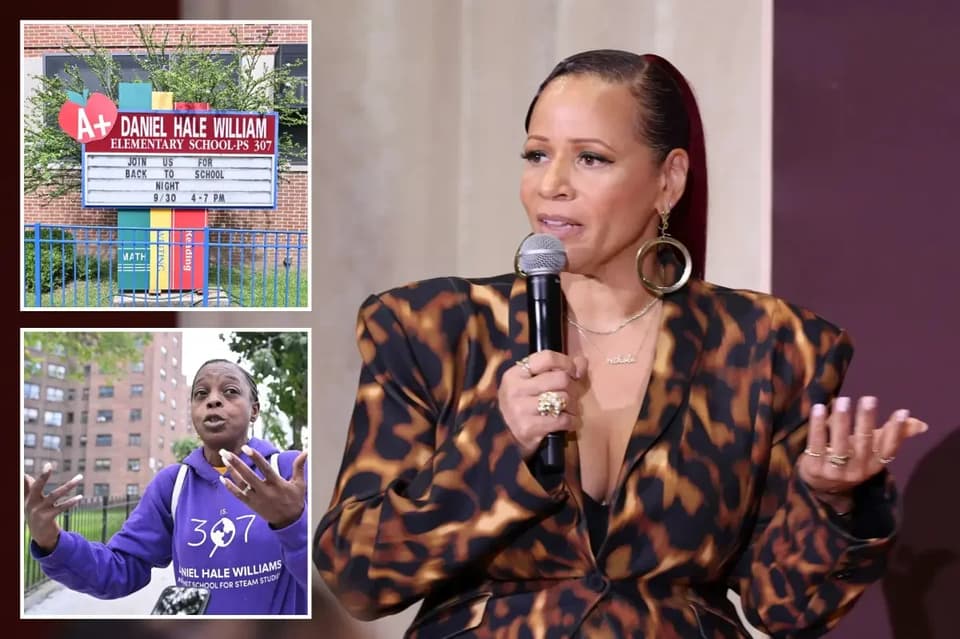
Nikole Hannah-Jones’s 2016 opposition to rezoning Brooklyn’s PS 307 to integrate affluent Dumbo students is resurfacing as part of a broader debate about her decision to enroll her daughter in a struggling school. While she framed the choice as a stand against segregation, critics argue she prioritized ideology over her child’s education, and new data shows the school remains largely Black and underperforming.
Key points
- In 2016, Hannah-Jones and her husband opposed a Department of Education rezoning plan that would have assigned gentrified Dumbo families to PS 307, fearing it would displace low-income students.
- Hannah-Jones later admitted in a New York Times Magazine essay that she sent her daughter Najya to the mostly Black, low-income school to challenge segregation, but acknowledged it may have harmed her daughter’s education.
- PS 307 remains approximately 6% white and has low proficiency rates (17% reading, 27% math) compared to city averages, despite the 2016 integration efforts failing to significantly change demographics.
- Critics, including local parents and education advocates, argue Hannah-Jones used her daughter as a political prop, while supporters view her as a civil rights leader who exposed systemic inequities.
- The debate highlights tensions between collective racial justice goals and individual educational outcomes, with some arguing for school choice and others for systemic reform.
Background
This story follows a series of recent articles (Sept 20-24, 2026) where Hannah-Jones publicly regretted her decision to send her daughter to PS 307, sparking national debate about the limits of individual activism in education. The 2016 rezoning conflict is now being revisited as evidence of her long-standing opposition to integration policies that might have improved the school’s resources or demographics.
How outlets are covering it
The New York Post emphasizes the contradiction between Hannah-Jones’s 2016 anti-integration stance and her later admission that the school failed her daughter, framing her actions as self-serving. USA Today’s Rev. Joshua Robertson argues that Hannah-Jones’s experience proves the need for school choice, claiming Black families overwhelmingly want freedom from underperforming public schools. WBUR’s Khari Thompson offers a nuanced view, acknowledging the pain of both choices—staying in segregated public schools or moving to white private spaces—and argues that the system itself is flawed, leaving Black parents with no perfect options. Local parents at PS 307, cited by the Post, feel betrayed by Hannah-Jones’s characterization of their school as a 'lawless place' and accuse her of imposing her will on the community.
Why it matters
The story underscores the ongoing national debate over school segregation, integration, and the personal costs of political activism in parenting. It highlights how individual choices can have broader implications for communities and how the failure of integration efforts in one school can reflect larger systemic issues in American education.
What to watch
Expect continued public discourse on school choice vs. systemic reform, with Hannah-Jones’s case serving as a focal point. Local communities may push for more accountability in public schools, while advocates for school choice may use her story to argue for expanded private and charter school options. The debate may also influence policy discussions on how to address underperforming schools without displacing low-income families.
- Exclusive | Nikole Hannah-Jones campaigned against a ‘yuppie invasion’ of kids from whiter areas to failing school they sent daughter New York Post
- Nikole Hannah-Jones missed the lesson. School choice matters | Opinion USA Today
- Schools for the poor are not poor schools The Economist
- Opinion | Nikole Hannah-Jones and the Price of ‘Equality’ WSJ
- When you're a Black student in America, nothing is simple WBUR
Want the full story? Read the original reporting
Read on New York Post