
Journalists Prove How Easy It Is to Launch Private Schools in Three States
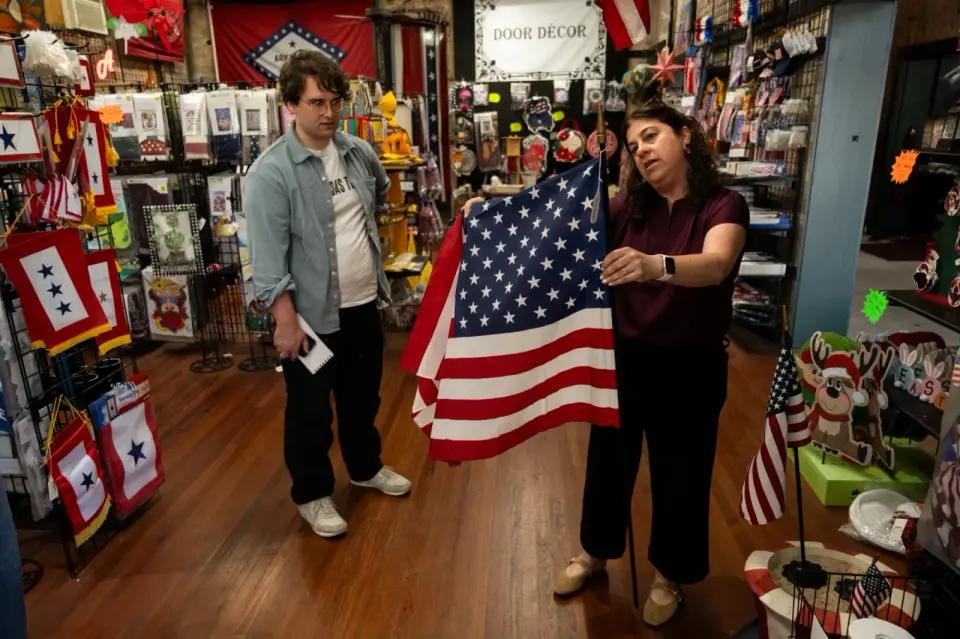
ProPublica reporters successfully registered private schools in Arkansas and West Virginia with minimal effort, demonstrating that state regulations for opening such institutions are often nonexistent. The experiment, conducted in partnership with local newsrooms, highlighted how easily individuals can bypass oversight to access public funding through voucher programs. While Arkansas required only a flag and a $45 fee, West Virginia accepted a handwritten note and a college transcript. In North Carolina, the team stopped before requiring new inspections, citing ethical concerns about using public resources. The findings underscore the lack of background checks or curriculum requirements for many private and microschools funded by taxpayer money.
Key points
- ProPublica partnered with the Arkansas Times, Mountain State Spotlight, and The Assembly to test the ease of opening private schools in three states.
- In Arkansas, registering a private school cost $45 and required only an American flag, with no background checks or curriculum requirements.
- West Virginia allowed the team to register a microschool using a handwritten note and a college transcript, bypassing building safety inspections.
- The team abandoned the North Carolina application after realizing it would require new, school-specific fire and sanitation inspections.
- The experiment revealed that many states lack mechanisms to oversee microschools, which can access public voucher funds with minimal scrutiny.
Background
This experiment follows ProPublica’s ongoing investigation into the rapid growth of private schools funded by public money. Earlier this year, the U.S. Treasury finalized rules for a $26 billion federal school choice tax credit, which is projected to significantly increase funding for private tuition by 2030. Concurrently, states like Arkansas have seen a surge in private and microschool registrations, with over 220 private schools and 143 microschools approved for public funding in the current cycle. This trend contrasts with local public school challenges, such as the proposed closures in Minneapolis and mixed performance ratings in Ohio, highlighting a broader shift in educational funding and oversight.
How outlets are covering it
ProPublica, the Arkansas Times, and Salon.com emphasize the lack of regulatory barriers, noting that in Arkansas, the state education department does not regulate private schools once they are open. The Arkansas Times highlights that the process was 'astoundingly easy,' requiring only a flag and a fee. Salon.com points out that while West Virginia required a high school diploma, it did not check qualifications or curriculum. In contrast, the North Carolina Division of Non-Public Education insisted on school-specific inspections, which the reporters deemed an ethical line not to cross. State officials, such as Kaelin Clay of the Arkansas Department of Education, defended the system by stating that families have the 'freedom to choose' their educators, while West Virginia officials noted they have no legal authority to approve or deny microschools. The consensus across outlets is that the current framework allows for minimal oversight, potentially enabling individuals with questionable backgrounds to establish schools and access public funds.
Why it matters
The findings raise critical questions about the integrity of public education funding and the potential for misuse of voucher programs. If journalists with no teaching experience can easily open schools and access taxpayer money, it suggests that other individuals with less transparent intentions could do the same. This lack of oversight may lead to the proliferation of unregulated schools that receive public funds without providing adequate educational standards or safety. As federal and state programs expand to fund private education, the absence of robust regulatory frameworks could result in the diversion of public resources and the exacerbation of educational inequalities, particularly for vulnerable populations who rely on public schools for support.
What to watch
ProPublica plans to close the schools they opened to ensure no students are misled, but they will retain the domain name and merchandise as mementos. The Arkansas Department of Education has invited the team to apply for public funding as a vendor or microschool in the next school year. The team will continue to monitor the implementation of the federal Education Freedom Tax Credit, which is set to launch in January 2027, and its impact on state-level private school regulations. Additionally, the reporters will publish a quiz to help readers understand the varying requirements for opening private schools across different states, aiming to inform the public about the ease of entry into the private education sector.
- How ProPublica Reporters Became Private School Owners in 24 Hours ProPublica
- Quiz: Where Could You Open a Private School? ProPublica
- We’re reporters, not teachers. We were able to start private schools anyway Salon.com
- It's Surprisingly Easy to Open Your Own Private School Newser
- Jennifer Smith Richards, Jodi S. Cohen and Jennifer Berry Hawes, ProPublica Arkansas Times
Want the full story? Read the original reporting
Read on ProPublica