
Federal judge blocks FIU from enforcing indoor protest ban after ruling on silent anti-ICE demonstration
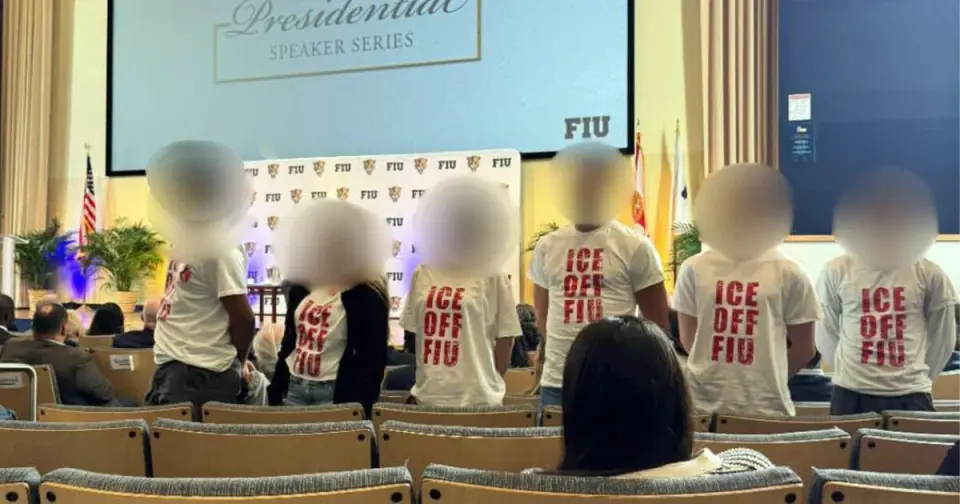
A federal judge issued a preliminary injunction against Florida International University, ruling that the school likely violated the First Amendment rights of seven students who staged a silent protest against the university's cooperation with federal immigration authorities. The court ordered FIU to immediately cease enforcing a policy banning 'expressive activities' indoors and halted disciplinary actions against the students, who had been required to submit video apologies. The ruling, issued by Judge Jacqueline Becerra, affirmed that student speech can only be restricted if it causes substantial disruption, a standard the judge found was not met by the silent protest. While the university stated it would comply with the order while considering legal options, the students, part of the group ICEBreakers, plan to continue advocating for the end of the campus agreement with ICE.
Key points
- Judge Jacqueline Becerra ruled that FIU likely violated the First Amendment by disciplining seven students for a silent protest in March where they wore shirts reading 'ICE OFF FIU' during an event with President Jeanette Nuñez.
- The court issued a preliminary injunction blocking FIU from enforcing its policy against 'expressive activities' indoors and stopped the university from requiring the students to submit video reflections as punishment.
- FIU had charged the students with misconduct, arguing their actions violated indoor conduct policies, but the judge noted that an internal email admitted the protest did not disrupt the event.
- The students, members of the ICEBreakers coalition, formed the group after FIU became the first U.S. university to sign an agreement allowing campus police to enforce immigration law.
- The ruling comes just before the start of the fall semester, and while the university stated it would comply with the order, it reserved the right to consider further legal options.
Background
This case follows a broader national trend where universities have implemented policies to limit on-campus expression, often citing safety or operational concerns. The dispute at FIU is part of a larger wave of legal challenges regarding student free speech rights in the context of immigration enforcement, similar to recent controversies in Minnesota involving anti-ICE protests and federal surveillance of activists. The legal precedent cited by the judge, Tinker v. Des Moines, has been the standard for student speech since 1965, establishing that students do not lose their constitutional rights at the schoolhouse gate unless their actions materially disrupt the educational mission.
How outlets are covering it
WLRN and the Tallahassee Democrat emphasized the judge's reliance on the 60-year-old Tinker v. Des Moines precedent, highlighting that the students' actions were non-disruptive and silent. WSVN focused on the emotional relief of the students and the role of the ACLU in supporting the lawsuit, noting that body camera footage proved the protest was peaceful. Axios framed the ruling as a significant win for free speech advocates that could set a precedent for other colleges adopting similar restrictive policies. FIU, through spokesperson Madeline Baró, maintained that while it values free expression, it has a responsibility to maintain campus operations and safety, arguing that reasonable regulations on indoor spaces are constitutional. FIU's legal team had argued that universities do not need to provide 'free rein' over their facilities, a stance the judge found unpersuasive given the lack of actual disruption.
Why it matters
The ruling establishes a clear legal boundary for universities attempting to restrict student speech indoors, reinforcing that peaceful, non-disruptive expression is protected under the First Amendment. It serves as a potential precedent for other institutions facing similar challenges regarding campus protest policies and immigration-related activism. The outcome may influence how other universities draft and enforce conduct policies related to political expression, particularly in the current climate of heightened scrutiny over immigration enforcement on college campuses.
What to watch
The lawsuit will continue as the preliminary injunction is temporary. FIU has stated it will consider its legal options, which may include an appeal or further defense of its policy. The ICEBreakers group plans to hold a town hall meeting on September 9 to discuss the case's progress and continue advocating for the termination of the university's agreement with ICE. The students have indicated they will continue holding events on campus, asserting that the ruling affirms their right to protest without fear of disciplinary action.
- Federal judge says FIU violated First Amendment rights of anti-ICE student protesters WLRN
- Federal judge rules in favor of FIU students who sued university for charging them with misconduct after anti-ICE protest WSVN
- Judge sides with students, says FIU likely violated free speech Axios
- Fla. College Protest Rule Blocked In 'ICEBreakers' Suit Law360
- Judge: FIU cannot silence student protesters Tallahassee Democrat
Want the full story? Read the original reporting
Read on WLRN