
Oklahoma’s 3-year degree push accelerates national shift in higher education
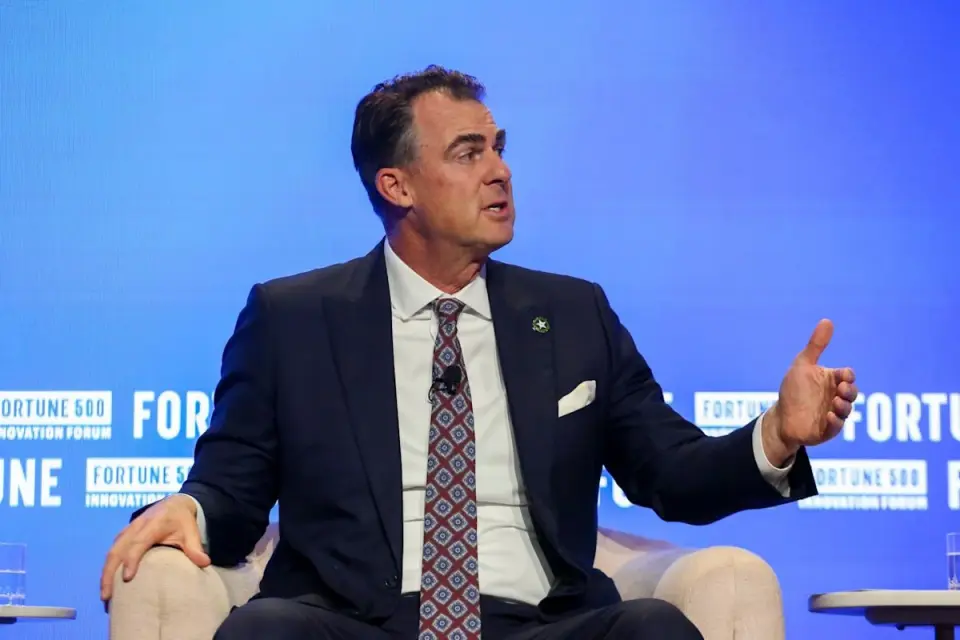
Oklahoma Governor Kevin Stitt is championing a 90-credit bachelor’s degree to reduce costs and speed up workforce entry, a model now spreading rapidly across the U.S. While supporters cite affordability and practicality, critics warn that cutting a year of study may compromise academic rigor and student flexibility.
Key points
- Oklahoma Gov. Kevin Stitt criticized universities for being 'stuck in their ways' and promoted a 90-credit bachelor’s degree, which is 30 credits and roughly one year shorter than the standard 120-credit requirement.
- The initiative began with a February executive order and was followed by state legislation requiring feasibility studies; by September, the Oklahoma State Regents approved four reduced-credit degrees in fields including social work, AI, business, and workforce development.
- RAND Corporation data indicates a surge in such programs, with approximately 150 announced in 2026 alone, compared to just five in 2024, driven largely by state mandates in places like Tennessee, Texas, Ohio, and Indiana.
- Supporters, including the Trump administration and state officials, argue the model lowers student debt and addresses workforce shortages, while critics like the American Association of University Professors label it 'cutting corners' that risks hollowing out higher education.
- Institutions are implementing safeguards, such as requiring a four-year fallback option during trial phases, to allow students to transfer if employers or graduate schools do not recognize the shorter credential.
Background
This development follows recent political shifts in Oklahoma, where Governor Stitt, an outgoing official, has continued to influence policy despite recent Republican electoral setbacks. The push for accelerated degrees aligns with broader conservative efforts to reduce public spending and combat what some view as ideological sprawl in universities, contrasting with earlier debates over civil discourse in state politics.
How outlets are covering it
Fortune highlights Stitt’s direct confrontation with academic inertia, noting his argument that traditional degrees are inefficient for workforce preparation. The Independent emphasizes the structural changes within universities, such as NYU’s consolidation of science courses and Johnson & Wales’s rising application rates, while also detailing the trade-offs in student flexibility. Both sources agree on the rapid expansion of these programs but differ in emphasis: Fortune focuses on the political and economic signaling aspect, whereas The Independent details the operational adjustments and faculty resistance, including concerns from the American Federation of Teachers about academic integrity.
Why it matters
The widespread adoption of three-year degrees could fundamentally alter the U.S. higher education landscape, potentially reducing the average cost of college by 25% and accelerating entry into the workforce. However, the long-term impact on graduate school admissions, employer perception, and the value of the degree as a signal of ability remains uncertain, posing risks for students who may find the shorter credential less recognized in competitive job markets.
What to watch
As more states mandate or encourage these programs, expect increased scrutiny from accrediting bodies and faculty unions. The next critical phase will involve tracking graduate outcomes to determine if employers and graduate schools accept the 90-credit degree as equivalent to the traditional 120-credit standard, which will dictate whether these programs expand or face reversal.
- Oklahoma’s governor sees universities as ‘stuck in their ways.’ His fix, a 3-year bachelor’s degree, is already spreading fast Yahoo
- Colleges have a new plan to make it more affordable: Three-year degrees The Independent
- Oklahoma’s governor sees universities as ‘stuck in their ways.’ His fix: a 3-year bachelor’s degree Fortune
- More colleges offering 3-year degrees amid affordability crisis Yahoo
- The Latest Way to Make College More Affordable: Shorter Degrees WSJ
Want the full story? Read the original reporting
Read on Yahoo