
NYC Launches Sweeping Cooling Tower Reforms After Deadly Upper East Side Legionnaires' Cluster
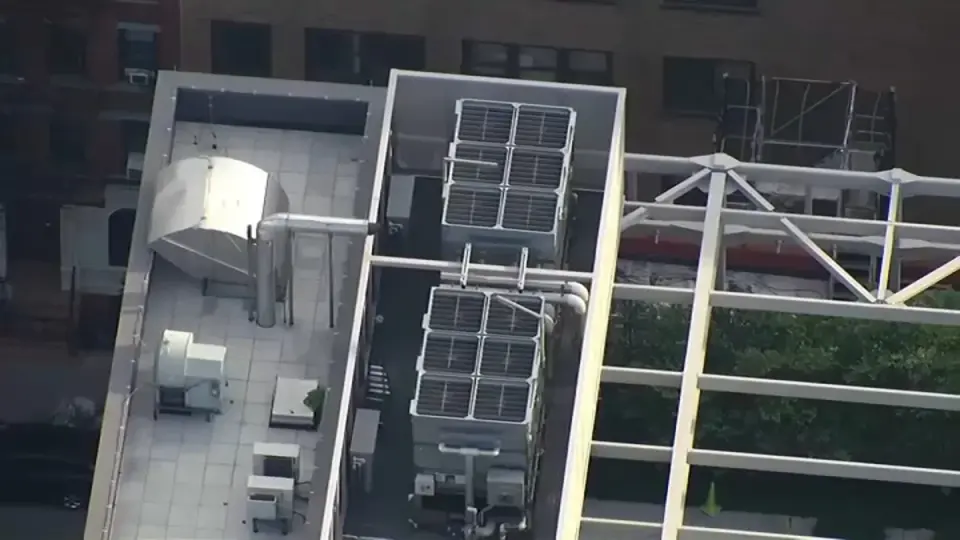
Mayor Zohran Mamdani unveiled a comprehensive new strategy to combat Legionnaires' disease following a summer cluster on the Upper East Side that resulted in 11 deaths and 94 cases. The plan includes a citywide cooling tower map, faster enforcement hearings, and a scientific advisory panel to explore alternative technologies. These measures follow a 2025 outbreak in Harlem that killed seven people and address concerns over inspection gaps and unregistered towers.
Key points
- The Upper East Side cluster resulted in 11 deaths and 94 cases, exceeding the 2025 Harlem outbreak's seven fatalities.
- New measures include a citywide mapping tool for cooling towers, to be launched by spring 2027, showing compliance history.
- Enforcement will accelerate with administrative hearing dates scheduled within 15 days of a summons.
- A scientific advisory panel will be formed to evaluate alternative cooling technologies to reduce reliance on traditional towers.
- The Health Department and Department of Buildings will integrate systems to identify and register unregistered cooling towers before they operate.
Background
This is the second major Legionnaires' outbreak in Manhattan in two years. In 2025, a cluster in Central Harlem resulted in seven deaths and over 100 illnesses. Investigations revealed that unregistered cooling towers were implicated in both outbreaks. Previous reporting highlighted a significant drop in city inspections due to staffing shortages, with only 1,167 towers inspected in the first half of 2025 compared to 3,190 in 2017. In response to the 2025 outbreak, the city allocated $13 million for additional inspections and stricter testing requirements in 2027.
How outlets are covering it
Mayor Mamdani and Health Commissioner Dr. Alister Martin emphasized the city's 'fast and aggressive' response, framing the new measures as a proactive improvement to existing rigorous standards. They highlighted the expansion of transparency tools and the formation of a scientific advisory panel to address climate-driven risks. Conversely, City Council members, including Speaker Julie Menin and Councilmember Lynn Schulman, criticized the city's initial response, calling for more aggressive enforcement and new local laws, such as requiring three cleaning cycles per summer. Councilmember Kamillah Hanks introduced legislation mirroring the mayor's interagency coordination proposal. Experts noted that while NYC has strict regulations, inspection rates had declined due to understaffing, and some argued that current penalties may not be sufficient deterrents. The Guardian highlighted the broader context of climate change increasing reliance on air conditioning, which exacerbates Legionella risks, while also noting the city's projected $8.8 billion budget gap in 2028 could constrain funding for these new initiatives.
Why it matters
Legionnaires' disease is a severe form of pneumonia that can be fatal, and its risk is increasing with rising temperatures and greater reliance on air conditioning. The new measures aim to prevent future outbreaks by improving transparency, enforcement, and technology. The high death toll in the Upper East Side cluster underscores the public health stakes and the need for robust infrastructure and regulatory compliance. The city's response also sets a precedent for other jurisdictions facing similar challenges due to climate change.
What to watch
The city expects to implement the new measures by the end of 2026. The cooling tower mapping tool and public education campaign are scheduled for launch by spring 2027. The scientific advisory panel will be appointed in the coming months, with recommendations expected within a year. Faster testing methods are targeted for implementation before the summer of 2028. Whole-genome sequencing results to identify the specific source of the Upper East Side outbreak are expected this fall. City Council hearings on the outbreak response are scheduled for Wednesday, where new local laws may be discussed.
- NYC unveils new Legionnaires safety measures after 11 deaths in Upper East Side cluster NBC New York
- Mayor Mamdani Announces Sweeping New Measures to Strengthen New York City’s Response to Legionnaires’ Disease NYC.gov
- Mamdani unveils new measures to halt Legionnaires’ after outbreak kills 11 Gothamist
- Death count grows in NYC Legionnaires' disease outbreak usatoday.com
- New York City to increase cooling tower inspections after legionnaires’ outbreaks The Guardian
Want the full story? Read the original reporting
Read on NBC New York